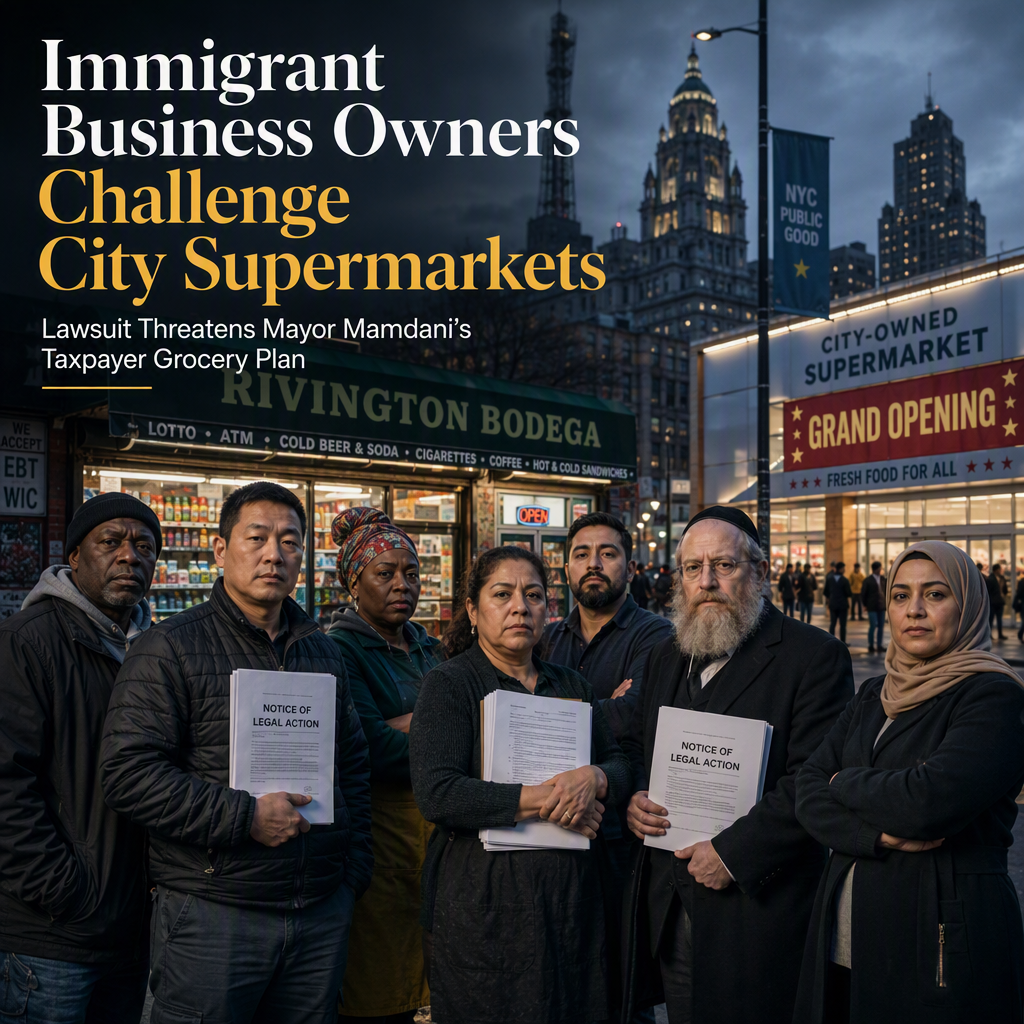
Several immigrant business owners in New York City, represented by the Multicultural Business Coalition (MBC), are preparing to sue Mayor Zohran Mamdani over his plan to open five city-owned grocery stores funded by taxpayers. These stores are expected to sell food at prices up to 30% below those of traditional retailers, a move that has sparked concern among existing small businesses about their ability to compete [1].
Frank Garcia, chairman of the MBC, stated that the coalition will send a letter to Mamdani's office in the coming days outlining their legal intentions. If the mayor does not respond or agree to meet with the group within three weeks, the MBC plans to proceed with legal action. Garcia emphasized that the lawsuit is nonpartisan and aims to protect small businesses, including bodegas and other local retailers, from the impact of the city’s initiative. He also noted that the MBC has broad support from various organizations and lawmakers, including New York State Senate Majority Leader Andrea Stewart-Cousins, and that funding for the lawsuit is already secured [1].
The MBC, founded earlier this year specifically to oppose Mamdani's grocery store plan, includes members from African, Asian, Caribbean, Hispanic, Jewish, and Middle Eastern business communities. The group has criticized the city-backed grocery stores as a 'communist fantasy' and is seeking to raise awareness about the challenges small business owners face due to rising costs in New York City [1].
In addition to the impending lawsuit from the MBC, Mayor Mamdani is also facing legal challenges from New York City landlords who are seeking to overturn the city's rent freeze [1].
CONCLUSION
The planned lawsuit by immigrant business owners highlights significant opposition to Mayor Mamdani’s taxpayer-funded supermarket initiative, with concerns centered on the impact to small businesses. The situation has garnered support from a diverse coalition and lawmakers, indicating potential for ongoing legal and political challenges. Market participants should monitor developments, as the outcome could affect the competitive landscape for local retailers in New York City.