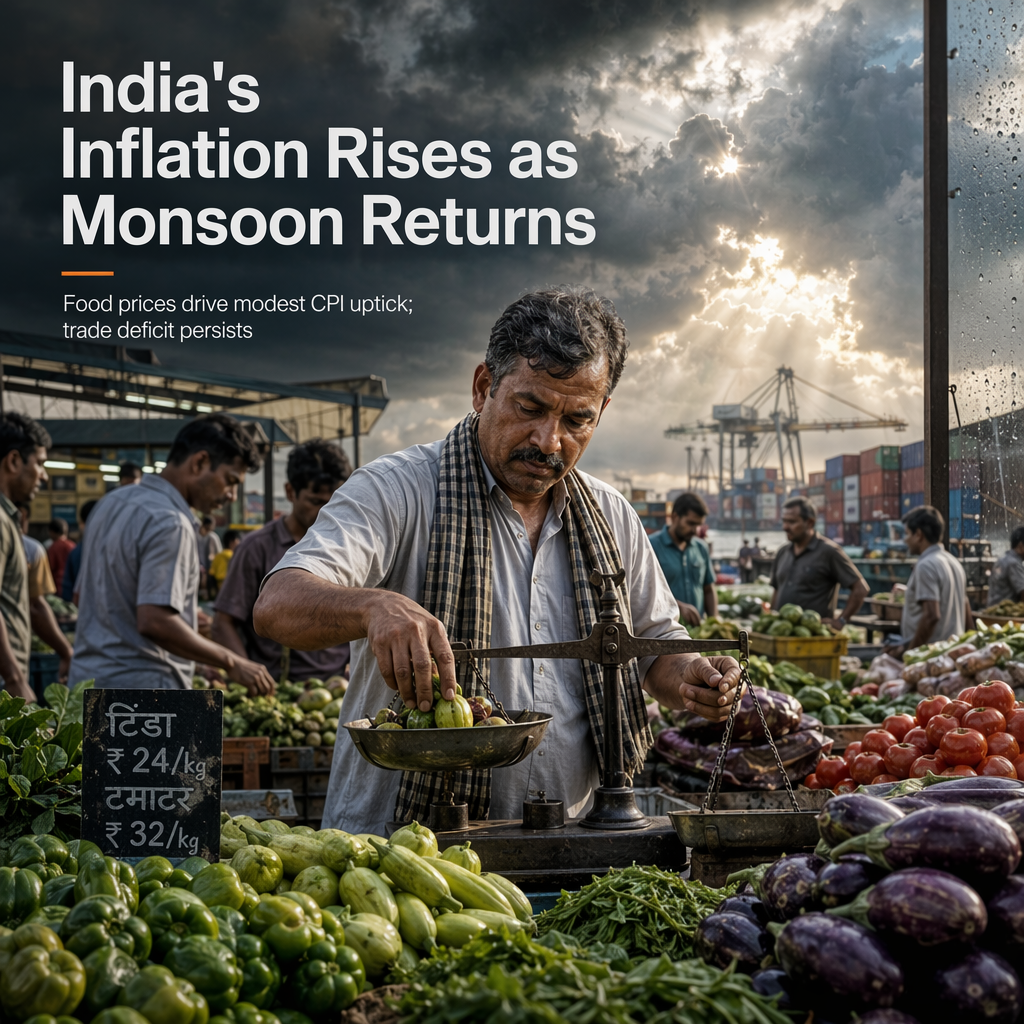
DBS economist Radhika Rao projects that India's Consumer Price Index (CPI) inflation for June will rise slightly to 4.1% year-on-year, up from 3.9% in the previous month. This increase is attributed to ongoing normalization in food prices and the pass-through of fuel costs into related segments [1]. Rao notes that, outside of food and fuel, the risks of further increases in core inflation are limited, citing softer prices for gold and other precious metals, as well as minimal scope for additional pump price adjustments [1].
The report highlights that market participants are closely monitoring the progress of the southwest monsoon, which plays a critical role in India's agricultural output and inflation dynamics. As of July 8, the nationwide rainfall shortfall had narrowed significantly to -15%, compared to a gap of over 40% at the end of June. Notably, key crop-producing regions in central and northwest India have seen improvements in rainfall, which could support agricultural production and help contain food inflation going forward [1].
On the external front, India's trade deficit for June is expected to remain elevated at approximately USD 28.5 billion. The report points out that the June trade data may not fully reflect the impact of a mid-month correction in oil prices, suggesting that the trade deficit could remain a concern in the near term despite some easing in energy costs [1].
CONCLUSION
India's June CPI inflation is anticipated to rise modestly, driven by food and fuel price dynamics, while core inflation risks remain limited. Improvements in monsoon rainfall and a persistently high trade deficit are key factors for markets to watch. The outlook suggests cautious optimism, with inflationary pressures contained but external imbalances persisting.