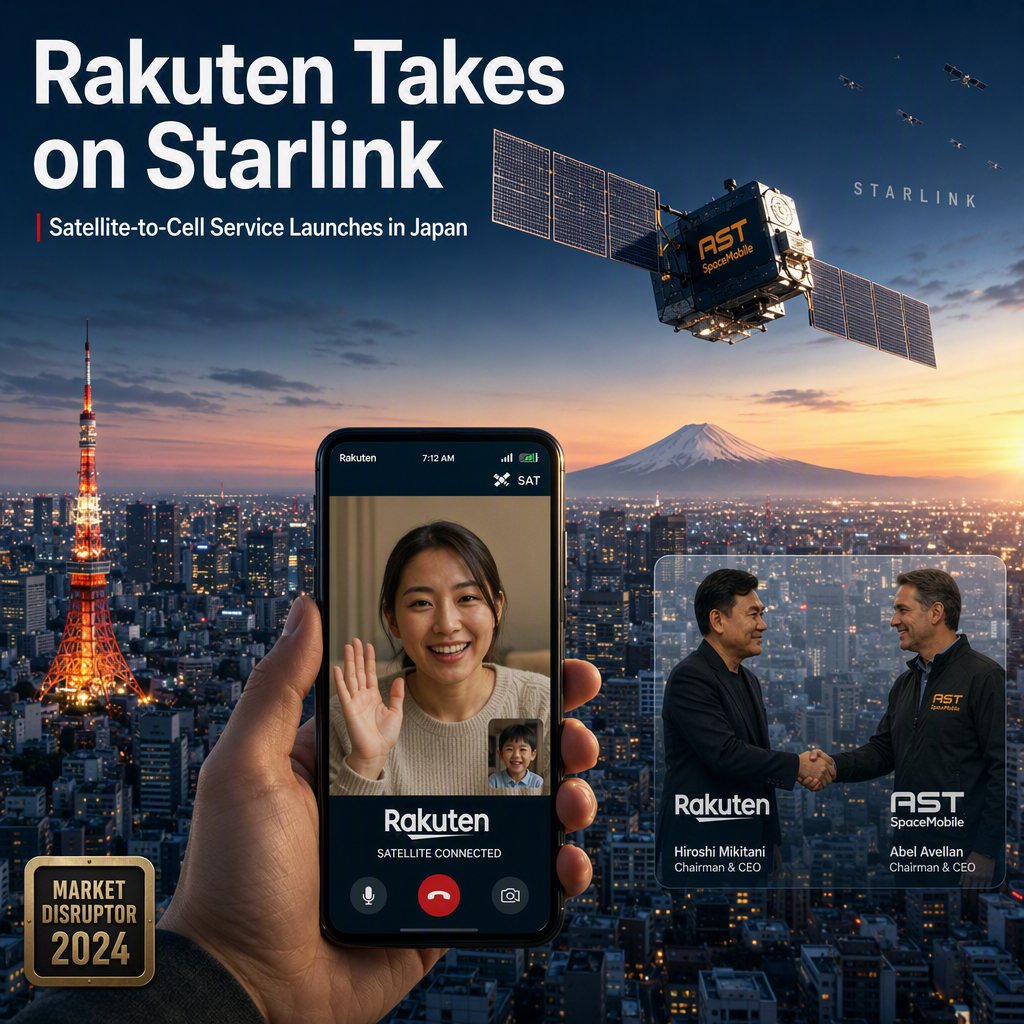
Japan's Rakuten Group is set to launch a direct-to-mobile satellite communications service as early as this year through a partnership with U.S.-based AST SpaceMobile, directly competing with SpaceX's Starlink system [1]. The collaboration was formalized in 2024, with Rakuten Group CEO Hiroshi Mikitani and AST SpaceMobile CEO Abel Avellan marking the beginning of the partnership [1]. The new service aims to support video calls and is expected to roll out within the year, although specific financial details and pricing structures have not been disclosed [1].
This strategic move positions Rakuten to challenge Starlink's dominance in the satellite-to-cell market, with a focus on improving connectivity for mobile users across Japan, particularly in remote areas where traditional mobile networks are limited [1]. Industry analysts note that direct-to-mobile satellite communications could open new revenue streams for Rakuten and intensify competition in the Japanese telecom sector [1]. The service is anticipated to potentially increase Rakuten's subscriber base and strengthen its market position against established players [1].
Market sentiment regarding Rakuten's entry into the satellite-to-cell sector is described as cautiously optimistic, with investors awaiting further information on the service's rollout, pricing, and technical performance [1]. The partnership with AST SpaceMobile, a key rival to Starlink, may also prompt other Japanese telecom companies to accelerate their own satellite communication initiatives [1].
No trading advice or specific price levels were mentioned in the article, but the move is considered a positive step for Rakuten's long-term growth prospects within Japan's competitive telecommunications industry [1].
CONCLUSION
Rakuten's partnership with AST SpaceMobile marks a significant step in Japan's satellite-to-cell communications market, directly challenging Starlink's presence. While details on pricing and rollout are still pending, the initiative is viewed as a positive development for Rakuten's growth and could reshape competition in the Japanese telecom sector.