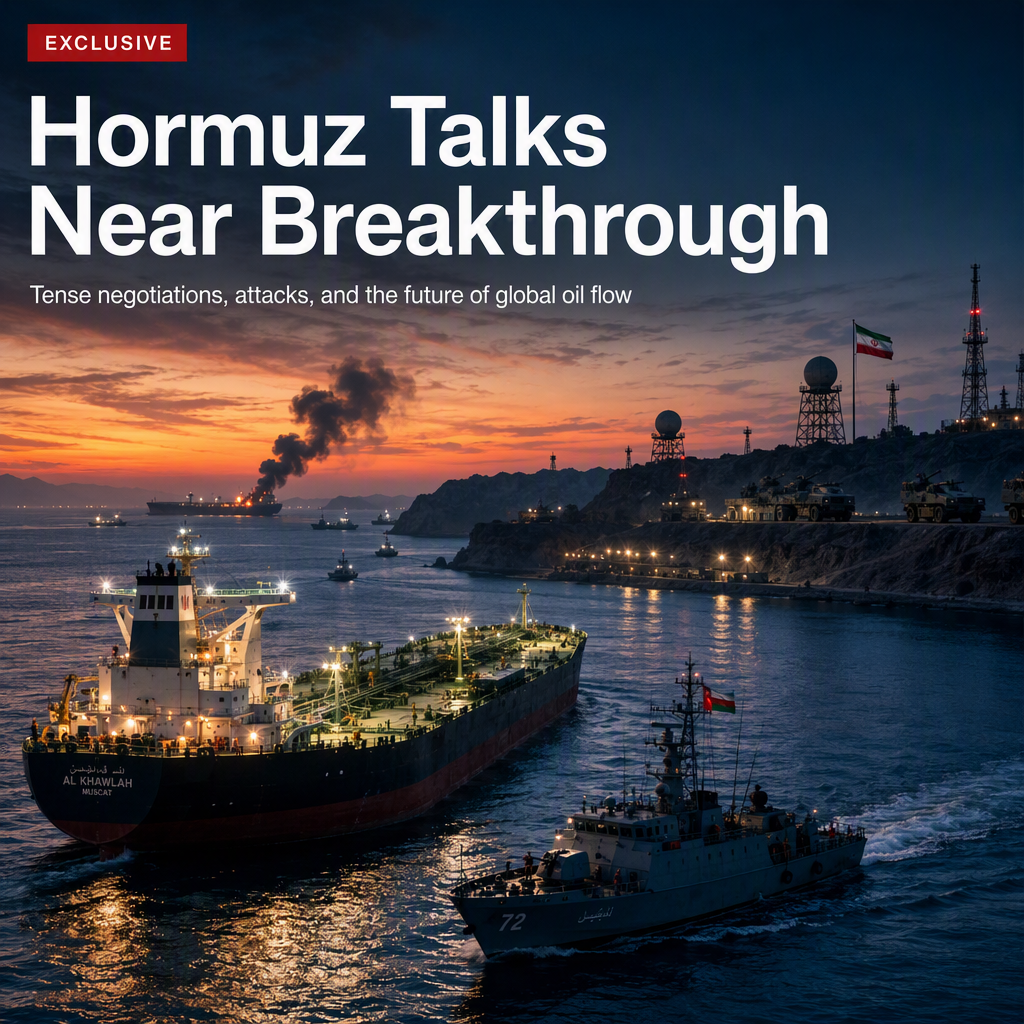
Iran announced that it is 'very close' to reaching an agreement with Oman regarding control and a new shipping route through the strategic Strait of Hormuz, a critical passage that previously carried one-fifth of the world’s oil and gas shipments before the ongoing conflict began with U.S. and Israeli attacks on Iran on February 28 [1]. However, Iranian Foreign Minister Abbas Araqchi emphasized that reopening the waterway would require additional conditions, including U.S. compensation to Iran, and that the previous traffic separation scheme is no longer acceptable to Tehran. Iran and Oman are currently discussing a temporary route while technical and legal issues for a permanent solution are addressed [1].
The United Arab Emirates reported that Iran attacked a carrier affiliated with its state oil company with a missile as it transited the Strait of Hormuz, marking the latest escalation in attacks on shipping in the region. No injuries were reported in the incident. Iranian authorities did not immediately comment, and Iranian media cited the UAE report without attributing blame to Iran [1].
A U.S. official stated that Washington anticipates an agreement soon between Iran and Oman, which could allow normal oil traffic to resume. The official added that once a deal is announced to restore commercial shipping without impediments, the United States will lift the blockade of Iranian ports. However, the official stressed that U.S. actions will remain performance-based and contingent on Iran’s implementation of its commitments [1].
Iran’s Revolutionary Guards clarified that reopening the Strait of Hormuz is contingent on Washington accepting Iran’s conditions and is not directly tied to the Iran-Oman negotiations. Guards spokesperson Hossein Mohebbi stated that the U.S. must stop interfering in the regional negotiation process, and only then will the strait be reopened [1].
CONCLUSION
Negotiations between Iran and Oman on the Strait of Hormuz are progressing, but the reopening of the waterway hinges on broader conditions, particularly U.S. actions and compensation. The situation remains tense, with continued attacks on shipping and no immediate resolution, signaling significant ongoing risks for global energy markets.