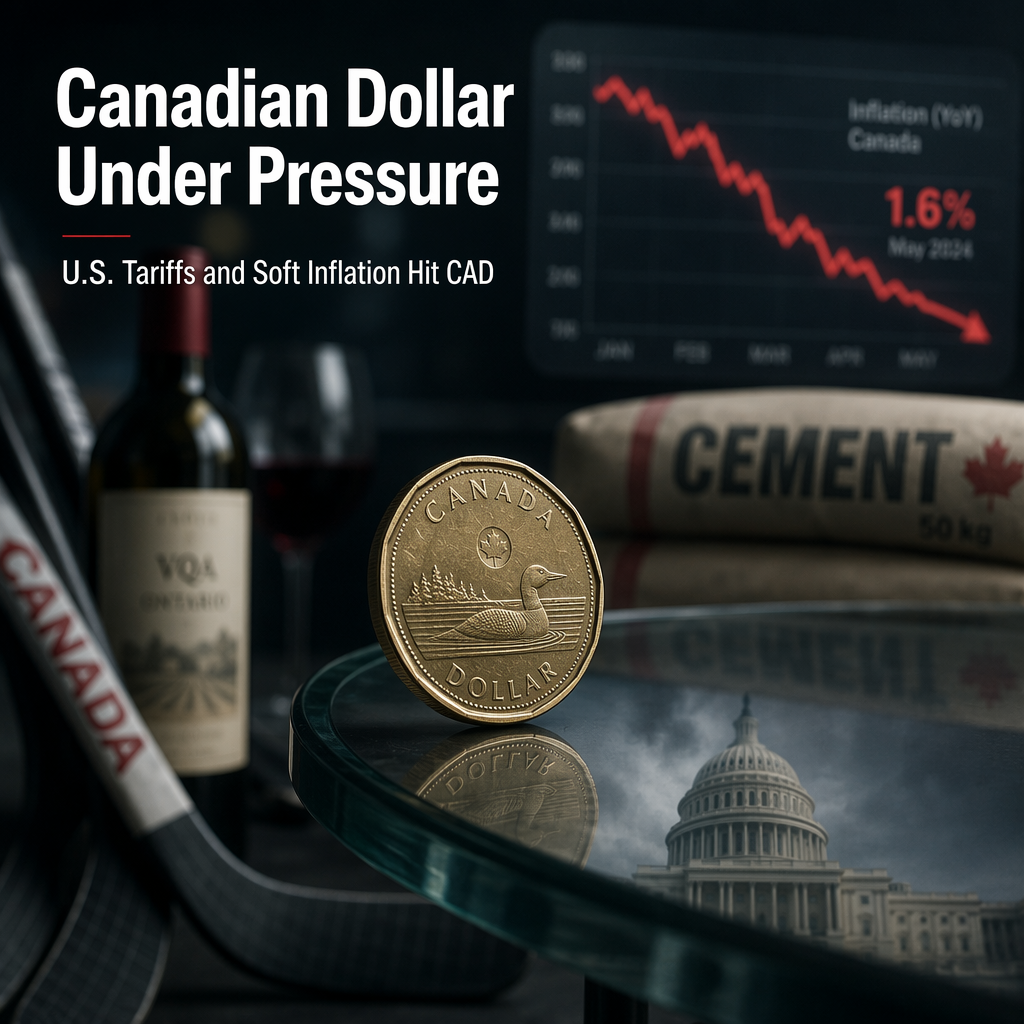
The Canadian Dollar (CAD) is underperforming other high-beta currencies following two significant developments: the announcement of a 50% tariff by the Trump administration on nearly $20 billion of Canadian imports and softer-than-expected inflation data for June [1]. The newly announced tariff, which represents approximately 0.85% of Canada’s GDP, will take effect on August 19 and targets a range of products including wine, hockey sticks, and cement. Notably, the tariff excludes energy, potash, goods already subject to Section 232 tariffs, fish, and critical minerals [1].
Simultaneously, Canada’s June inflation data revealed that headline CPI rose 2.8% year-over-year, below the consensus estimate of 2.9% and down from 3.2% in May, largely due to lower gasoline prices. The core CPI, which averages the trim and median measures, dropped to 1.85% year-over-year (consensus: 2.05%), matching the September 2020 low and falling below the Bank of Canada’s (BoC) 2% target. However, core CPI excluding food and energy was slightly higher than anticipated at 1.8% year-over-year (consensus: 1.7%), up from 1.6% in May [1].
The combination of a worsening US-Canada trade dispute and core inflation running below the BoC’s target supports expectations for an extended pause in BoC rate hikes. As a result, there is room for market bets on BoC rate hikes—currently pricing in 50 basis points over the next twelve months—to adjust lower against the CAD [1].
CONCLUSION
The Canadian Dollar faces significant headwinds from both the newly imposed U.S. tariffs and softer inflation data. These developments are likely to keep the BoC on hold and may prompt markets to reassess expectations for future rate hikes, adding further downside pressure to the CAD.