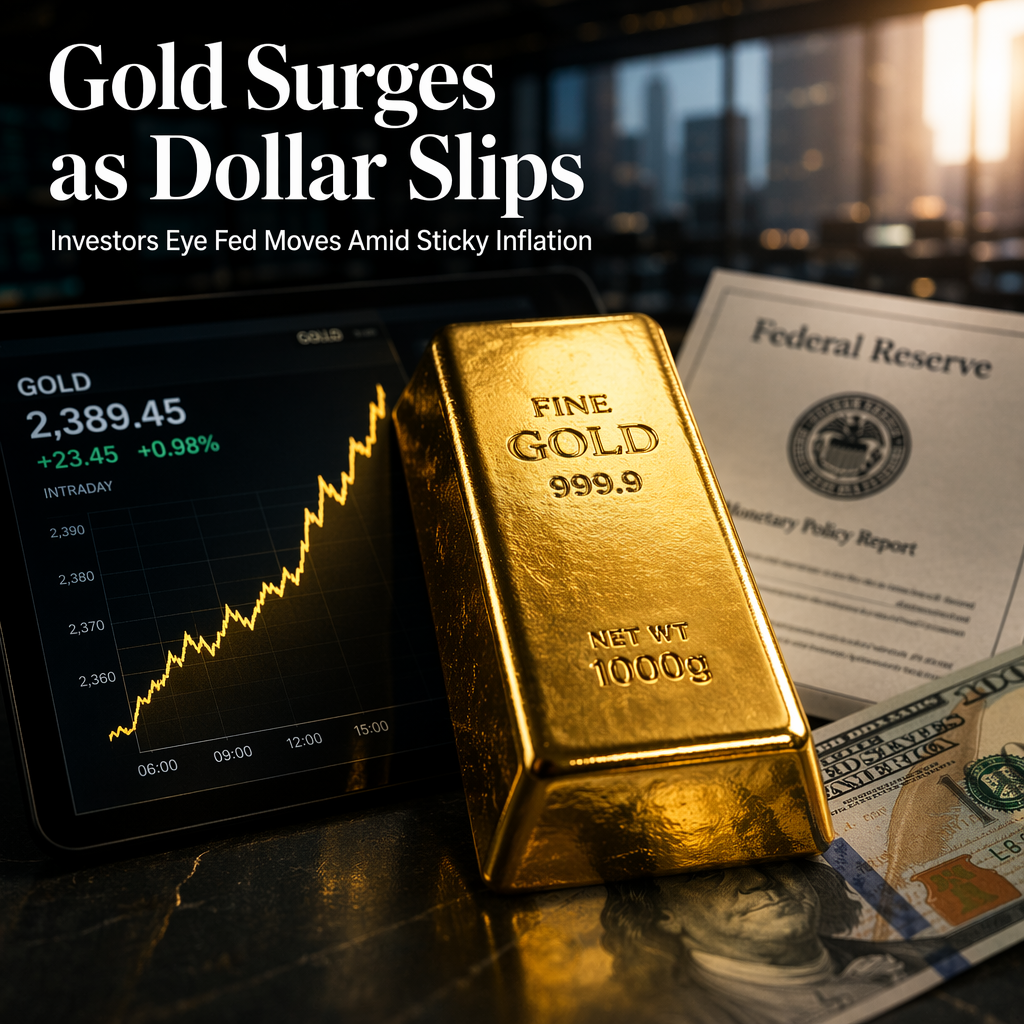
Gold (XAU/USD) prices rebounded on Thursday, rising by almost 1% as the US Dollar weakened, despite inflation data that supports a 'higher-for-longer' interest rate scenario from the Federal Reserve. The XAU/USD pair traded at $4,028 after hitting a daily low of $3,963, reflecting a recovery as the Greenback slipped, even though the US Core Personal Consumption Expenditures (PCE) Price Index increased by 3.4% year-over-year in May, up from 3.3% in April, in line with expectations [1].
US Treasury yields declined as investors continued to anticipate at least one rate hike by the end of the year, with market pricing reflecting 30 basis points of tightening. The US Dollar Index (DXY) fell 0.19% to 101.39, retreating from the yearly high of 101.80 reached on Wednesday [1]. Labor market data showed strength, as jobless claims dropped from 227,000 to 215,000, below the forecast of 225,000. However, US Durable Goods Orders fell sharply by -4.5% year-over-year in May, compared to an 8.5% increase in April [1].
Oil prices also saw movement, with Western Texas Intermediate (WTI) trading around $71.50 per barrel, up 2.40% on the day but down nearly 19% month-to-date, following a US-Iran deal aimed at reopening the Strait of Hormuz [1].
From a technical perspective, gold remains in a downtrend, with a series of lower highs and lower lows, though the trend shows signs of exhaustion. The Relative Strength Index (RSI) bounced off the 30 oversold level, forming a higher low and indicating a positive divergence. Key resistance levels for gold are at $4,050 and $4,098, with further upside potential toward $4,200 if these are breached. On the downside, a move below $4,000 could see gold test the year-to-date low of $3,959 and then $3,900 [1].
Looking ahead, market participants are watching for comments from Federal Reserve speakers and the University of Michigan Consumer Sentiment final reading for June, which could influence gold's direction [1].
CONCLUSION
Gold's rebound reflects a complex interplay between weakening US Dollar, persistent inflation, and shifting market expectations for Federal Reserve policy. While technical indicators suggest the downtrend may be losing steam, key resistance and support levels will determine the next move. Investors remain attentive to upcoming economic data and Fed commentary for further direction.