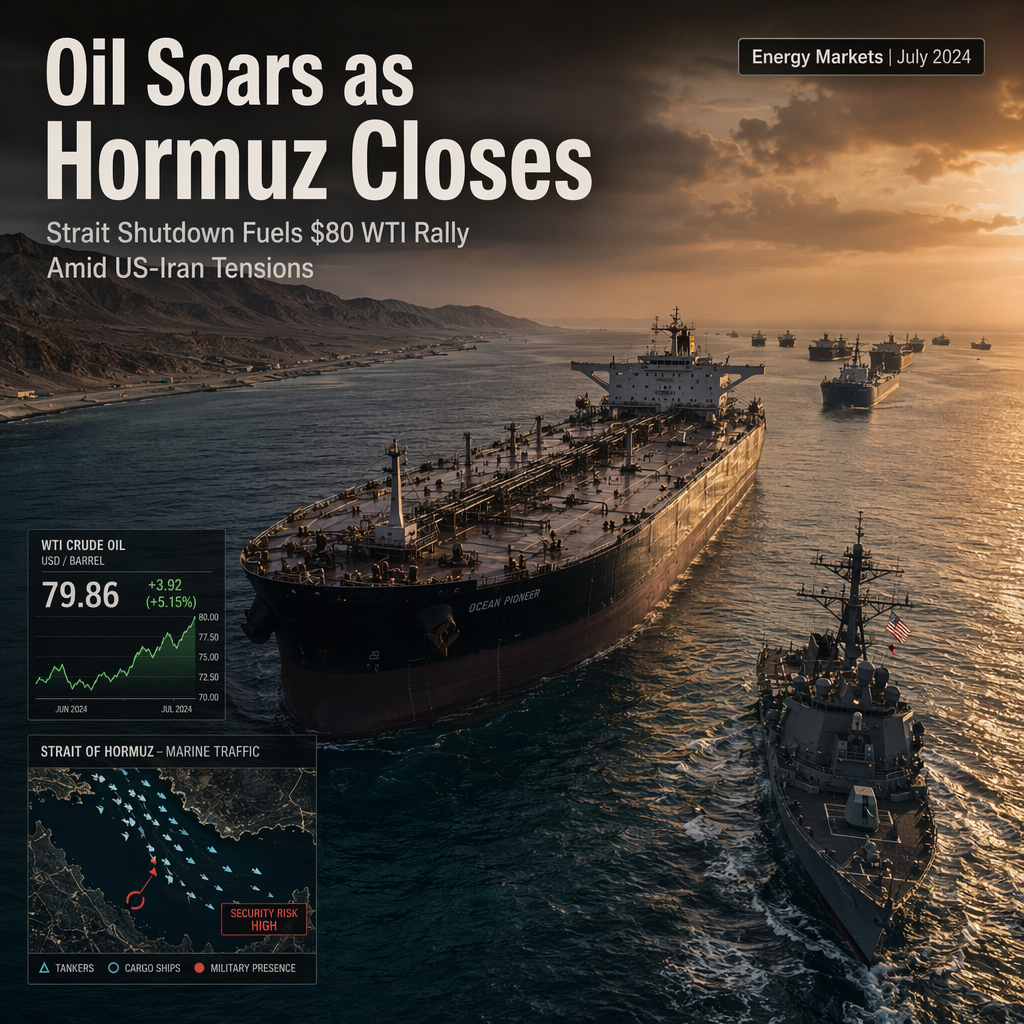
West Texas Intermediate (WTI) oil prices extended their gains on Tuesday, consolidating at one-month highs around the $80.00 mark, which is approximately 18% above the lows recorded in early July [1]. The primary driver behind this surge is the escalating conflict between the United States and Iran, with both nations exchanging attacks for the sixth consecutive day as of Monday [1]. In response to the hostilities, the US military reinstated a blockade affecting ships entering and exiting Iran [1].
A significant market-moving development is the sharp decline in sea traffic through the Strait of Hormuz, a critical oil transit corridor, following renewed hostilities and reported attacks on vessels attempting passage [1]. The Iranian Islamic Revolutionary Guard Corps (IRGC) announced on Sunday that the Strait of Hormuz is closed to commercial traffic 'until further notice' and claimed responsibility for disabling two supertankers that ignored warnings and tried to navigate a mined route [1]. Despite US assurances that crude oil flows would continue, sea traffic tracking data indicates that the number of ships crossing Hormuz has dropped to levels seen before the ceasefire or even lower [1].
US President Donald Trump offered protection for cargo ships in exchange for a 20% fee, a move that contributed to the accelerated recovery of crude oil prices [1]. Later in the day, the American Petroleum Institute (API) is expected to release its weekly crude oil stocks report, which is anticipated to show a decline in commercial oil reserves by 2.7 million barrels for the week of July. If confirmed, this would mark the 13th consecutive weekly drawdown of crude stockpiles, heightening concerns about the economic impact of a potential oil shortage [1].
CONCLUSION
WTI oil prices have surged to monthly highs near $80, driven by escalating US-Iran tensions and the closure of the Strait of Hormuz to commercial traffic. The anticipated drawdown in US crude inventories adds to concerns about tightening supply. Market sentiment remains positive for oil prices amid ongoing geopolitical risks and supply disruptions.