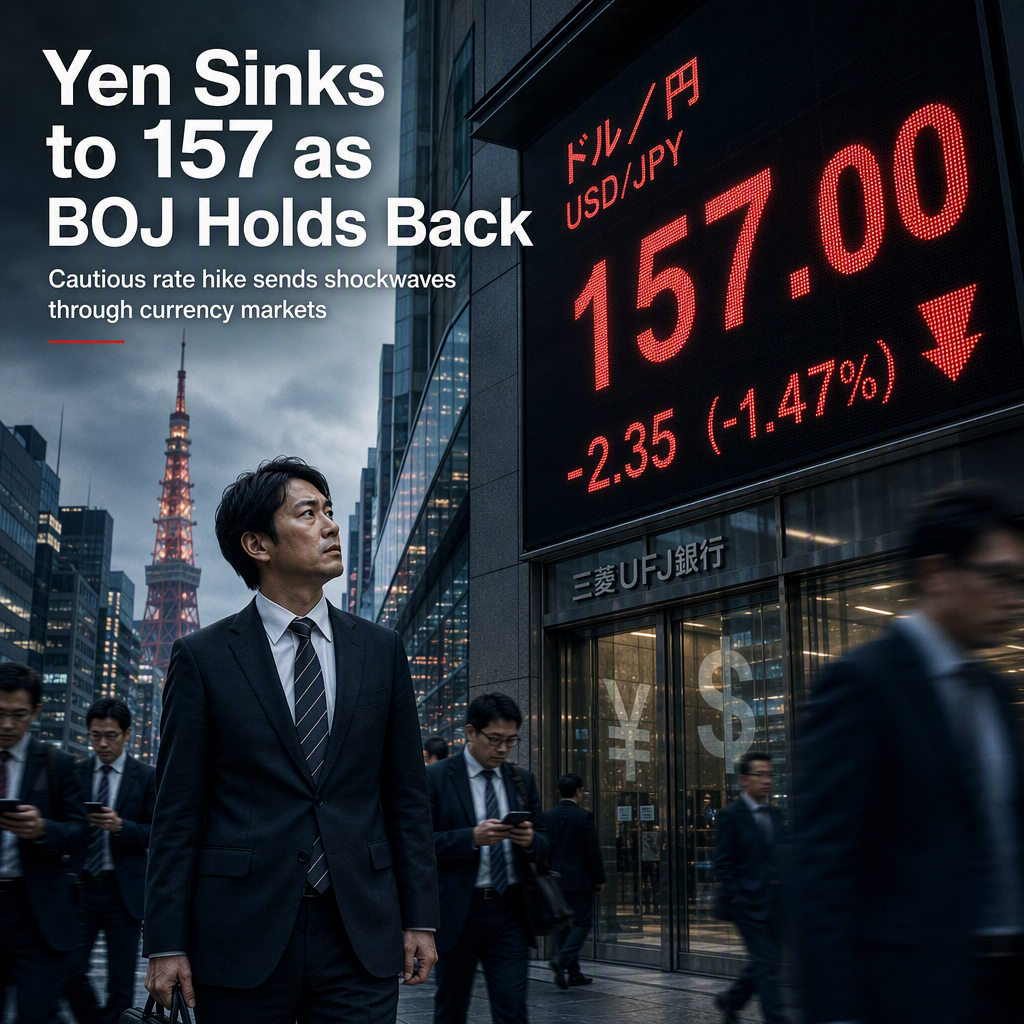
The Japanese yen weakened to 157 against the U.S. dollar on Friday following the Bank of Japan's (BOJ) decision to raise its policy rate by a quarter point to 1.25% around midday, disappointing market expectations for more aggressive tightening measures [1]. This move came after Japan's consumer inflation for August was reported lower than anticipated, which further reduced hopes for larger rate hikes by the BOJ [1]. Notably, no BOJ policy board member proposed a half-point hike, signaling a cautious approach to monetary tightening [1].
Market participants had previously speculated about the possibility of a stronger response from the BOJ due to ongoing yen weakness and persistent inflationary pressures. However, the modest rate increase and the split vote led traders to scale back expectations for additional near-term tightening [1]. A Tokyo-based currency strategist commented that the BOJ's decision, combined with the lack of support for a larger move, sent a clear signal to the market that the central bank is not prepared for aggressive action [1].
The yen's decline to the 157 level underscores continued pressure on the currency, especially as the U.S. Federal Reserve maintains a hawkish stance on interest rates [1]. Technical analysts identified the next support for the yen near the 158 mark, with resistance currently at 155 [1]. In response to the yen's weakness, some market participants are now monitoring upcoming economic data and BOJ commentary for further policy direction, and are bracing for potential intervention should the yen's decline accelerate [1].
CONCLUSION
The BOJ's cautious quarter-point rate hike to 1.25% and lack of support for a larger move led to a sharp weakening of the yen to 157 per dollar. Market sentiment turned negative as hopes for aggressive tightening faded, and attention now shifts to future economic data and possible intervention if yen weakness persists.