
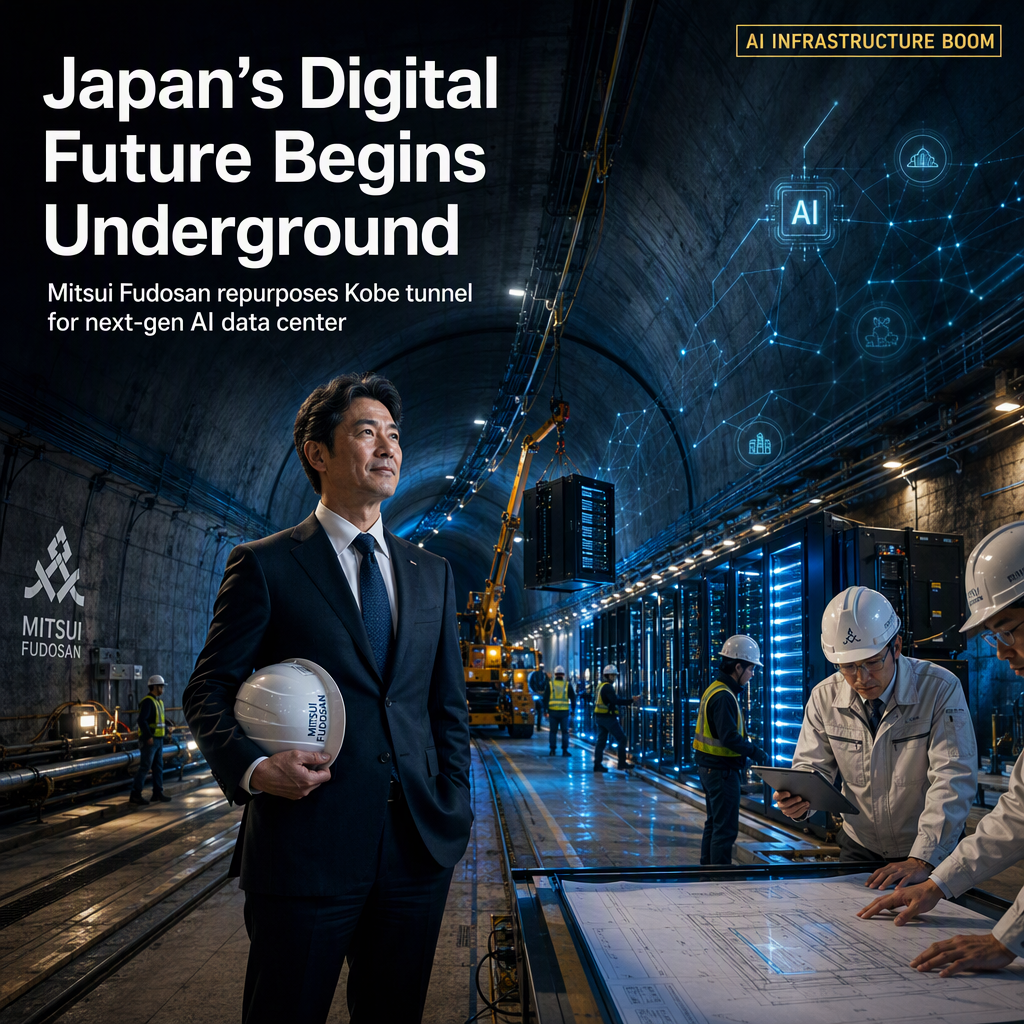
Japanese real estate developer Mitsui Fudosan has announced plans to construct a data center in the Suma Belt Conveyor tunnel, an abandoned underground facility in Kobe, Japan. This initiative aims to repurpose unused infrastructure and address the challenges associated with building data centers above ground, such as land acquisition, zoning issues, and exposure to environmental risks [1]. The Kobe site is considered particularly advantageous due to its naturally cool temperatures and resistance to natural disasters, which are expected to enhance the reliability and energy efficiency of the data center [1].
The project comes amid surging demand for data centers across Asia, driven by the rapid expansion of artificial intelligence applications. This trend has sparked a wave of multi-billion dollar investments in Japan's data center sector, with recent projects ranging from $4 billion to $15 billion, primarily led by major power producers and real estate companies [1]. Although Mitsui Fudosan has not disclosed specific financial terms or investment figures for the Kobe project, industry analysts highlight that underground data centers offer a competitive edge in cooling costs and disaster resilience [1].
Market observers are closely monitoring the development, as it reflects the growing convergence between Japan’s real estate and technology sectors to support the needs of an AI-driven economy. The Kobe tunnel project is expected to attract further investment in digital infrastructure and may set a precedent for repurposing obsolete assets for advanced technology applications [1].
CONCLUSION
Mitsui Fudosan's plan to build a data center in Kobe's abandoned tunnel underscores the innovative use of existing infrastructure to meet rising AI-driven demand. While no financial details were disclosed, the project is seen as a model for disaster-resilient, energy-efficient data centers and is likely to spur further investment in Japan's digital transformation. Market sentiment is positive, reflecting optimism about the sector's growth and the strategic advantages of underground facilities.