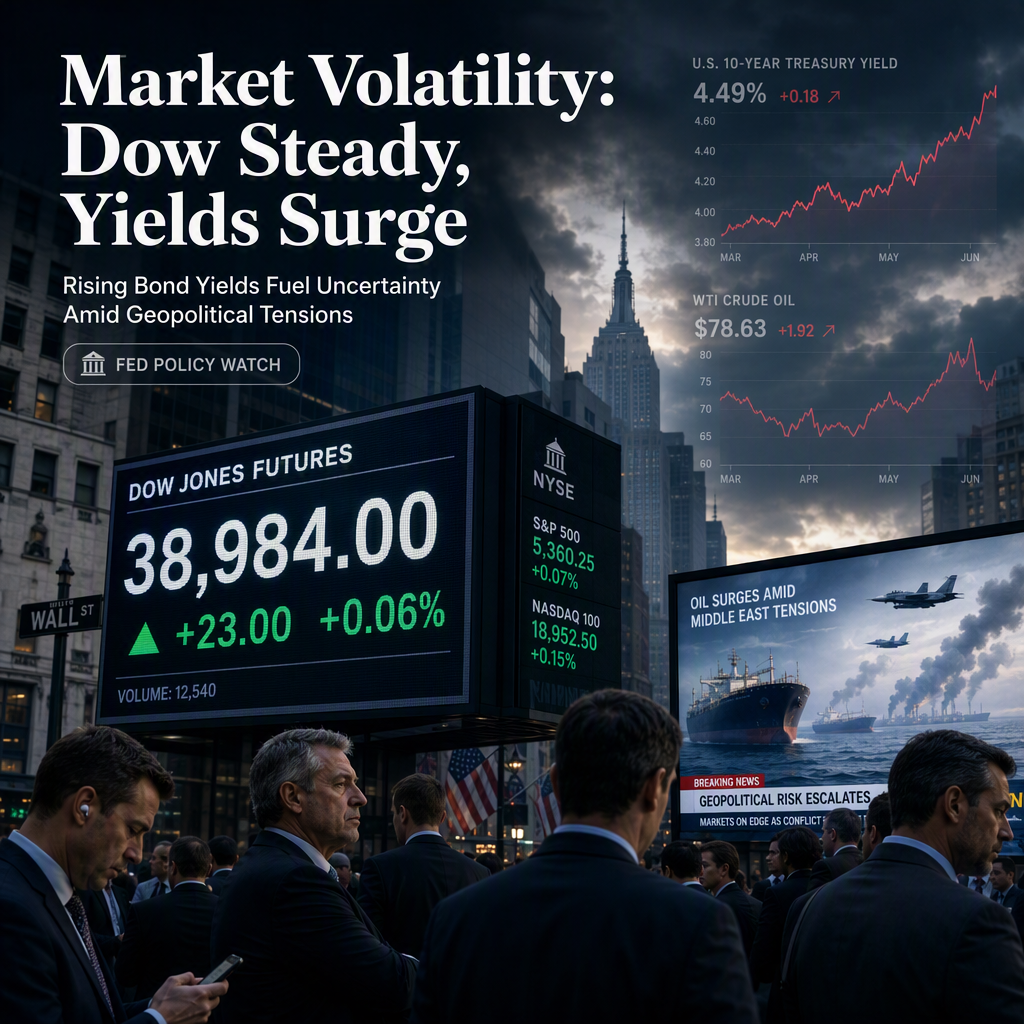
Dow Jones futures edged up by 0.05% to trade near 52,850 during European hours on Wednesday, while S&P 500 futures declined by 0.4% to around 7,640 and Nasdaq 100 futures slipped 0.19% to approximately 29,070, reflecting a mixed performance in US stock futures as traders adopted a cautious stance amid a global bond selloff [1]. The benchmark 10-year US Treasury yield surged to 4.80%, marking its highest level since early 2025, which contributed to the cautious market sentiment [1].
Analysts at MUFG/BTMU noted that markets are now pricing in a modestly higher probability of further Federal Reserve tightening, with 17 basis points of Fed hikes priced in for the September 16th FOMC meeting. They attributed this shift to the recent rise in energy costs, warning that continued increases in energy prices could make it more difficult for the Fed to keep rates on hold [1].
Geopolitical tensions also weighed on market sentiment, as higher oil prices amplified concerns over persistent inflation and potential Fed interest rate hikes. Energy markets remained elevated following US military strikes against Iranian targets near the Strait of Hormuz, which President Donald Trump described as retaliation for Tehran’s attempts to place sea mines in the waterway and an earlier attack on a US military base [1].
The mixed action in futures followed a turbulent regular trading session on Tuesday, during which the Dow Jones fell 0.79%, the S&P 500 declined 0.71%, and the Nasdaq Composite dropped 1.03%. These losses extended the losing streak for all three major benchmarks to a third consecutive session, with consumer discretionary, industrial, and materials stocks hit hardest by the selloff [1]. Market participants are now turning their attention to upcoming economic indicators and corporate earnings, including ADP private payrolls data, the Federal Reserve’s Beige Book, and quarterly results from Broadcom, Hewlett Packard, and Snowflake [1].
CONCLUSION
US equity markets are experiencing heightened volatility amid rising bond yields, persistent inflation concerns, and escalating geopolitical tensions. Investors remain cautious, awaiting key economic data and corporate earnings for further direction. The market's focus on Fed policy and energy prices suggests continued uncertainty in the near term.