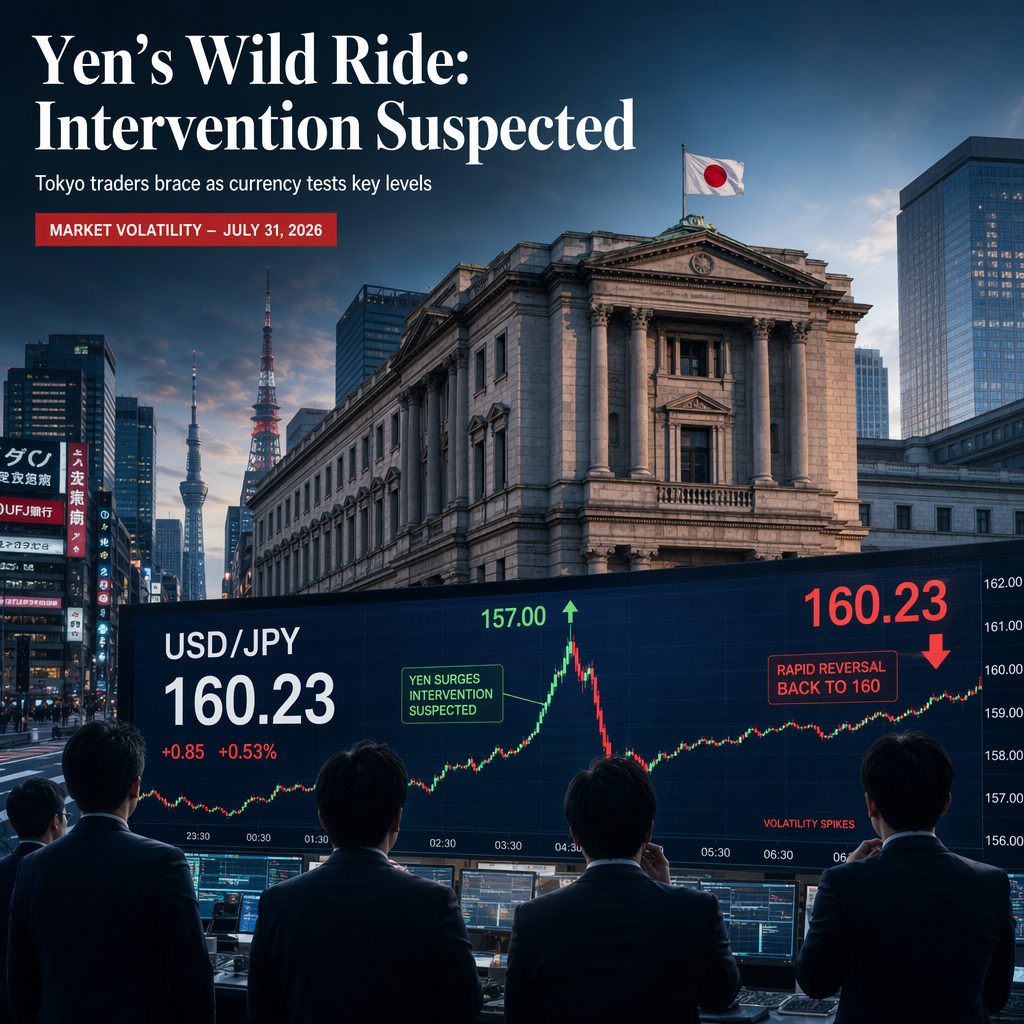
On July 31, 2026, the Japanese yen experienced significant volatility against the U.S. dollar, initially strengthening to the 157-158 range in overnight trading, which market participants attributed to suspected intervention by the Japanese government and the Bank of Japan (BOJ) in the foreign exchange market [1][2]. According to NHK World, the yen briefly reached the 157 yen per dollar level during morning trading, with financial market analysts highlighting the likelihood of official intervention due to the rapid and large-scale movement in a period of low market liquidity [2]. Nikkei Asia reported that the yen's overnight rally to 158 was quickly reversed as commercial demand for dollars resumed when Tokyo trading opened, pushing the currency back into the 160 range [1].
Technical analysts from both sources emphasized the importance of the 158 yen per dollar support level, noting that the yen's break below this threshold was a significant technical event. NHK World cited an analyst stating that the move below 158 yen was crucial and increased short-term yen appreciation pressure, while further declines below 157 yen could lead to additional yen strengthening [2]. Nikkei Asia described the 160 yen per dollar level as a psychological threshold, with further depreciation potentially prompting more intervention or stronger warnings from Japanese authorities [1].
Market sentiment remains cautious and volatile, with traders closely monitoring upcoming BOJ and U.S. Federal Reserve meetings for signals on future rate moves. Expectations of an early BOJ rate hike have increased as the yen recently fell to a 39-year low of 163 per dollar, driven by geopolitical tensions and policy signals [1]. Both sources noted that investors are advised to remain vigilant and responsive to sudden price movements, especially as the possibility of further intervention or technical breaches could significantly impact the currency's trajectory [1][2].
While there is no official confirmation of intervention, market participants widely believe that government action was the primary driver of the yen's sharp appreciation, given the timing and scale of the move [2].
CONCLUSION
The yen's sharp overnight rally and subsequent reversal highlight heightened volatility and intervention speculation in the currency markets. Key technical levels, particularly 158 and 160 yen per dollar, are being closely watched, with further moves likely to trigger additional market responses. Investors are urged to stay alert as central bank meetings and potential interventions continue to shape the yen's outlook.