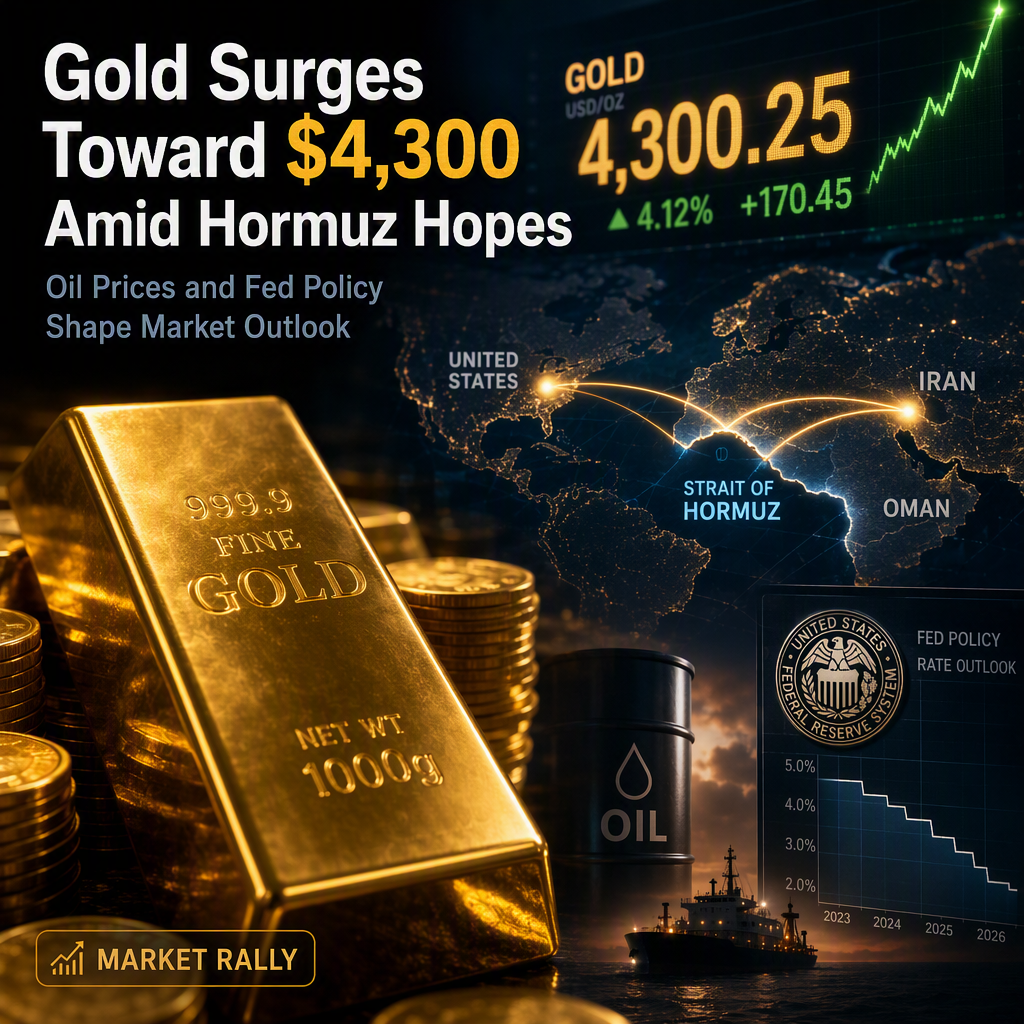
Gold experienced a sharp rally of more than 4% on Wednesday, with prices moving closer to $4,300 per ounce, driven by optimism that a potential US-Iran agreement and lower energy prices could ease inflationary pressures. ING analysts Warren Patterson and Ewa Manthey attribute the rally to a softer US dollar, reduced expectations for Federal Reserve tightening, and ongoing investment demand from China, all of which have supported bullion in the current environment [1].
On Thursday, gold (XAU/USD) consolidated its gains, trading around $4,270, up 0.53% on the day, after briefly climbing above $4,300. The rally followed Iran's announcement of an understanding with Oman on a proposed shipping route through the Strait of Hormuz, with a joint statement in the final drafting stages. However, Iran clarified that the agreement would only establish a temporary shipping route and not a full reopening of the Strait, and denied holding talks with the United States, stating discussions with Oman are strictly bilateral. Meanwhile, Yemen’s Houthis claimed attacks on two Saudi oil tankers, adding to the region's geopolitical risk premium [2].
Lower oil prices have created a supportive backdrop for gold, as a sustained decline in energy prices is expected to ease inflation concerns and reduce pressure on the Federal Reserve to raise interest rates. Despite this, inflation remains above the Fed’s 2% target, keeping expectations of tighter monetary policy alive. According to the CME FedWatch Tool, the probability of a 25-basis-point Fed rate hike in September has decreased to 52.9% from 63.4% a week earlier, reflecting softer US labor-market data and moderating ADP employment figures. Analysts from TD Securities anticipate that the trend of moderating job gains is likely to continue with the upcoming Nonfarm Payrolls report [2].
Technical analysis shows XAU/USD recovering above the 50-day Simple Moving Average at $4,157, with the Relative Strength Index at 61 and the MACD indicator in positive territory, suggesting improving upside pressure despite resistance from higher moving averages [2].
In related markets, the Indian Rupee (USD/INR) has been supported by lower oil prices and strong capital inflows, with the Reserve Bank of India holding the repo rate at 5.25%, lowering inflation forecasts, and increasing growth projections. However, OCBC analysts note that choppy oil prices amid ongoing US-Iran geopolitical developments and elevated US Treasury yields may cap further INR gains [3].
CONCLUSION
Gold's rally above 4% toward $4,300 was fueled by optimism over a potential US-Iran agreement and lower energy prices, which have eased inflation concerns and reduced expectations for Fed tightening. While technicals suggest further upside, persistent geopolitical risks and uncertainty around Fed policy continue to influence market sentiment. The Indian Rupee also benefits from lower oil and capital inflows, but remains sensitive to ongoing developments in the region.