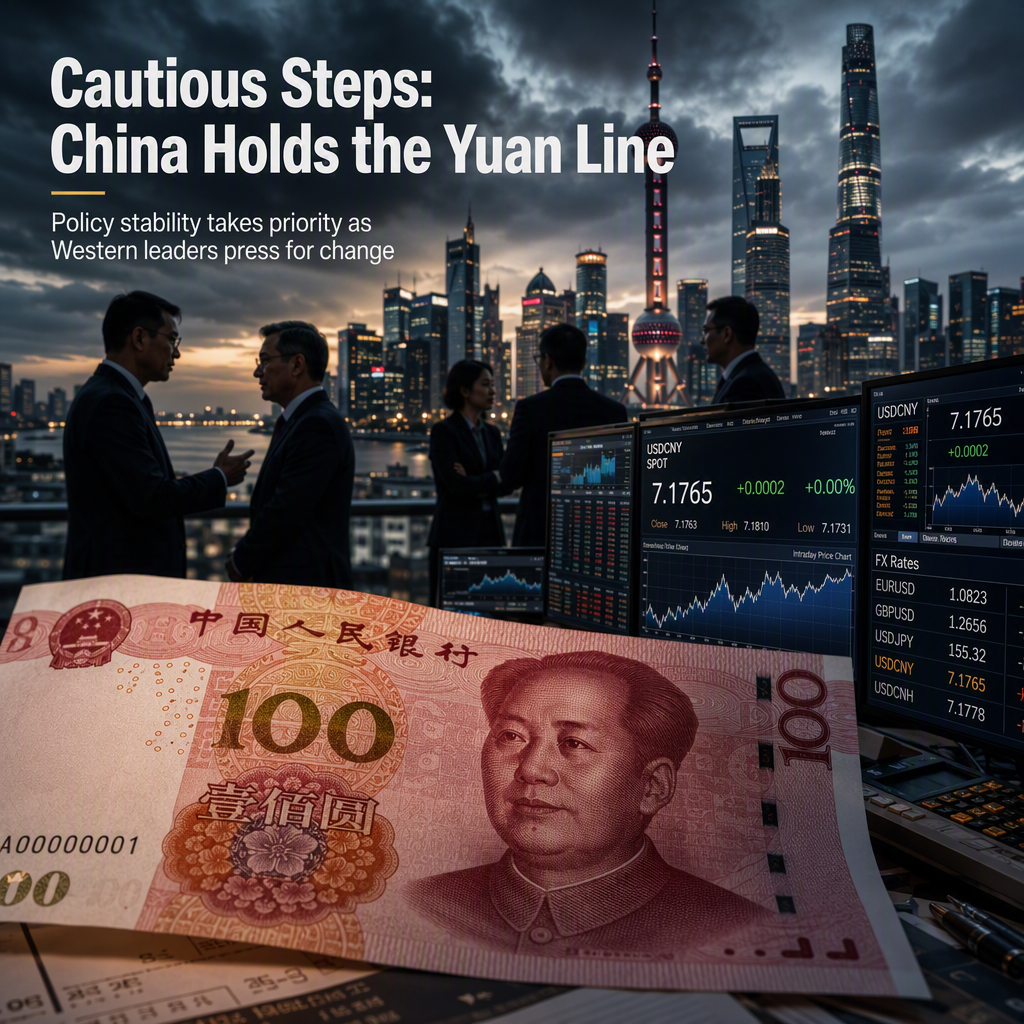
China is taking a cautious approach to yuan appreciation as US and European leaders demand a stronger currency to address global trade imbalances during the Trump-Xi summit this week [1]. The yuan is considered up to 30% undervalued, but Chinese policymakers are wary that rapid appreciation could harm the country's manufacturing sector, which is already facing thin profit margins and weak demand, and could worsen unemployment in a deflationary environment [1]. The People's Bank of China continues to set the daily midpoint for the yuan with a bias toward stability, avoiding sharp moves in either direction [1].
Analysts warn that a stronger yuan would squeeze exporters, many of whom are already operating on slim margins, and authorities are particularly concerned about job losses and the stability of the export sector [1]. Negotiations between the US and China are expected to address currency issues, but few anticipate a breakthrough, as China's approach remains incremental despite persistent Western pressure [1].
There are no signs of imminent policy changes or interventions that would significantly alter the yuan's trajectory. Most traders expect continued range-bound trading for the Chinese currency, with the central bank maintaining a cautious stance [1]. Technical levels to watch include the yuan's support around key psychological thresholds versus the US dollar, with resistance noted in the event of unexpected policy announcements [1].
Forward-looking statements from market participants suggest that unless there is a dramatic shift in global demand or domestic policy, the yuan is likely to see only gradual movements [1].
CONCLUSION
China's measured approach to yuan appreciation reflects concerns about domestic economic stability and export sector health, despite ongoing Western demands for a stronger currency. Market participants expect continued stability and gradual movements in the yuan, with no immediate policy shifts anticipated. The persistent divide over currency policy underscores broader challenges in global trade rebalancing.