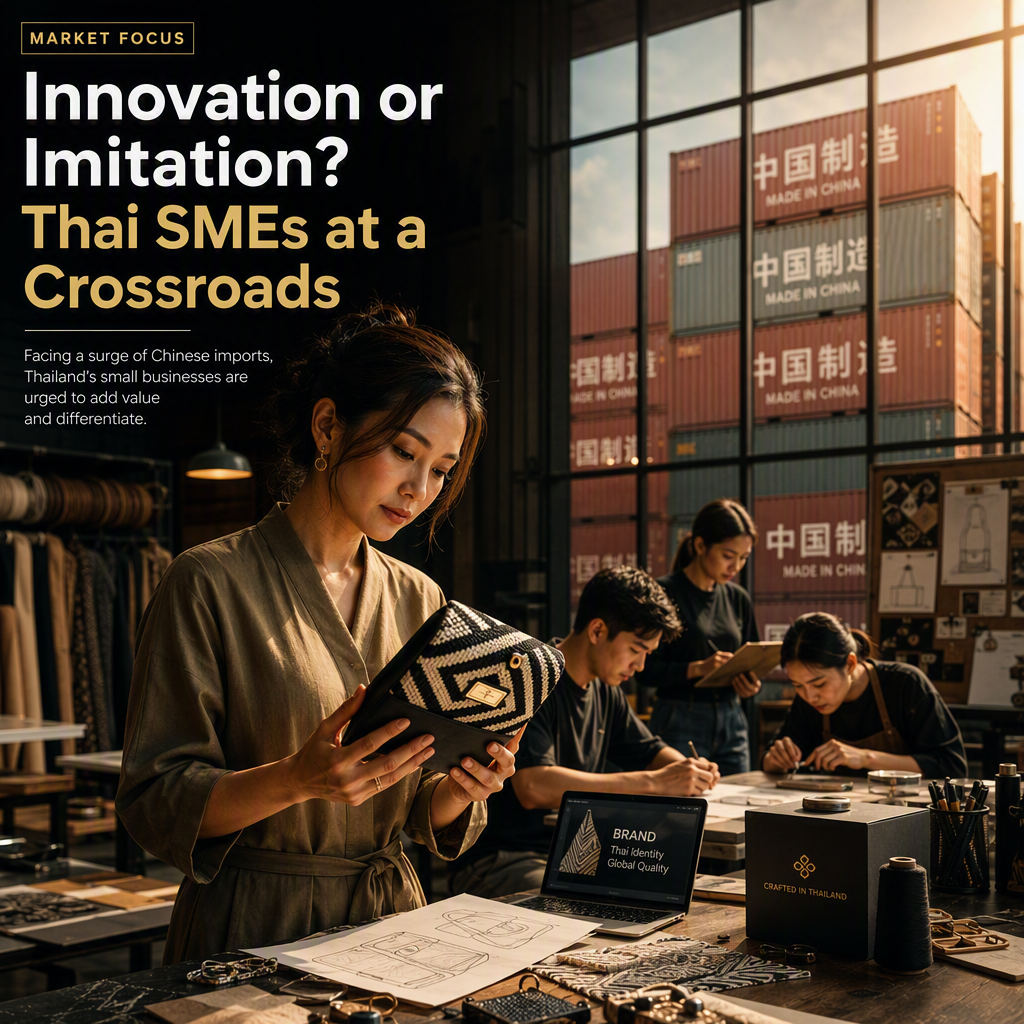
The acting director general of Thailand's Office of Small and Medium Enterprises Promotion, Panita Shinawatra, has called on Thai small and midsize enterprises (SMEs) to focus on creating products with higher added value in order to counter the influx of inexpensive imports from China [1]. Shinawatra warned that engaging in a price war with Chinese competitors is unsustainable, especially as the volume of low-cost imports continues to rise, intensifying competition in sectors such as textiles, electronics, and consumer goods [1].
She emphasized that Thai SMEs should prioritize innovation, branding, and product differentiation to compete effectively, stating, 'Thai SMEs cannot win in a price war against China. Instead, they must innovate and add value to their goods and services' [1]. The government is encouraging SMEs to invest in quality improvement, product design, and niche markets to maintain profitability and achieve sustainable growth [1].
To support this transition, the Office of Small and Medium Enterprises Promotion is considering additional measures, including training programs, improved access to finance, and market access initiatives to help local businesses upgrade their offerings [1]. No specific financial data, price levels, or technical indicators were provided in the article [1].
CONCLUSION
Thai SMEs are facing mounting pressure from low-cost Chinese imports, prompting government officials to advocate for innovation and value-added strategies. While no immediate market reaction or financial data was cited, the push for quality and differentiation is expected to shape the competitive landscape for Thai small businesses. The government's planned support measures may help SMEs adapt and sustain growth in the face of intensified competition.