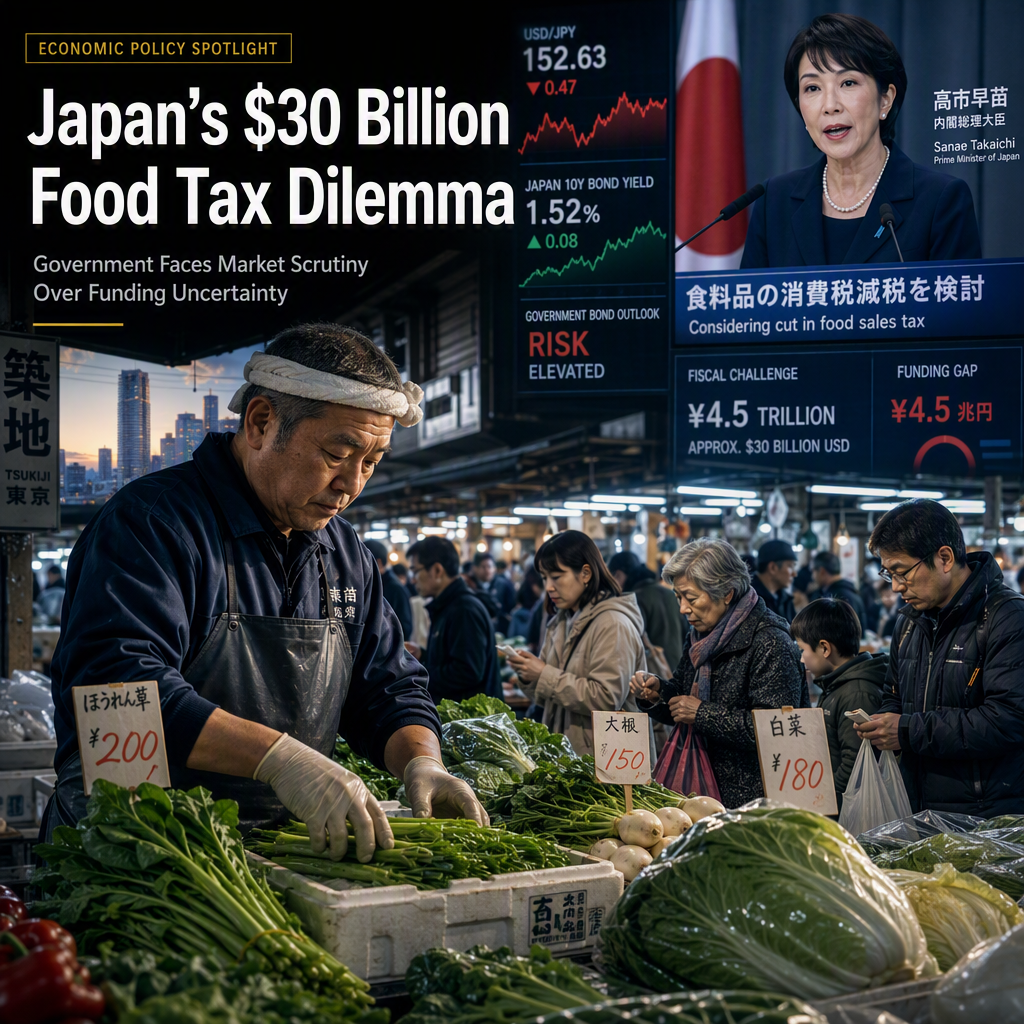
Japanese Prime Minister Sanae Takaichi reiterated her intention to lower the consumption tax on food, emphasizing that the measure will not be financed through deficit-covering bonds [1]. The proposed reduction in the food sales tax is estimated to require approximately $30 billion in funding, raising significant questions about how the government will secure these resources while also pursuing growth investments and increased defense spending [1].
The plan has sparked concerns among market participants regarding Japan's fiscal management, as the government must balance the objective of alleviating inflationary pressures on households with the need to maintain economic stimulus and support defense outlays [1]. Analysts have warned that the lack of clarity around funding sources for the tax cut could heighten market unease, with potential implications for bond yields and the yen [1].
As the debate continues, the outcome of these policy decisions is expected to influence investor sentiment and Japan's broader macroeconomic outlook [1]. The government's approach to securing stable funding without increasing the national debt remains a key point of focus for both markets and analysts [1].
CONCLUSION
Japan's plan to cut the food sales tax presents a $30 billion funding challenge, with the government ruling out deficit-covering bonds as a solution. The uncertainty over funding sources and competing fiscal priorities is generating market concern, and the final policy direction will likely impact investor sentiment and the country's economic outlook.