
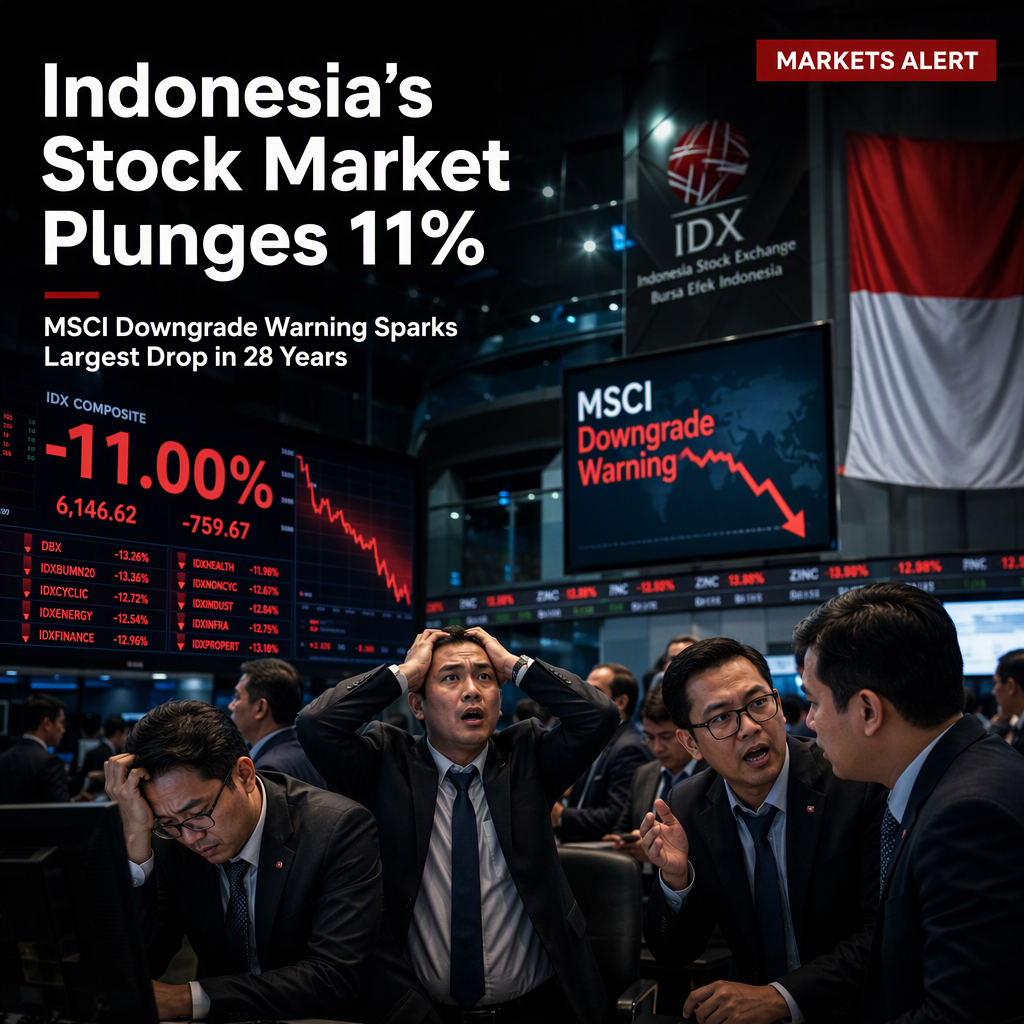
Indonesian stocks experienced a dramatic sell-off on Friday after MSCI, a leading global financial services company, announced it is considering downgrading the MSCI Indonesia Index from emerging market to standalone market status. This announcement represents a significant setback for Indonesia, which has been striving to maintain its emerging market classification amid ongoing policy uncertainty and concerns over market transparency [1].
The Jakarta Composite Index (JCI) plunged over 11%, marking its largest single-day decline in 28 years. The sharp drop reflects heightened investor anxiety over potential capital outflows and the broader impact on Indonesia’s financial markets should the downgrade occur. Market analysts estimate that up to $60 billion could exit Indonesia's stock market, as funds tracking MSCI's emerging market indices would be compelled to rebalance and reduce their exposure to Indonesian equities [1].
A Jakarta-based equity strategist described the MSCI warning as a "wake-up call" for regulators and market participants, emphasizing the real risk of accelerated capital flight if the downgrade materializes. Technical analysis indicates the JCI has broken through key support levels, with the next major support at 5,000 and resistance at the previous high near 5,800. Market sentiment has turned sharply negative, with traders recommending caution and a wait-and-see approach regarding Indonesian equities [1].
Investors are now closely monitoring regulatory responses and any measures that may be taken to address MSCI's concerns. The market reaction highlights the critical role of index provider classifications in shaping global capital flows and underscores the potential for significant changes to Indonesia’s investment landscape if the downgrade proceeds [1].
CONCLUSION
The MSCI downgrade warning has triggered Indonesia's largest stock market drop in nearly three decades, reflecting deep investor concern over potential capital outflows and market reclassification. Unless Indonesia addresses MSCI's requirements, the country faces the risk of losing its emerging market status and the associated investment inflows. Market participants are adopting a cautious stance as they await regulatory action.