
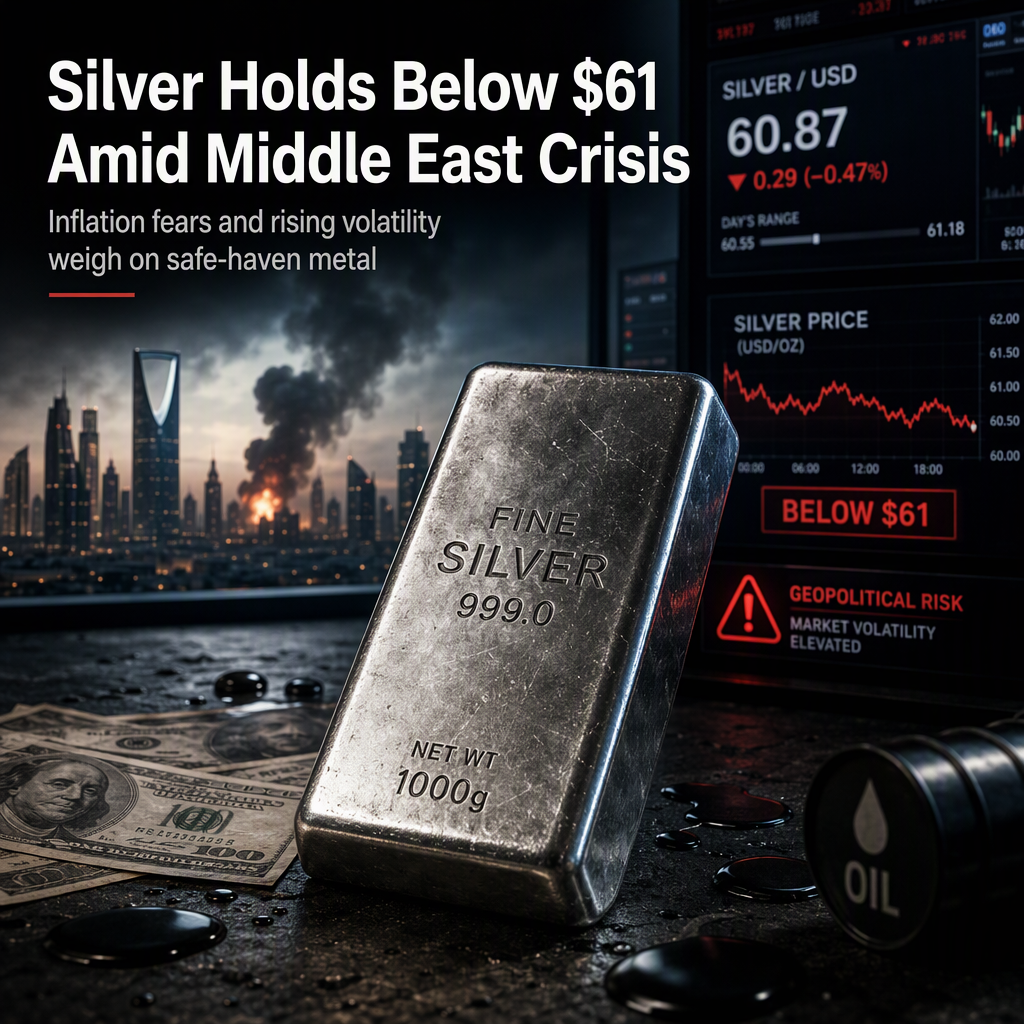
Silver (XAG/USD) prices retreated to around $60.70 per troy ounce during European trading hours on Monday, following a gain of over 2.5% in the previous session. The pullback comes as the market digests heightened geopolitical risks after deadly attacks on Riyadh’s King Khalid International Airport, which killed 12 people and injured more than 300. The attacks, attributed to Iran-backed Houthi militants, have prompted U.S. President Donald Trump to consider joining Saudi Arabia in retaliatory actions against the Houthis in Yemen. Additionally, a drone strike on an oil tanker near the Sohar anchorage off Oman over the weekend underscored ongoing vulnerabilities in the region, despite indications of increased crude exports from the Persian Gulf [1].
The geopolitical instability has contributed to inflationary concerns, as crude oil prices may rebound in response to the attacks. HSBC strategists noted that a surge in oil prices driven by the Iran conflict has been a major factor behind the bond market shock in 2026, feeding directly into fixed income volatility and repricing [1].
On the macroeconomic front, the University of Michigan's Consumer Sentiment Index fell to 46.3 in October from 48.1 in September, missing market expectations of 47.6. According to the CME FedWatch tool, the probability of a 25 basis point rate hike this month has decreased to 19.4% from 24.4% the previous week, while market participants are strongly pricing in an 86% chance of a rate increase at the Federal Reserve's December meeting [1].
Silver, as a non-yielding asset, typically benefits from lower interest rates and is considered a safe-haven during periods of geopolitical instability and inflation. However, the current environment of rising energy costs and fixed income volatility has kept silver prices below the $61.00 mark, despite recent gains [1].
CONCLUSION
Silver prices remain under pressure below $61.00 per ounce amid renewed geopolitical tensions and inflationary fears following attacks in the Middle East. While silver saw gains in the previous session, ongoing market volatility and expectations of future rate hikes are tempering further upside. Investors are closely watching developments in the region and central bank policy signals for future direction.