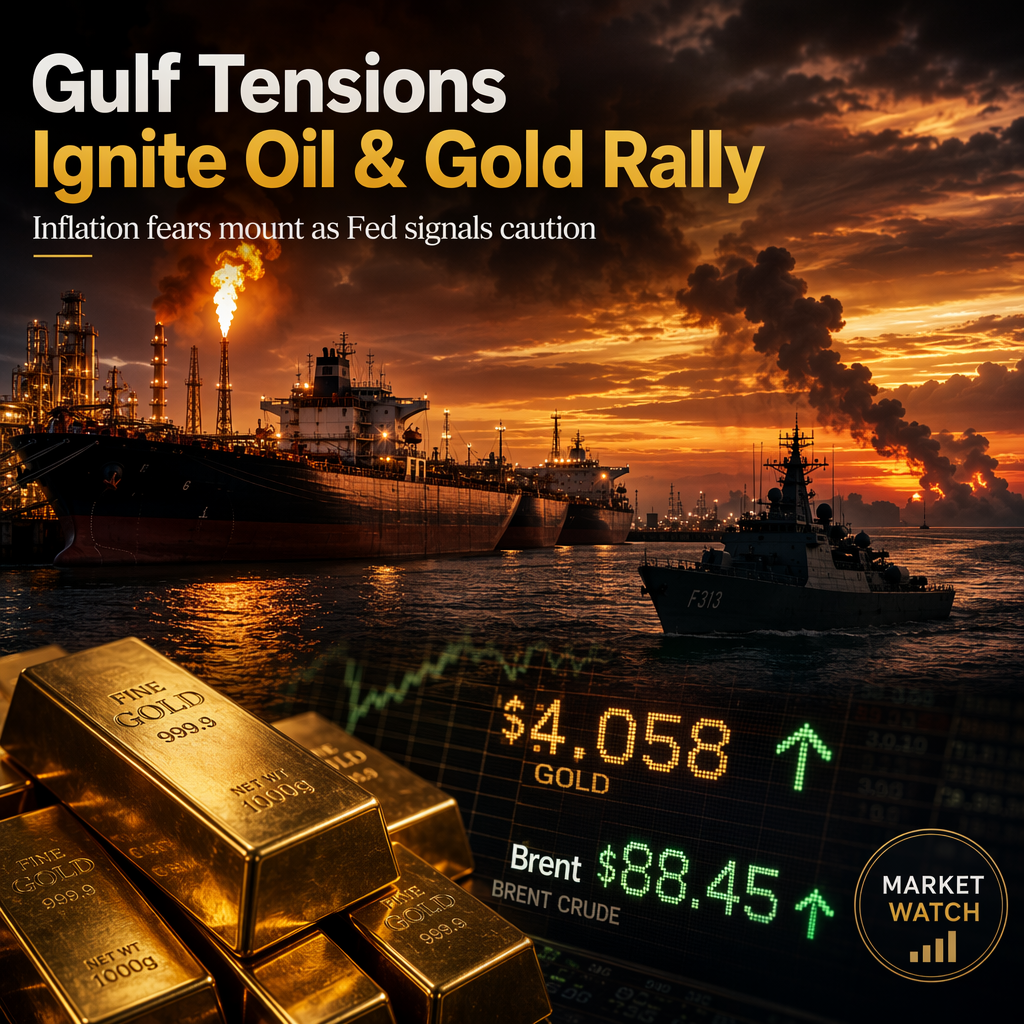
Geopolitical tensions in the Gulf region have intensified, with the United States and Iran engaging in a tenth consecutive day of military strikes, and Houthi militants in Yemen threatening new maritime actions in the Red Sea [1][2]. The U.S. Central Command reported strikes on Iranian command centers, launch sites, and air defenses, while Iran targeted U.S. military sites in Kuwait and Jordan [1][2]. Diplomatic efforts are ongoing, with Iranian officials meeting mediators in Pakistan and a 10-day ceasefire offer reportedly extended to Tehran to restore a previous interim agreement [2].
These developments have sustained a geopolitical premium in energy markets, pushing Brent crude toward $88.45 per barrel and U.S. gasoline above $4 per gallon [1]. The risk of disruptions to shipping through the Strait of Hormuz could further tighten global oil supplies and elevate geopolitical risk [1]. Gold (XAU/USD) has also edged higher, trading around $4,058, up 1.27% on the day, as buyers defend the $4,000 psychological level [2]. However, gold's upside is limited by expectations that the Federal Reserve will maintain or even increase interest rates in response to inflationary pressures from higher energy prices [2].
The U.S. Dollar remains the preferred safe-haven asset, with the Dollar Index (DXY) hovering just below 101.00, little changed on the day [2]. Analysts at ING note that the FX market is reacting to escalating Gulf tensions, with the Dollar finding broad-based support [2]. OCBC strategists observe that gold is consolidating around recent lows and suggest that a more sustained recovery in gold prices would require oil prices to retreat, real yields to ease, and Fed tightening expectations to diminish [2].
Technical analysis indicates that XAU/USD is stabilizing above $4,000, testing the 20-day Simple Moving Average at $4,062, with the Relative Strength Index at 45 and the Average Directional Index near 39, signaling a strong prevailing trend but weak bullish momentum [2].
CONCLUSION
Escalating Gulf tensions are driving both oil and gold prices higher, with markets pricing in a geopolitical premium and inflation risks. However, expectations of continued Fed tightening are capping gold's upside, while the U.S. Dollar remains the safe-haven of choice. The situation remains fluid, with further market moves likely dependent on developments in the Gulf and central bank policy signals.