
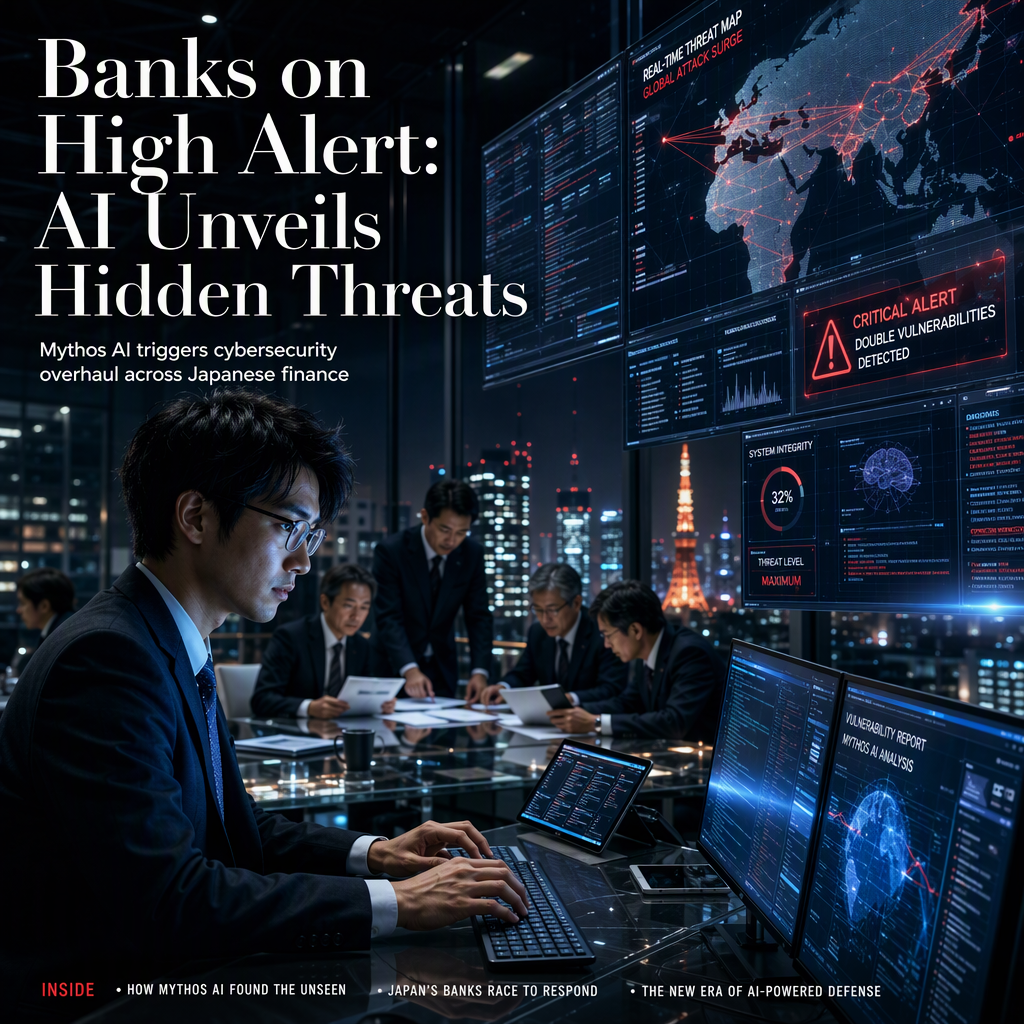
Major Japanese banks have identified twice as many system vulnerabilities following the release of Mythos AI, according to Nikkei. This surge in discoveries is attributed to the dual impact of advanced AI tools, which both enhance the ability to detect weaknesses and increase the risk of sophisticated cyberattacks [1]. The financial sector is responding by reviewing protocols, investing in AI-powered detection and mitigation systems, and considering temporary service suspensions to prevent major breaches [1].
Industry experts emphasize that while AI accelerates vulnerability identification, it also enables attackers to exploit these gaps more efficiently. As a result, banks are adopting real-time monitoring and incident response strategies, and some are exploring partnerships with domestic tech firms to develop AI-based cybersecurity solutions that keep sensitive data within Japan [1].
Regulatory bodies are intensifying oversight, requiring banks to report vulnerabilities and implement stringent countermeasures. The discovery of vulnerabilities spans core banking systems, payment platforms, and online services, prompting urgent reviews and prioritization of patches and upgrades to critical IT infrastructure components [1].
Market analysts suggest that, despite potential short-term disruptions and service suspensions that may affect trading activity and customer sentiment, the increased awareness and improved detection capabilities are expected to strengthen the sector in the long term [1].
CONCLUSION
The adoption of Mythos AI has led Japanese banks to uncover twice as many vulnerabilities, prompting urgent cybersecurity upgrades and regulatory scrutiny. While short-term disruptions are possible, analysts believe these measures will ultimately enhance the sector's resilience and market confidence.