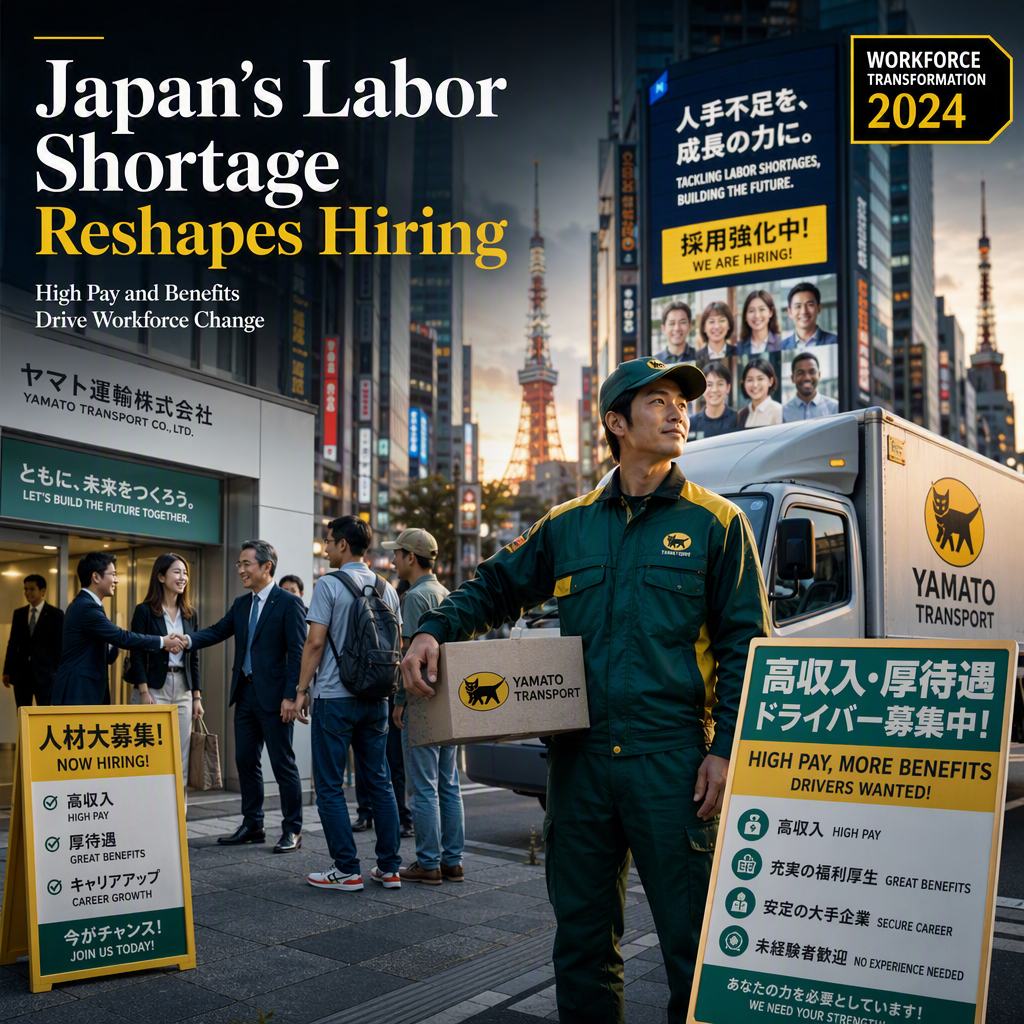
Japan is currently experiencing a severe labor shortage, with the transport sector being particularly affected. Companies such as Yamato Transport are responding to this challenge by offering high salaries and extensive benefits in an effort to attract new workers. Notably, these companies are removing traditional barriers to employment, such as requirements for experience, gender, or education, signaling a significant shift in Japan's employment practices and recruitment strategies [1].
The article highlights that recruitment signs now promise better jobs, but there are fewer people available to take them. This competitive environment among employers underscores the urgency of the labor shortage and the lengths to which companies are willing to go to secure talent [1].
While the article does not provide specific data points such as the exact number of job openings, salary figures, or market reactions, it emphasizes the critical nature of the staffing shortfall and the resulting changes in hiring practices. There are no forward-looking statements or analyst opinions included in the source [1].
CONCLUSION
Japan's acute labor shortage is prompting companies to offer better pay and benefits while lowering traditional hiring barriers. This trend reflects a significant transformation in the country's employment landscape, with potential implications for wage growth and sector competitiveness.