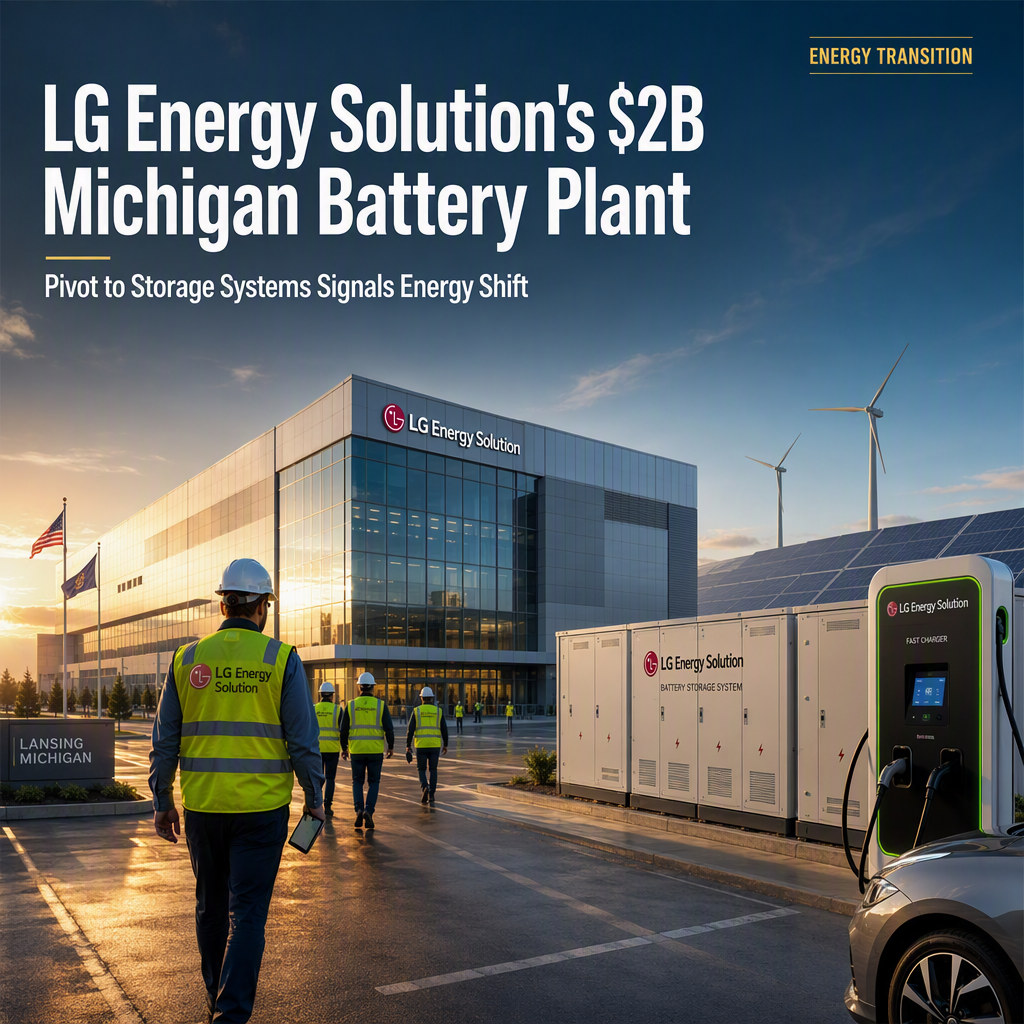
LG Energy Solution has commenced production at a new lithium-ion battery plant in Lansing, Michigan, following a delay attributed to a slowdown in U.S. electric vehicle (EV) demand [1]. The facility, representing an investment of approximately $2 billion, marks a strategic pivot for LG Energy Solution as it shifts its focus from primarily serving the EV market to emphasizing battery storage systems [1]. This transition reflects broader market trends, with battery storage costs now falling below those of gas-fired power plants for the first time, signaling a significant milestone in the energy transition [1].
The Lansing plant is expected to supply battery cells to major automakers, including Toyota and Tesla, as well as support the growing demand for grid storage and non-EV applications [1]. Industry analysts cited in the article note that LG Energy Solution's move positions the company strongly within the U.S. market, particularly as traditional EV battery demand softens [1]. The shift underscores the increasing importance of renewable energy storage and infrastructure, with LG Energy Solution Vertech as a primary recipient of the plant's output [1].
The $2 billion investment demonstrates LG's commitment to expanding its manufacturing presence in the United States and adapting to evolving industry needs [1]. The facility is set to play a key role in supporting both the automotive and energy storage sectors, aligning with the company's strategy to address changing market dynamics [1].
CONCLUSION
LG Energy Solution's opening of its $2 billion Michigan battery plant and strategic pivot toward storage systems highlight the company's adaptability amid slowing EV demand. This move is expected to strengthen LG's position in the U.S. market and support the ongoing energy transition, with significant implications for both automotive and renewable energy storage sectors.