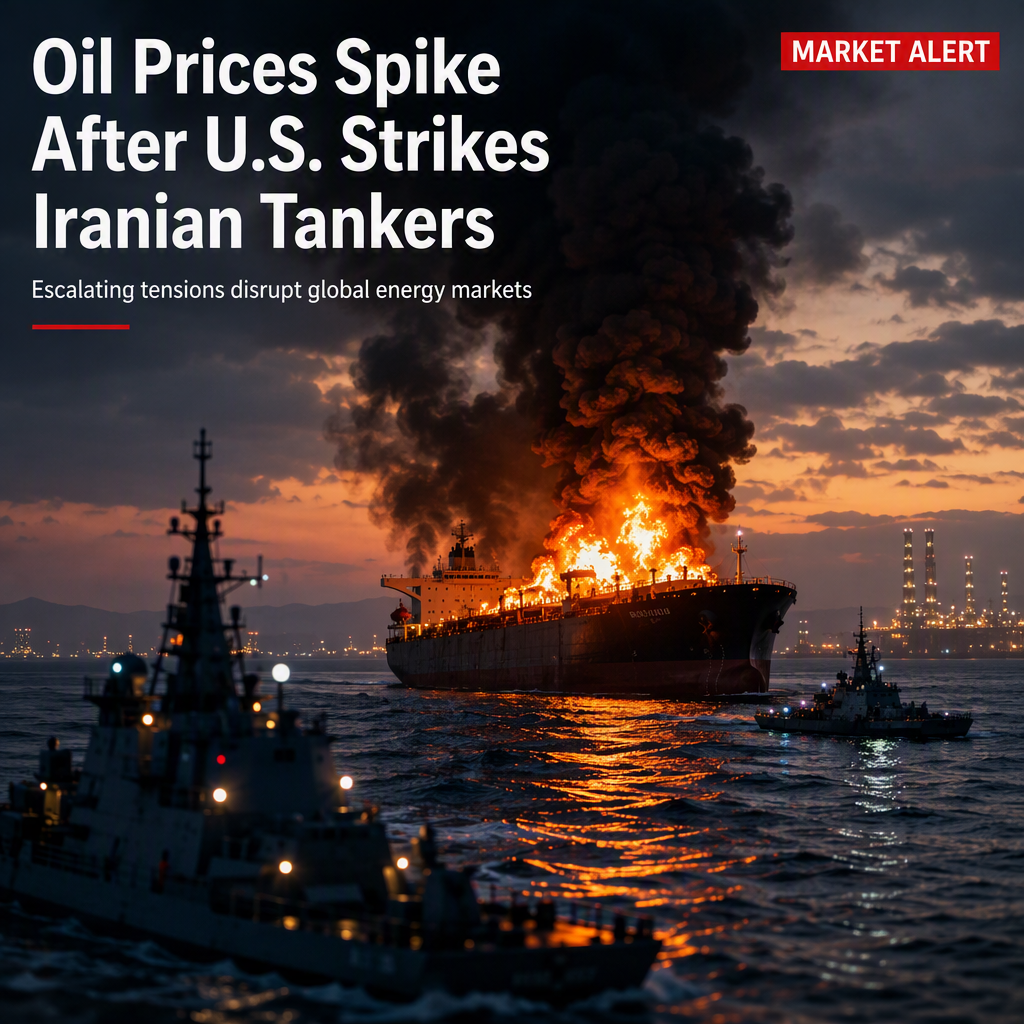
The U.S. military destroyed several Iranian oil tankers on Saturday in retaliation for Iran firing ballistic missiles at U.S. Navy ships, marking a significant escalation in military tensions between the two countries [1]. This exchange has intensified volatility in global oil markets, particularly due to concerns over potential disruptions in the Strait of Hormuz, a vital passageway for global oil shipments [1].
The immediate market reaction was pronounced, with crude oil prices jumping several dollars per barrel following news of the strikes, as traders began pricing in increased geopolitical risk premiums [1]. The national average price for a gallon of gasoline in the U.S. has surged by over 10% in the past week, reaching new highs for the year, directly impacting consumers and industries [1].
Energy sector analysts have highlighted key technical levels, noting resistance for crude oil futures at $92.50 and $97.00 per barrel. If prices break above these thresholds, momentum could drive crude toward the psychologically significant $100 mark, while support is identified at $88.00 per barrel [1].
Market strategists and analysts are advising investors to closely monitor ongoing geopolitical developments, as any further escalation could lead to heightened volatility and present both risks and trading opportunities in the energy sector [1].
CONCLUSION
The U.S. strikes on Iranian oil tankers have triggered a sharp rise in oil and gasoline prices, with markets reacting to the heightened risk of supply disruptions. Analysts warn that continued military escalation could push energy prices even higher, underscoring the need for vigilance among investors and consumers alike.