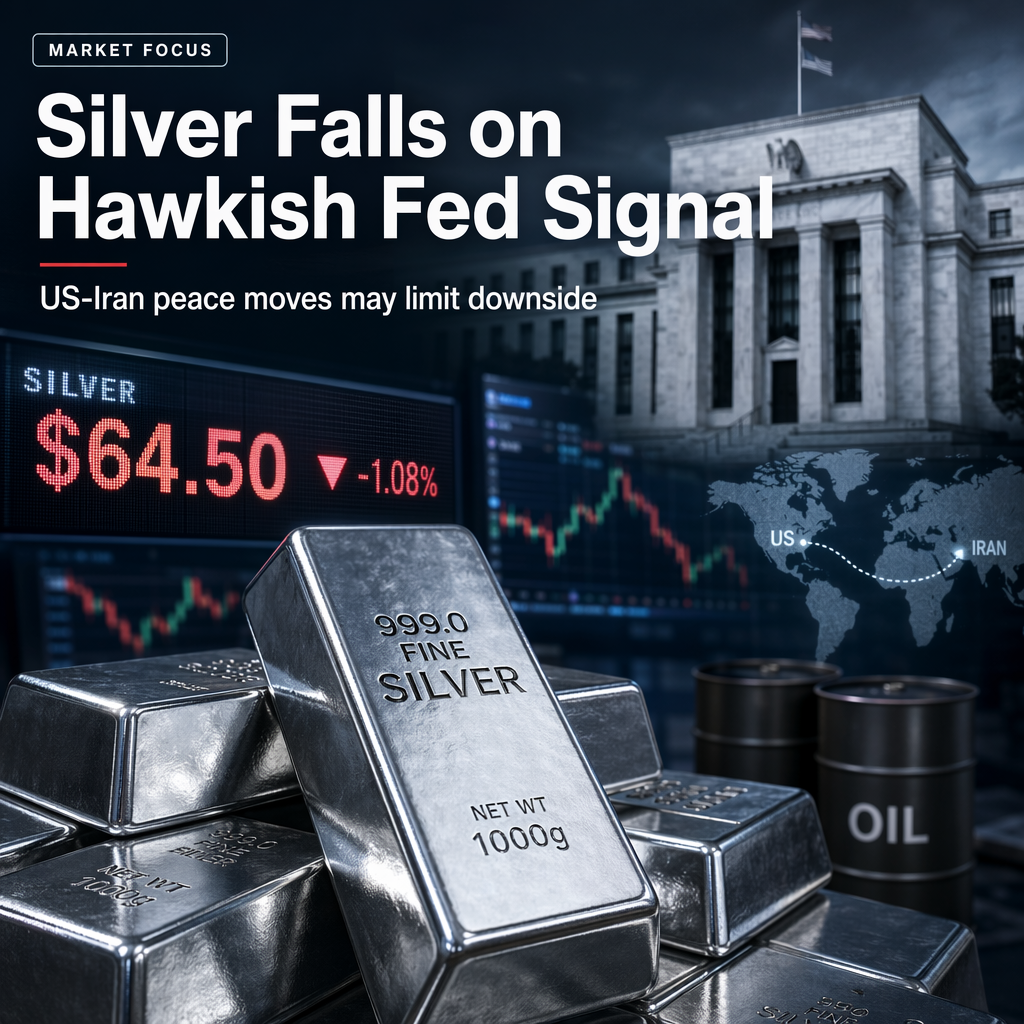
Silver (XAG/USD) experienced a decline of over 1%, trading near $64.50 per troy ounce during Asian hours on Tuesday, following modest gains the previous day [1]. The drop was attributed to a more hawkish-than-expected policy stance from the Federal Reserve. Last week, the Fed kept its benchmark interest rate steady between 3.50% and 3.75%, but updated economic projections and commentary from new Fed Chair Kevin Warsh surprised markets with a hawkish tone [1]. As a result, futures traders have fully priced in a 25-basis-point rate hike for the September meeting, with some even considering the possibility of a tightening move as early as next month [1].
Despite the downward pressure, silver's losses may be limited by progress in peace talks between the US and Iran, which have helped ease inflation concerns. US Vice President JD Vance stated that negotiations have made 'great progress,' and Iran has agreed to readmit International Atomic Energy Agency (IAEA) inspectors [1]. Iranian Foreign Minister Abbas Araghchi also confirmed that the Swiss-mediated dialogue has achieved 'major progress' [1].
Since the outbreak of the Middle East conflict in late February, precious metals like silver have faced persistent downward pressure. Initial disruptions to energy flows through the Strait of Hormuz drove crude oil prices higher, raising fears that central banks would maintain elevated interest rates to combat inflation [1]. However, the supply outlook shifted after Washington granted Tehran a 60-day license to sell oil on international markets, fueling expectations of a quicker recovery in global crude supplies and potentially easing inflationary pressures that have weighed on safe-haven assets like silver [1].
CONCLUSION
Silver prices have come under renewed pressure due to the Federal Reserve's unexpectedly hawkish outlook, with traders now anticipating a rate hike in September. However, diplomatic progress between the US and Iran and regulatory relief for Iranian oil exports may help limit further downside by easing inflation concerns. The market remains sensitive to both monetary policy signals and geopolitical developments.