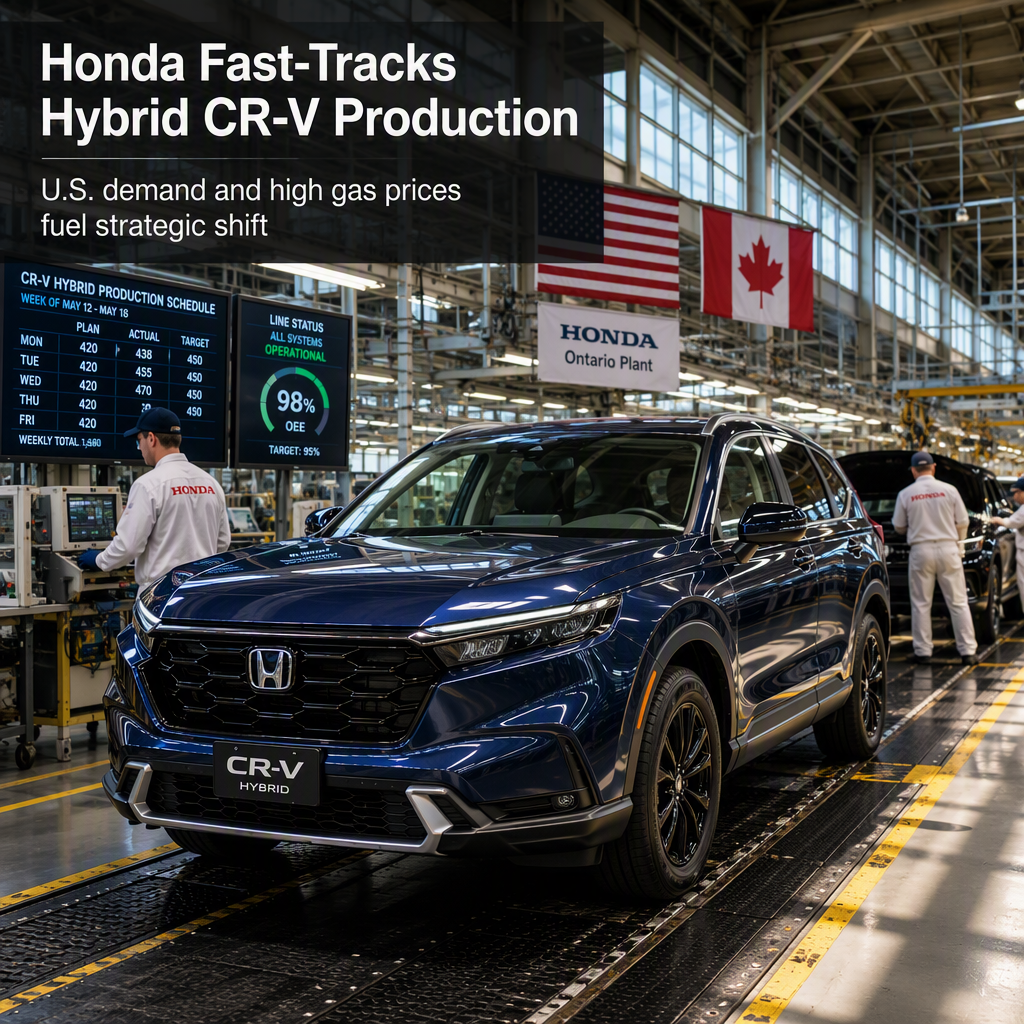
Honda Motor has announced plans to accelerate the mass production of its next-generation hybrid vehicles, specifically moving up the timeline for the hybrid CR-V sport utility vehicle in North America to as early as February 2027 [1]. This strategic shift is driven by robust hybrid sales in the United States, which have been bolstered by persistently high gasoline prices [1]. The company’s decision reflects a broader overhaul of its electric vehicle (EV) strategy, prioritizing hybrid technology in response to evolving consumer sentiment in the U.S. market, where hybrids are gaining popularity due to their fuel efficiency and reduced reliance on EV infrastructure [1].
Honda’s Ontario, Canada plant is expected to play a key role in the production of the hybrid CR-V, positioning the company to strengthen its competitive stance in the North American automobile sector [1]. The move is part of a larger industry trend, with Japanese automakers increasingly focusing on hybrid models as a transitional technology between traditional combustion engines and full electric vehicles [1].
The company’s updated production schedule signals confidence in the continued growth of the hybrid market, as Honda anticipates that strong hybrid sales will persist, supported by elevated fuel prices and consumer preferences [1]. No specific analyst opinions or forward-looking financial projections were provided in the article [1].
CONCLUSION
Honda’s decision to accelerate next-generation hybrid production underscores its confidence in sustained hybrid demand, particularly in the U.S. market. The move reflects both a strategic response to high gasoline prices and a broader industry shift toward hybrid technologies as a bridge to full electrification.