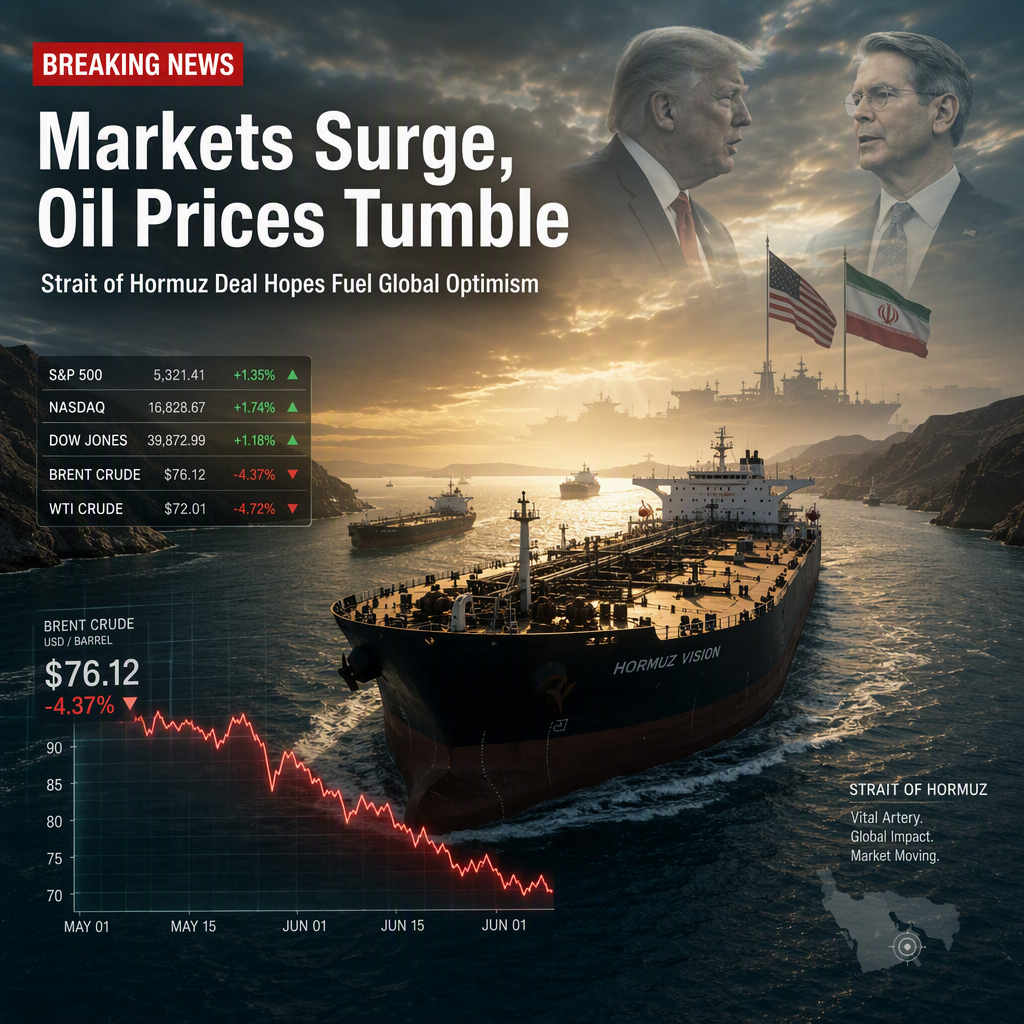
The Trump administration projected confidence this week that the United States could soon strike a deal with Iran to reopen the Strait of Hormuz, a critical passageway for global oil trade, which led to a surge in stock markets and a sharp decline in oil prices [1]. President Donald Trump and Treasury Secretary Scott Bessent both stated that a deal could be expected within days, with Bessent telling CNBC's 'Squawk Box' that an agreement to ensure 'freedom of movement' in the strait might come 'today or tomorrow' [1]. Despite these assurances, no deal was announced by the promised date [1].
This pattern of market reaction has repeated multiple times, as investors have responded to similar claims from President Trump with bursts of buying on hopes that a breakthrough is imminent, even though the war with Iran, which began more than five months ago, continues to widen and progress on containing Iran's nuclear ambitions remains stalled [1]. Helima Croft, global head of commodity strategy at RBC Capital Markets, noted a 'tremendous optimism bias in the market,' with many investors assuming that both the U.S. and Iran have incentives to reach a diplomatic solution [1]. However, Croft cautioned that some investors may be overly optimistic, viewing a potential deal as a way to reset the Middle East to its prewar status quo, which she believes is unlikely [1].
The core issue in the negotiations centers on the future of the Strait of Hormuz. Claudio Galimberti, partner and chief economist at Rystad Energy, highlighted a fundamental disagreement: Iran wants to impose a service fee for passage, while the U.S. seeks a return to the pre-war situation with international, free waters in the strait [1]. The closure of the strait by Iran triggered a global energy supply shock, driving up gas prices, exacerbating inflation, and raising concerns about oil reserves [1].
The oil market remains highly sensitive to any signs of progress toward reopening the strait, with even hints of a deal causing significant price movements [1]. Despite the optimism, the future of the strait remains unresolved, and the conflict continues to present challenges for both diplomatic and market stability [1].
CONCLUSION
Markets responded strongly to the Trump administration's optimistic statements about an imminent deal with Iran, with stocks rising and oil prices falling. However, no agreement was reached by the promised date, and fundamental disagreements over the Strait of Hormuz persist. The situation remains fluid, with markets highly reactive to any developments in the ongoing negotiations.