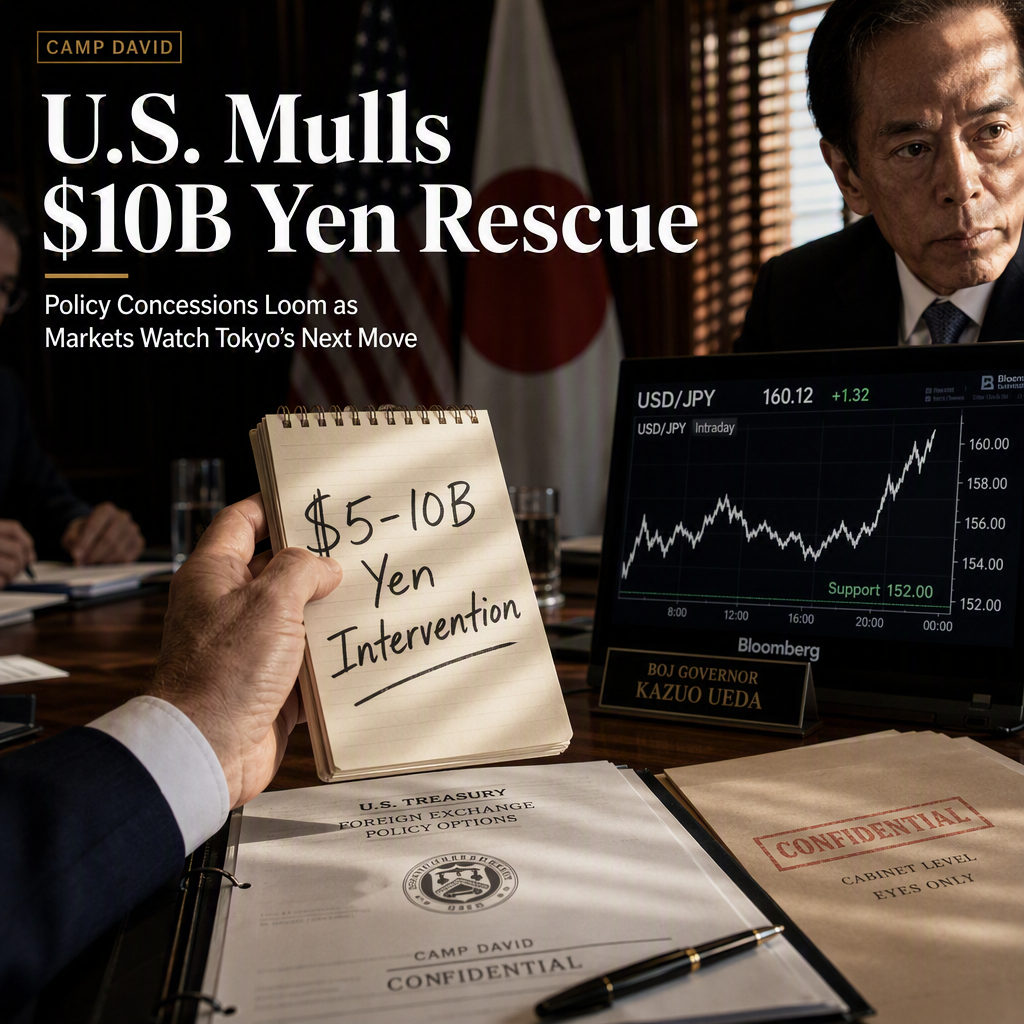
U.S. Treasury Secretary Scott Bessent is considering a $5-10 billion intervention to support the Japanese yen, as indicated by a notepad seen during a cabinet meeting at Camp David, Maryland, on July 31 [1]. This potential rescue effort has drawn significant market attention, but it is expected to come with substantial strings attached. Washington is likely to demand policy concessions from Tokyo, including possible shifts in Bank of Japan (BOJ) monetary policy, structural reforms, or enhanced defense cooperation in the region [1].
The intervention would place pressure on BOJ Governor Kazuo Ueda to adjust Japan's ultra-loose monetary policy, with both market participants and U.S. officials closely monitoring for signals of normalization or tighter policy as a prerequisite for continued support [1]. The timing of the intervention coincides with heightened tensions in the Middle East near the Strait of Hormuz, suggesting that the U.S. may link currency support to Japan's stance on regional security, potentially expecting Tokyo to take a firmer line or offer logistical support in response to oil supply disruptions or instability [1].
Recent months have seen significant volatility in the dollar-yen pair, with the yen reaching multi-decade lows against the U.S. dollar. Technical analysis highlights major resistance levels near 160 and support in the 150-152 range, with any intervention likely targeting these thresholds to prevent further depreciation of the yen [1]. Traders remain cautious, viewing the prospect of U.S. intervention as providing only a temporary floor for the yen. Market sentiment indicates that unless Japan delivers on reforms or policy normalization, any relief rally may be short-lived, given persistent yield differentials, sluggish growth, and the BOJ's dovish stance [1].
As Bessent's notepad suggests, the U.S. is prepared to buy Japanese yen in significant quantities, but both traders and policymakers should be aware that Washington's support is unlikely to be unconditional. The coming weeks are expected to clarify what Japan will be required to offer in exchange for this financial lifeline [1].
CONCLUSION
The U.S. Treasury's consideration of a $5-10 billion yen intervention is a high-impact event, but it is expected to come with significant policy and geopolitical conditions. While the move may temporarily stabilize the yen, sustained relief will depend on Japan's willingness to implement reforms or policy shifts. Market participants should remain alert for further developments and potential concessions from Tokyo.