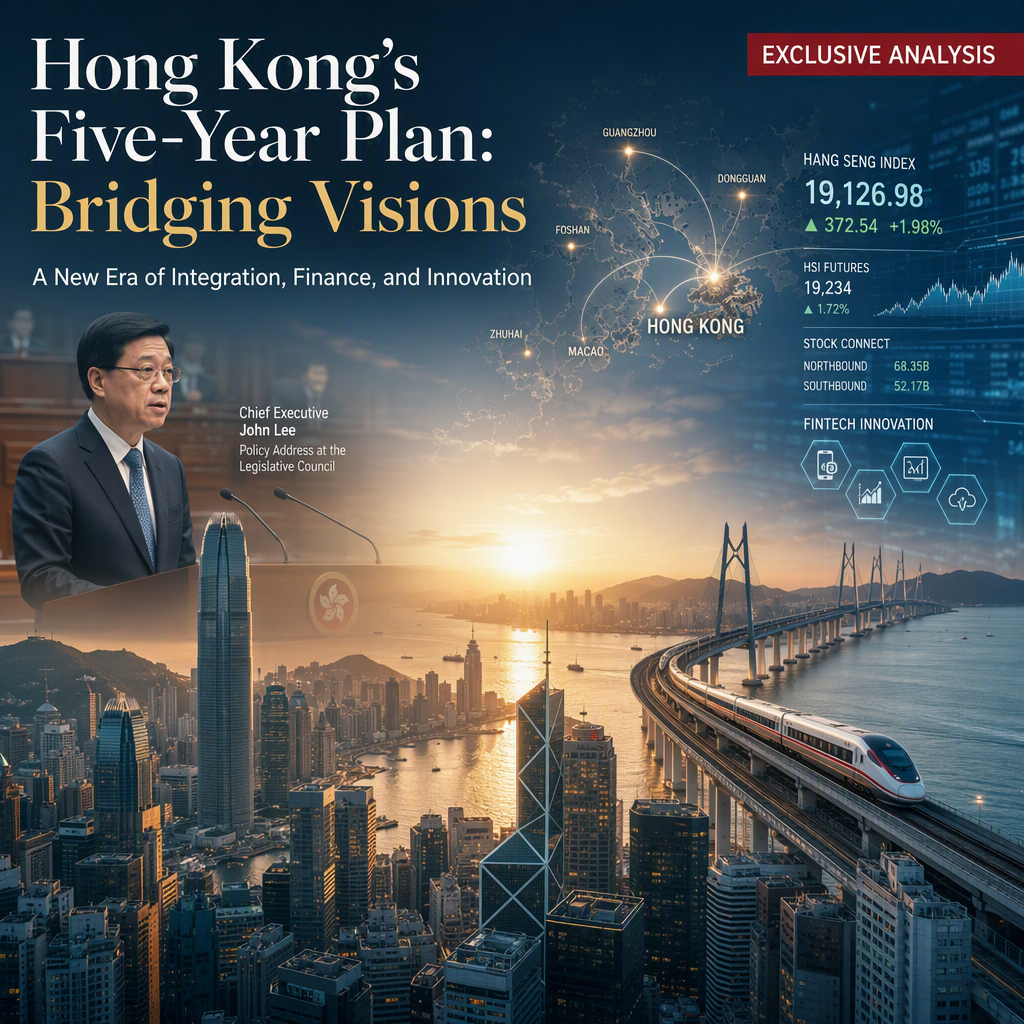
Hong Kong's Chief Executive John Lee unveiled the city's inaugural five-year plan during his annual policy address at the Legislative Council, marking a significant shift in governance as the city seeks to align its development priorities with those of Beijing [1]. The blueprint aims to synchronize Hong Kong's economic, social, and political goals with China's national strategies, emphasizing enhanced integration with the Greater Bay Area economic zone, support for cross-border investments, and innovation initiatives [1].
Key financial and economic objectives outlined in the plan include strengthening Hong Kong's role as a global finance hub through targeted policies to attract international capital and foster fintech growth, as well as infrastructure upgrades—particularly in transport and urban development near the China border—to facilitate greater connectivity and attract multinational corporations [1]. The plan also proposes measures to boost IPO activity and support the local equities market, leveraging the recent surge in follow-on deals and the Chinese AI race [1].
John Lee stated, "Hong Kong must seize new opportunities by aligning closely with national development plans, leveraging its unique position as a gateway between China and the world" [1]. The plan sets specific targets for economic growth, job creation, and housing supply, aiming to address local challenges while supporting Beijing's broader vision for the region [1]. Policymakers hope these measures will reinforce investor confidence and sustain Hong Kong's competitive edge in financial services [1].
Market analysts noted that the five-year plan signals a more coordinated approach to economic policy, with potential implications for property values, stock market performance, and foreign investment flows. Investors are awaiting further details on implementation and any adjustments to regulatory frameworks [1]. The unveiling of the plan is regarded as a milestone in Hong Kong's political and economic trajectory, reflecting a deliberate effort to harmonize with mainland China's priorities while maintaining its status as a global finance center [1].
CONCLUSION
Hong Kong's first five-year plan represents a strategic move to align more closely with Beijing's economic vision, targeting integration, financial sector growth, and infrastructure upgrades. While the plan is expected to bolster investor confidence and reinforce Hong Kong's global finance status, market participants are watching for further implementation details. The coordinated approach may have medium-term implications for property values, stock market performance, and foreign investment flows.