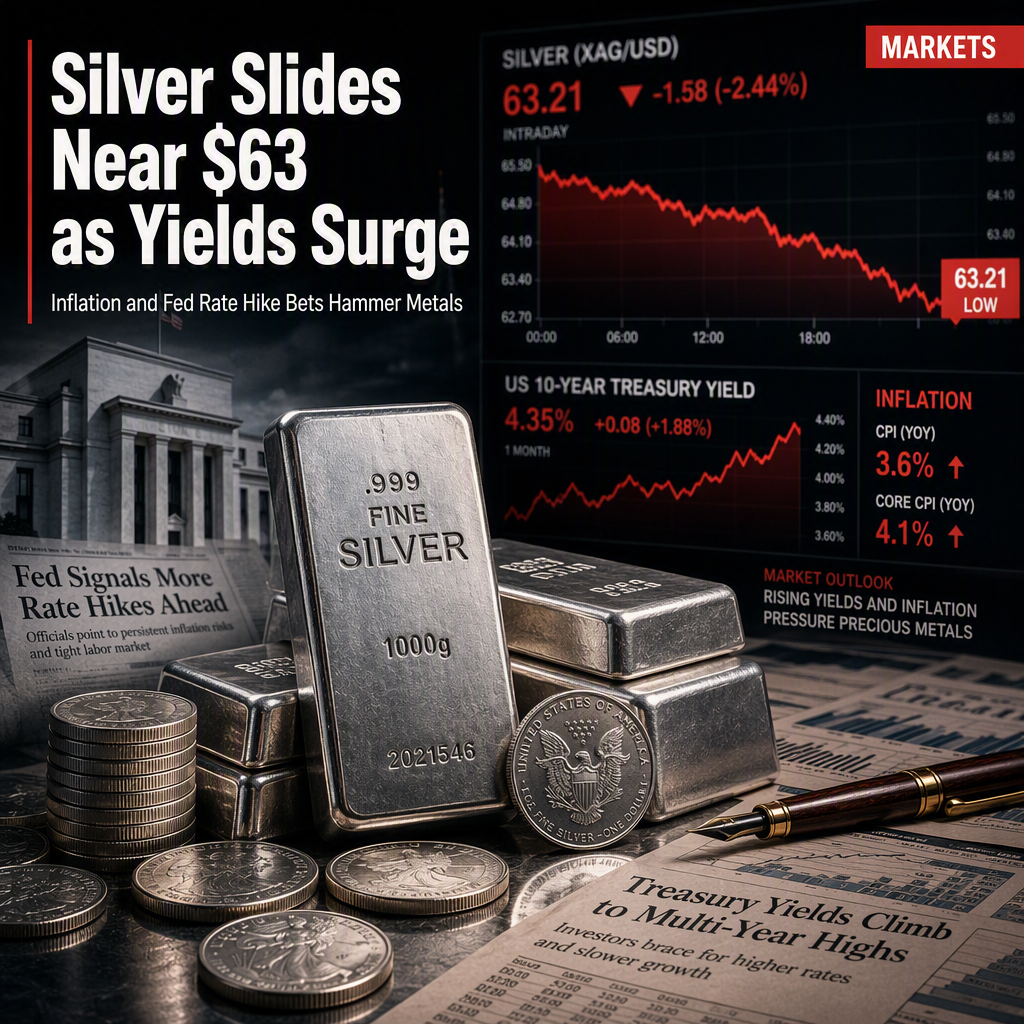
Silver prices (XAG/USD) declined for the second consecutive day, trading around $63.20 per troy ounce during Asian hours on Tuesday, as inflation concerns and rising Treasury yields weighed on the precious metal [1]. Elevated oil prices have intensified expectations for a US Federal Reserve interest rate hike, with money markets reflecting over a 92% probability of a rate increase, up sharply from approximately 60% a week earlier, according to CME FedWatch data [1]. This shift in rate hike expectations follows Friday's US economic data, which showed the Consumer Price Index (CPI) rising in August, and core inflation recording its largest gain in four months [1].
The US 10-year Treasury yield surged toward 5% amid broader inflation and fiscal worries, exerting additional downward pressure on non-yielding assets like silver [1]. TD Securities' latest CTA tracker indicates that trend-following funds currently hold only a modest long position in silver, suggesting room for adjustment as price action evolves [1]. The bank's scenario analysis differentiates between sharp sell-offs, moderate declines, and sideways trading, highlighting how systematic flows could vary materially depending on future price movements [1].
Market participants are closely watching the interplay between inflation, energy prices, and Federal Reserve policy, as these factors continue to drive volatility in silver prices. The elevated probability of a rate hike and surging Treasury yields have diminished silver's appeal as a safe-haven asset, at least in the short term [1].
CONCLUSION
Silver's recent decline to near $63 per ounce is driven by heightened inflation concerns and surging Treasury yields, which have increased expectations for a US Federal Reserve rate hike. With trend-following funds holding only modest long positions, further price adjustments are possible as market conditions evolve. The outlook for silver remains sensitive to upcoming economic data and Fed policy decisions.