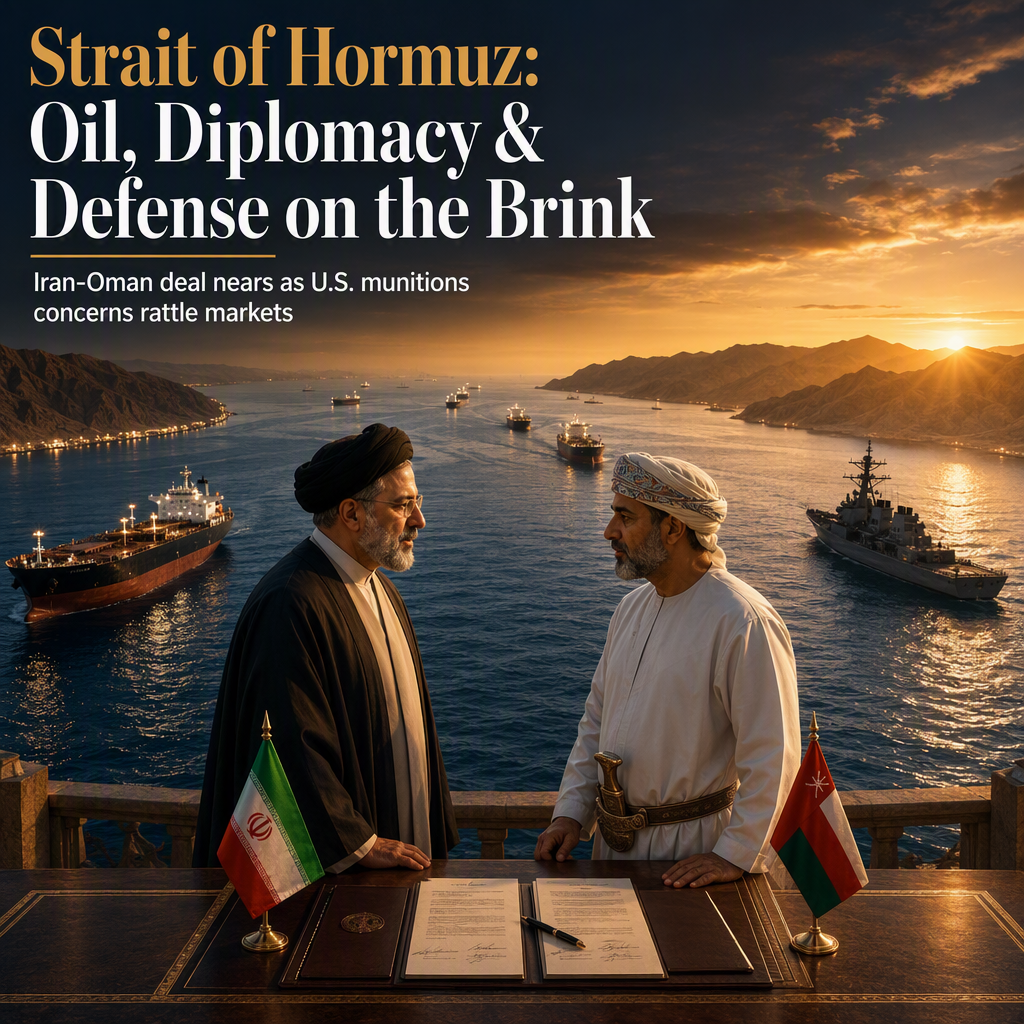
A draft agreement between Iran and Oman regarding the Strait of Hormuz is currently under review, with the Iranian foreign ministry indicating that a deal could be finalized as early as Thursday [1]. The Strait of Hormuz is a vital corridor for global oil exports, and any developments in the region are closely watched by financial markets due to their potential to influence crude oil prices and market volatility [1].
The news of the advancing deal comes at a time when concerns are rising over a possible shortage of U.S. munitions supply, which could have repercussions for defense stocks and related sectors [1]. Financial analysts are monitoring the situation, noting that market sentiment remains cautious as traders await further updates on the agreement and its implications for both energy prices and the defense industry [1].
An energy market analyst described the review of the draft agreement as a positive step, but emphasized that ongoing worries about U.S. munitions supply continue to dampen investor confidence [1]. Technical analysis of oil futures indicates resistance near $80 per barrel and support at $75, with geopolitical developments in the Strait of Hormuz driving price action [1]. Chart patterns suggest increased volatility, and moving averages are trending upward in anticipation of a potential breakthrough in negotiations [1].
Traders are advised to closely monitor developments in the Strait of Hormuz, as any announcement regarding the deal could trigger significant movements in both energy and defense-related equities [1].
CONCLUSION
The potential Iran-Oman deal on the Strait of Hormuz is a key focus for global markets, with significant implications for oil prices and defense stocks. While the agreement is seen as a positive development, ongoing concerns about U.S. munitions supply are keeping market sentiment cautious and volatility elevated.