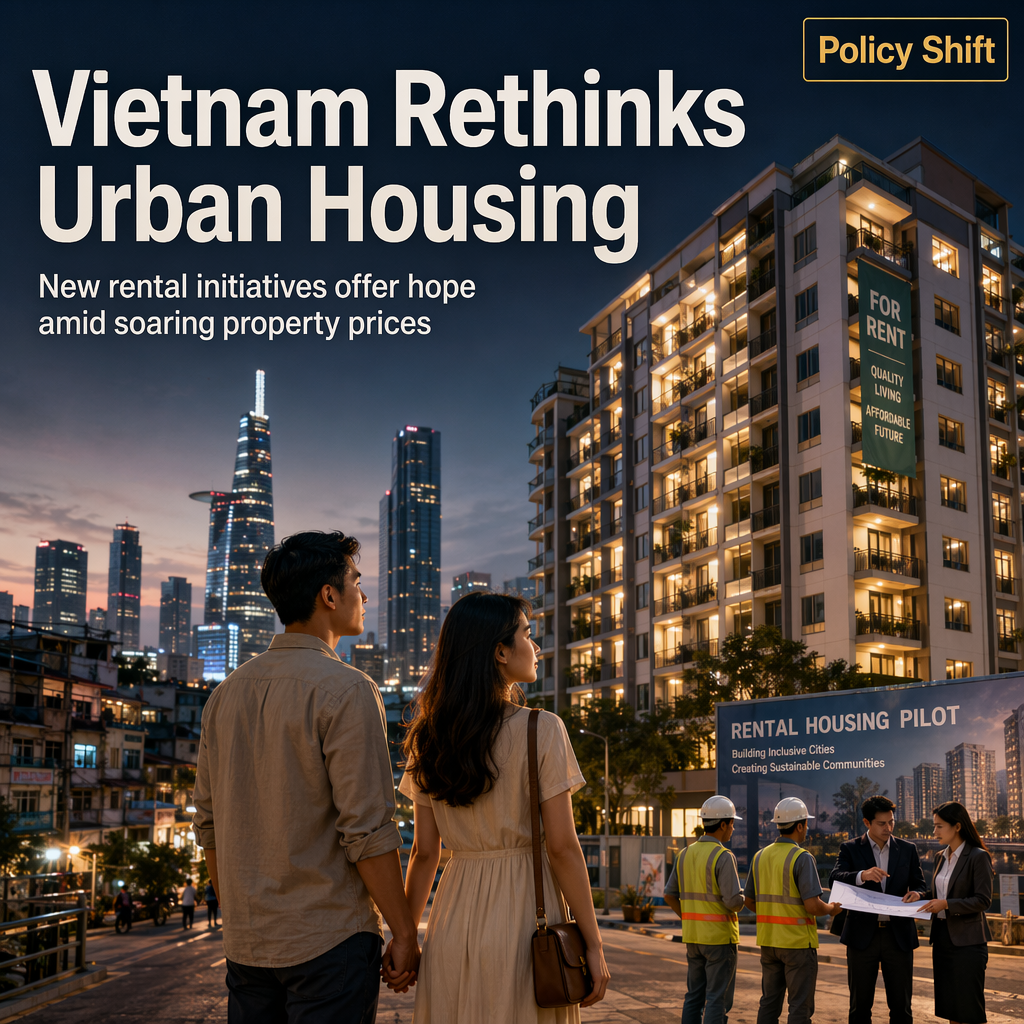
Vietnam is implementing new policies to promote rental housing as home ownership becomes increasingly unattainable for many citizens due to rapidly rising property prices in major cities such as Ho Chi Minh City and Hanoi [1]. The government has introduced pilot projects and incentives aimed at expanding rental options, particularly targeting workers and young families who are being priced out of the ownership market [1].
These initiatives include pilot rental housing projects in key urban centers and incentives for developers to construct and manage rental properties [1]. The measures are part of a broader strategy to stabilize the property market and address the growing supply-demand imbalance caused by rapid urbanization and an influx of workers into cities [1].
A real estate analyst in Ho Chi Minh City noted a market shift, with more people viewing renting as a viable long-term solution, and suggested that government support could accelerate this transition [1]. The policy shift is also intended to attract more institutional investment into the rental housing sector, which has historically been fragmented and dominated by small landlords [1]. Authorities hope that a more robust rental market will help ease pressure on property prices and improve housing accessibility [1].
While the rental housing push is still in its early stages, the government has signaled a strong commitment to expanding the sector and providing more choices for urban residents. Market participants are closely monitoring these developments to assess their impact on property values and the overall housing landscape in Vietnam [1].
CONCLUSION
Vietnam's government is taking concrete steps to promote rental housing as a response to surging property prices and urbanization pressures. While the initiatives are in their infancy, they signal a significant policy shift that could reshape the housing market and improve affordability for urban residents.