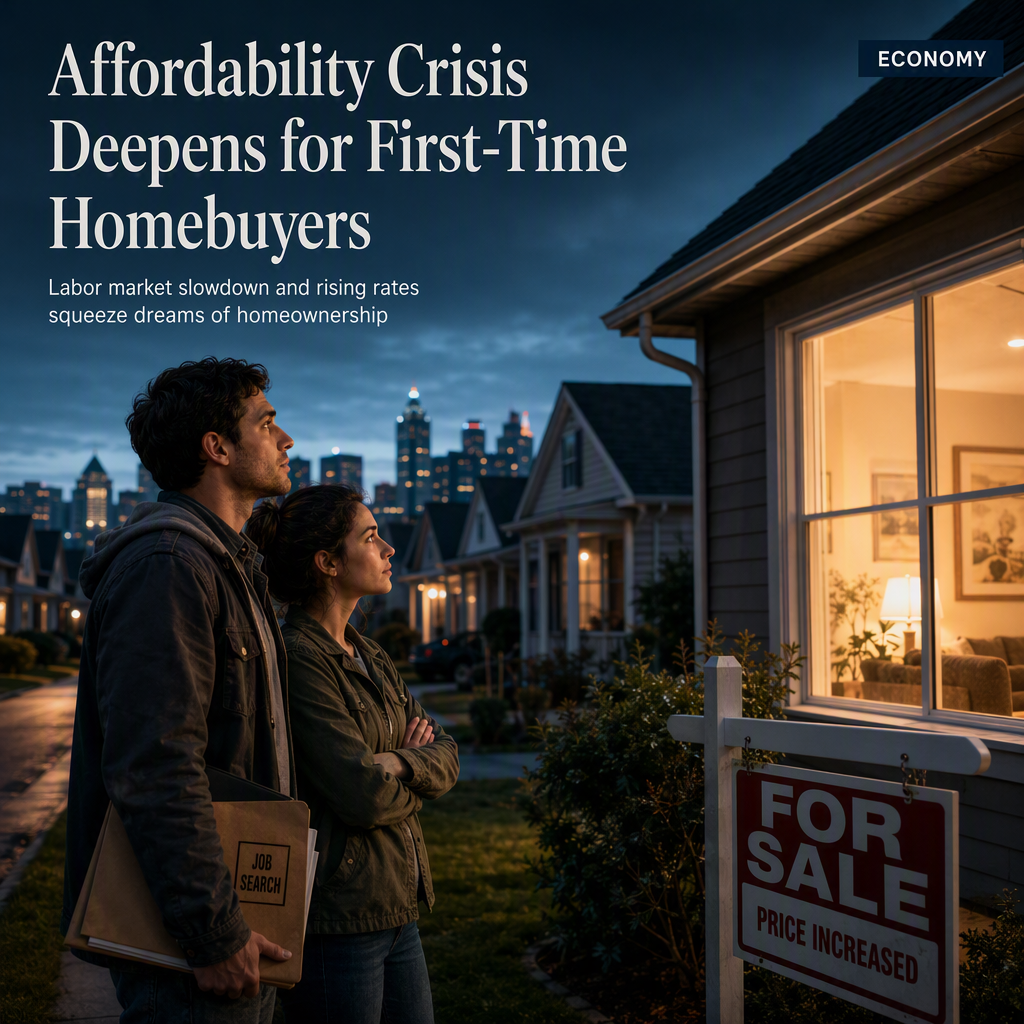
The U.S. labor market showed unexpected weakness in July, with the Bureau of Labor Statistics reporting a net loss of 23,000 jobs, contrary to economists' expectations of an 80,000 job gain [1]. Although the unemployment rate declined to 4.1%, this was attributed to a drop in the labor force participation rate as more individuals exited the workforce [1]. According to Realtor.com Senior Economist Joel Berner, the labor market is a critical foundation for the housing market, and the current slowdown is undermining consumer confidence and the ability of potential homebuyers to save for down payments [1].
Berner described the July jobs report as a "pretty rough report," noting that wage growth continues to lag behind inflation, further eroding affordability for would-be homebuyers [1]. He emphasized that the combination of slower job growth, slower wage growth, and reduced labor force participation is likely to persist, making it increasingly difficult for individuals to save and purchase homes [1].
The affordability crisis is being exacerbated by rising mortgage rates, which have recently reached their highest point of the year and are expected to remain elevated through the end of 2024 [1]. Berner highlighted that first-time homebuyers are facing a "double whammy"—they are unable to save as much for down payments and must finance more of their purchases at higher rates, intensifying the affordability squeeze from multiple angles [1].
Looking ahead, Berner does not anticipate relief in the near term, as the Federal Reserve is more likely to maintain or increase interest rates amid persistent inflation, rather than cut them [1]. He expects the current mortgage rate environment and market softness to persist, with slower growth in listing prices and only slightly higher sales activity compared to last year [1].
CONCLUSION
The unexpected contraction in the U.S. labor market, combined with persistent inflation and rising mortgage rates, is creating significant headwinds for first-time homebuyers. Market softness and affordability challenges are likely to persist through the end of the year, with little relief expected in the near term.