
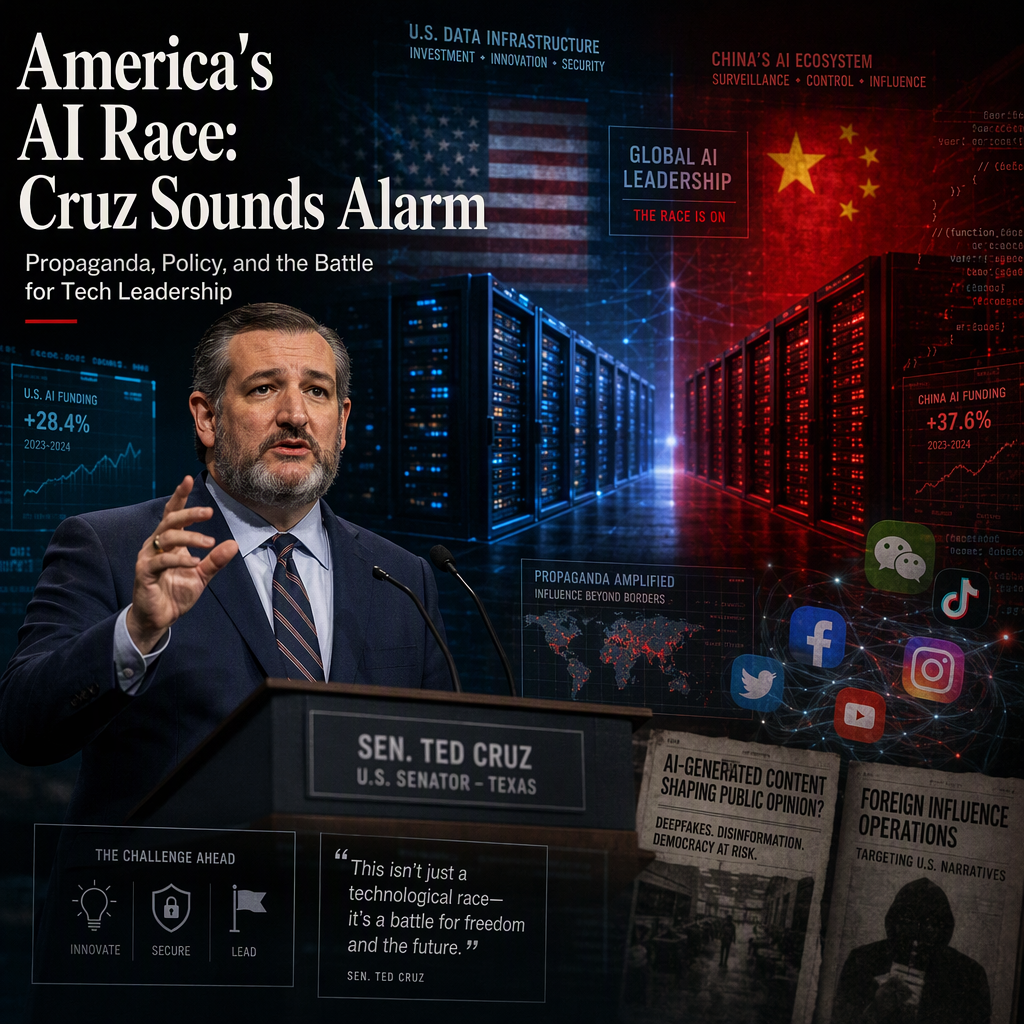
Sen. Ted Cruz, chair of the Senate Commerce Committee, emphasized to Fox News Digital that the competition between the United States and China for leadership in artificial intelligence (AI) is 'the single most important economic question facing America today' [1]. Cruz highlighted that the debate over AI and data centers has intensified both in Congress and among American families, particularly as midterm elections approach [1]. He warned that opposition to U.S. data centers and AI advancement is being shaped by coordinated propaganda and influence campaigns, drawing parallels to previous foreign-funded anti-fracking movements [1].
Cruz asserted that while direct funding from the Chinese government into U.S. data center policies has not been revealed, recent actions by OpenAI indicate covert influence operations. In June, OpenAI banned ChatGPT accounts believed to have originated in China, stating that these accounts were used to generate social media content alleging that data centers are raising electricity costs for Americans [1]. OpenAI described these activities as attempts to manipulate legitimate debates about American AI and tech policies [1].
Cruz expressed concerns that if China wins the AI race, the technology will be used for 'espionage and propaganda and control and surveillance,' reflecting the values of the Chinese Communist Party. Conversely, he argued that a U.S. victory would ensure AI embodies American values such as free speech, individualism, free enterprise, and privacy [1]. He also criticized the dominant opposition to AI advancement and data centers among Democrats, linking their stance to major industry players like Anthropic, who he claims seek antitrust exemptions and government partnerships to control AI development [1].
The ongoing debate and alleged influence campaigns underscore the strategic importance of AI policy in the U.S., with potential implications for economic competitiveness, national security, and the future direction of technology development [1].
CONCLUSION
Sen. Ted Cruz's remarks highlight the critical stakes in the U.S.-China AI race, warning of coordinated propaganda efforts and the need for American values to guide AI development. The issue is gaining prominence in political and public discourse, with potential medium-term impacts on tech policy and market dynamics. The outcome of this debate could shape the future of AI and its role in the global economy.