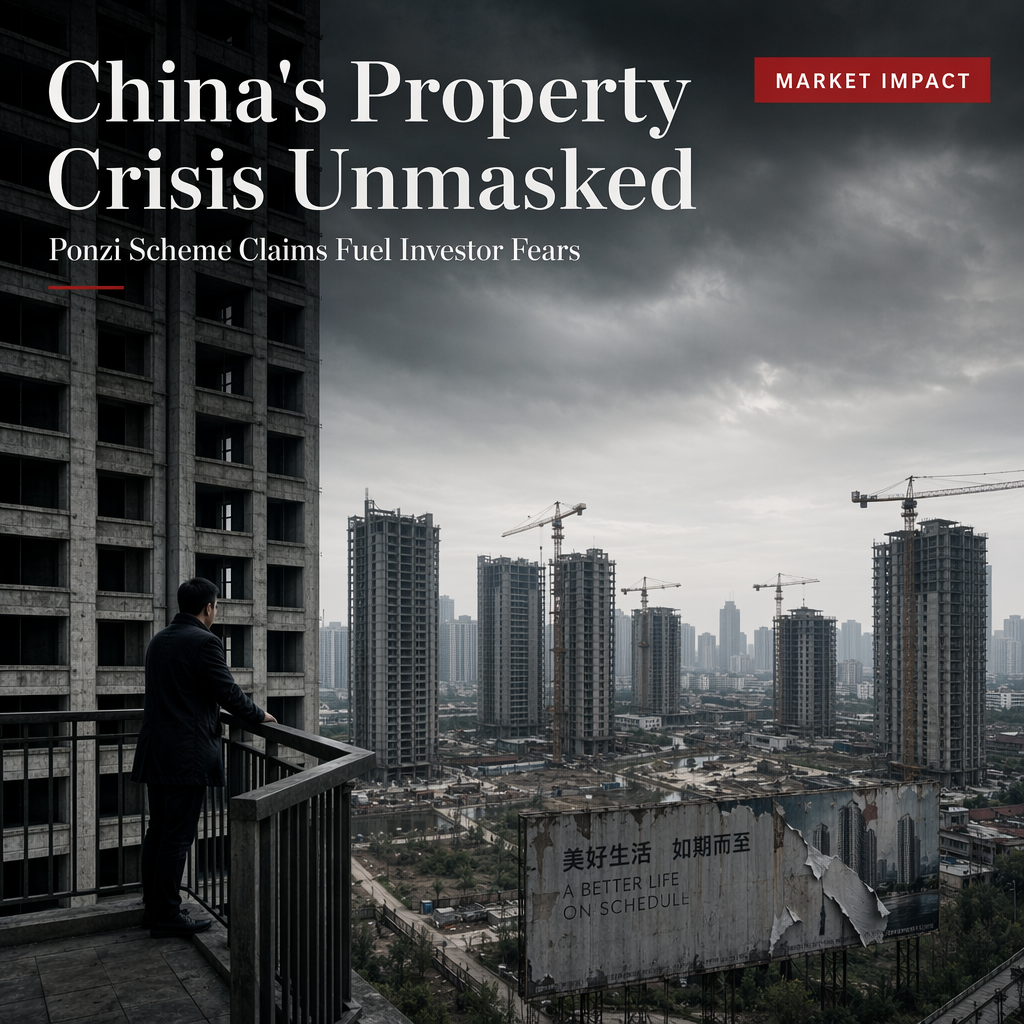
A social media post published in April by former industry heavyweight Pan Shiyi sparked widespread debate in China by claiming that the real estate industry's investment model resembled a Ponzi scheme, fueling an unsustainable property bubble [1]. The post argued that property developers had been using funds from new buyers to fulfill obligations to earlier purchasers, warning of the risks inherent in such practices [1]. Although the post was deleted shortly after publication, copies continued to circulate online, amplifying public discussion [1].
The fallout from the property boom has left high-rise buildings in Beijing and other major cities unfinished or empty, highlighting the sector's excesses and contributing to mounting debt and a crisis of confidence among investors and homebuyers [1]. Industry observers largely agree with Pan's assessment, emphasizing the urgent need to restore trust and confidence for a sustainable recovery in the property market [1].
The ongoing challenges facing real estate developers underscore the necessity for regulatory reform and a shift away from speculative investment practices that previously fueled the bubble [1]. No specific figures, dates, or forward-looking analyst opinions beyond the call for reform and trust restoration are provided in the article [1].
CONCLUSION
China's property sector is grappling with the consequences of a speculative investment model, as highlighted by Pan Shiyi's controversial post. The crisis of confidence and mounting debt signal a high market impact, with industry observers calling for regulatory reform and a restoration of trust. The sector's recovery hinges on addressing these fundamental issues.