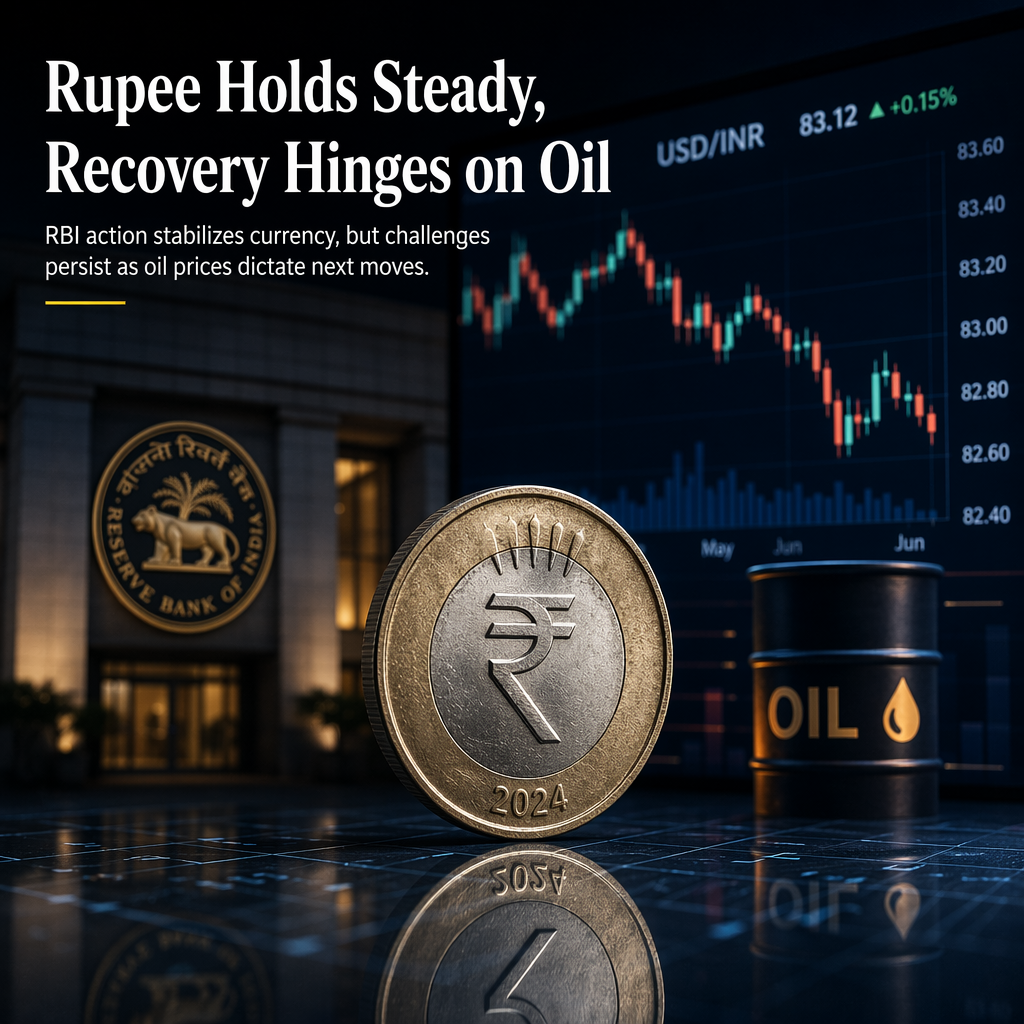
OCBC strategists Christopher Wong and Sim Moh Siong report that the Indian Rupee (INR) recently faced depreciation pressure due to rising oil prices and renewed geopolitical concerns, which pushed the USD/INR exchange rate towards a one-month high [1]. However, some of this pressure has eased as oil prices have retreated from their highs and the Reserve Bank of India (RBI) has intervened through Dollar sales to help limit INR losses [1]. The strategists highlight that the flow backdrop has improved marginally, supported by RBI's June measures to attract foreign exchange inflows via FCNR(B) deposits, external borrowings, and expanded foreign access to long-end government bonds [1]. Month-to-date, foreign net equity and debt inflows have also shown slight improvement [1].
Despite these stabilizing factors, OCBC notes that the bar for a clean recovery in the INR remains high unless oil prices continue to move lower [1]. Technically, USD/INR was last seen at 95.40, with momentum described as mildly bullish and the RSI showing tentative signs of moderation from the recent rise [1]. Key resistance levels are identified at 95.55 (50% Fibonacci retracement of 2026 high to June low) and 95.90 (61.8% Fibonacci retracement), while support is seen at 95.20 (50-day moving average, 38.2% Fibonacci retracement) and 94.80/90 (21-day moving average, 23.6% Fibonacci retracement) [1].
The strategists suggest that, in the near term, USD/INR should remain relatively contained, but a sustained recovery for the INR will require a further decline in oil prices [1].
CONCLUSION
The Indian Rupee has stabilized following RBI intervention and improved foreign inflows, but faces significant hurdles to recovery unless oil prices fall further. Market sentiment remains cautious, with technical indicators pointing to mild bullish momentum for USD/INR. Investors should monitor oil price movements and RBI actions for further direction.