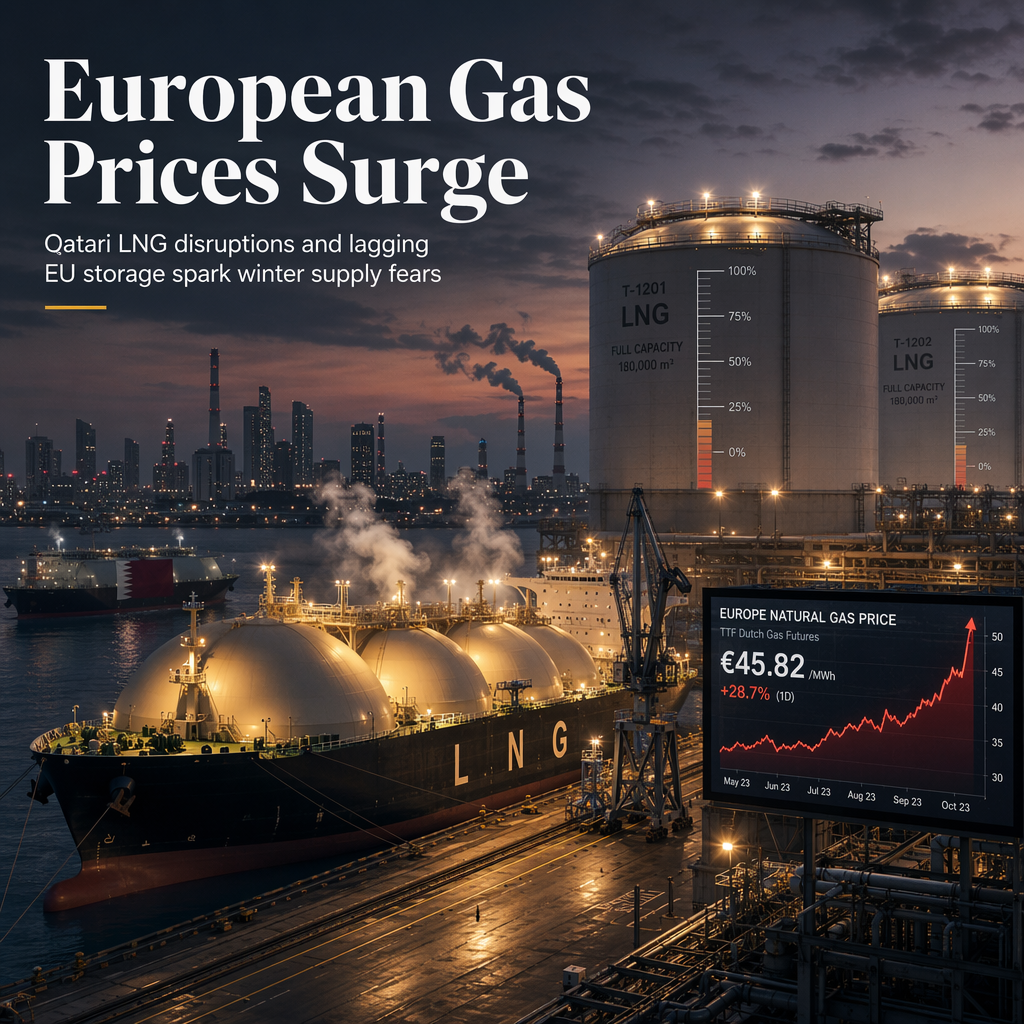
European natural gas prices have risen sharply following renewed tensions in the Middle East, which have disrupted Qatari LNG exports and led to an extended force majeure by QatarEnergy for buyers in Asia and Europe, potentially lasting until the end of September [1]. Reports also indicate QatarEnergy is seeking to subcharter an LNG carrier until the end of October due to ongoing export disruptions [1].
EU LNG imports are projected to decline by more than 25% year-over-year in July, complicating efforts to refill gas storage ahead of winter [1]. Currently, EU gas storage stands at 56% full, significantly below the 10-year seasonal average of 72% [1]. Heatwaves across Europe are further hindering storage injections, increasing the vulnerability of the European gas market as winter approaches [1].
ING analysts Warren Patterson and Ewa Manthey warn that tighter-than-usual storage at the start of the heating season will likely keep gas prices elevated throughout winter, with the risk of price spikes during the heating season [1].
CONCLUSION
Disruptions to Qatari LNG exports and lagging EU gas storage levels are driving European natural gas prices higher, with ING analysts expecting elevated prices and potential spikes through the winter. The market faces increased vulnerability as storage remains well below seasonal norms and import declines persist.