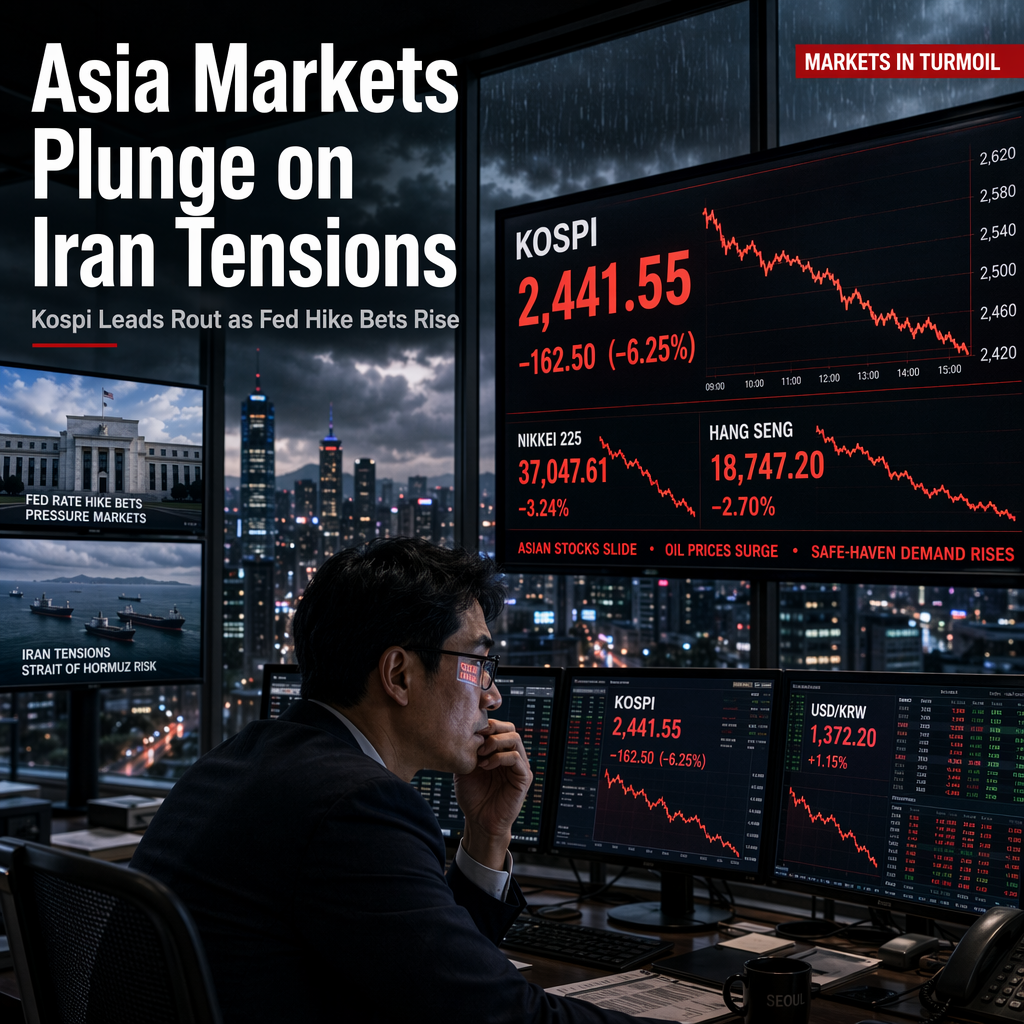
Asian equity markets experienced significant declines on Tuesday, with South Korea's Kospi Index leading regional losses by dropping more than 6% after a period of strong gains, particularly in heavyweight chipmakers. Japan’s Nikkei 225 and Hong Kong’s Hang Seng also fell over 1% for the day, reflecting widespread risk aversion among investors following an overnight slump in US technology stocks [1].
Investor sentiment was further dampened by ongoing uncertainty surrounding the US-Iran peace deal. While US Vice President JD Vance stated that Iran had agreed to admit nuclear monitors and was prepared to accept extensive weapons inspections as part of diplomatic negotiations, Iran's foreign ministry contradicted this by asserting that Tehran had made no new commitments regarding nuclear inspections [1]. Additionally, US President Donald Trump emphasized that preventing Iran from acquiring a nuclear weapon was a higher priority than potential economic fallout from extended military action. Iran's chief negotiator and parliamentary speaker, Mohammad Bagher Ghalibaf, reinforced geopolitical tensions by declaring that the Strait of Hormuz would remain under Tehran's control and would not revert to pre-war status, maintaining elevated geopolitical risk premiums [1].
Market participants were also reacting to the previous week’s hawkish Federal Reserve meeting, which increased expectations for an imminent rate hike. The CME Group's FedWatch Tool indicated that traders were pricing in a 70% chance of a US central bank rate hike in September and a 90% probability of a move in December. This outlook for higher borrowing costs further reduced appetite for riskier assets and contributed to the broad market downturn [1].
CONCLUSION
Asian markets faced sharp declines amid heightened geopolitical risks related to Iran and increased expectations of US interest rate hikes. The Kospi's 6% drop underscores the sensitivity of regional equities to both international tensions and monetary policy shifts. Investors are likely to remain cautious as these uncertainties persist.