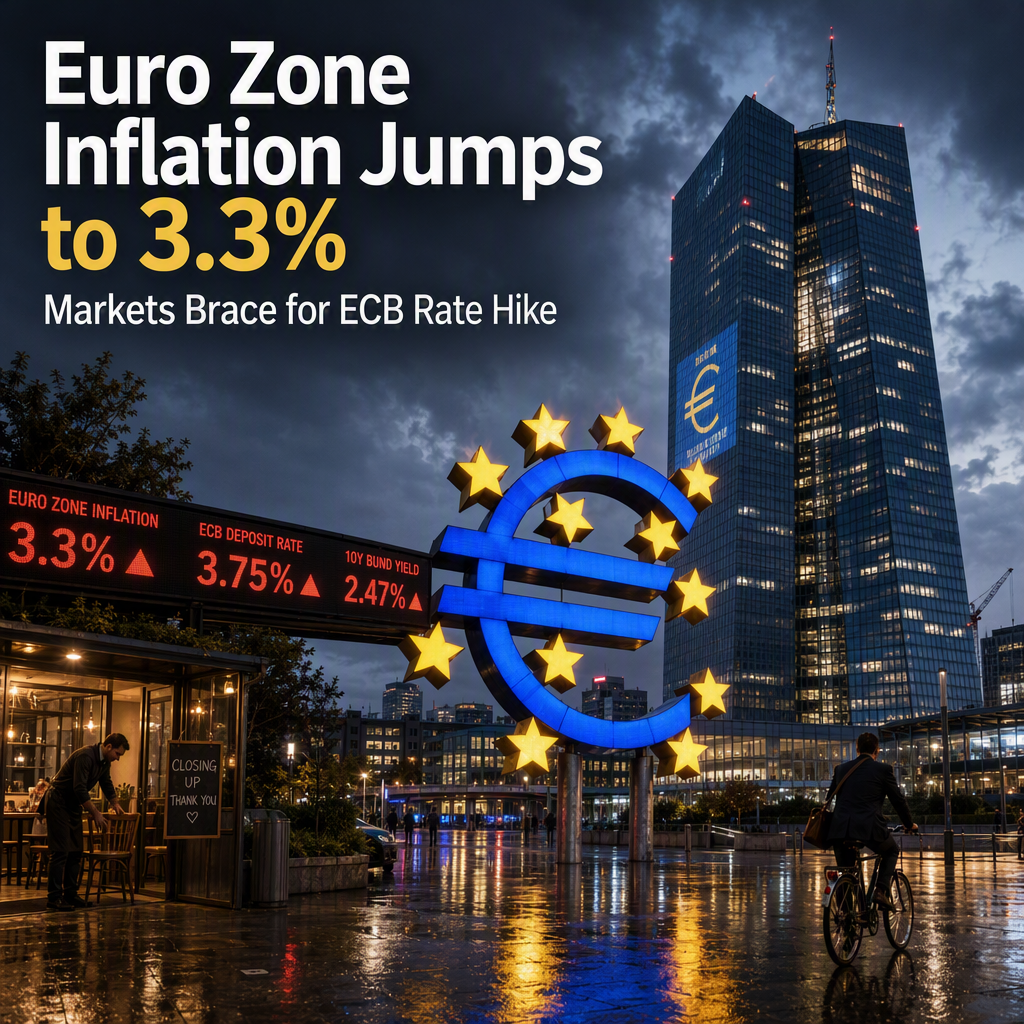
Euro zone inflation accelerated to 3.3% in August, up from 2.9% in July and 2.8% in June, marking the highest level since September 2024. This surge was primarily driven by a sharp rise in energy prices, which have been impacted by the Iran war and the blockage of the Strait of Hormuz, causing disruptions in crude oil and natural gas markets. Energy inflation jumped to 14.3% from 10.3% in the previous month, according to a flash estimate published by Eurostat on September 1, 2026 [1].
Core inflation, which excludes energy, food, alcohol, and tobacco, edged down slightly to 2.4% from 2.5% [1]. The European Central Bank (ECB) is widely expected to respond with a 25 basis point interest rate hike at its September 10 meeting, with market pricing indicating a 98.9% probability of this move, raising the key rate to 2.5%. The ECB previously raised its key rate to 2.25% in June, the first increase since 2023, in response to global inflationary pressures stemming from the Iran conflict [1].
Economists caution that the ECB faces a difficult trade-off between curbing inflation and the economic cost of higher borrowing costs. Joe Nellis, head of economic research at MHA, noted that the central bank will be wary of short-term inflation pressures becoming structural, potentially feeding into wages and services inflation. He warned that higher interest rates will continue to squeeze heavily indebted households, weaken housing markets, and make investment more expensive for businesses. For small- and medium-sized enterprises (SMEs), another increase in financing costs could lead to investment plans being postponed or abandoned altogether [1].
The market reaction has been significant, with traders locking in expectations for the rate hike and concerns mounting about the impact on businesses and households. The combination of elevated energy prices and tighter monetary policy is expected to pose challenges for the euro zone economy, particularly for sectors sensitive to borrowing costs [1].
CONCLUSION
Euro zone inflation's jump to 3.3% in August has heightened expectations for an imminent ECB rate hike, with markets nearly certain of a 25 basis point increase. While this move aims to address inflationary pressures, economists warn it could exacerbate challenges for indebted households and businesses, especially SMEs. The market takeaway is a high-impact event likely to shape euro zone economic conditions in the near term.