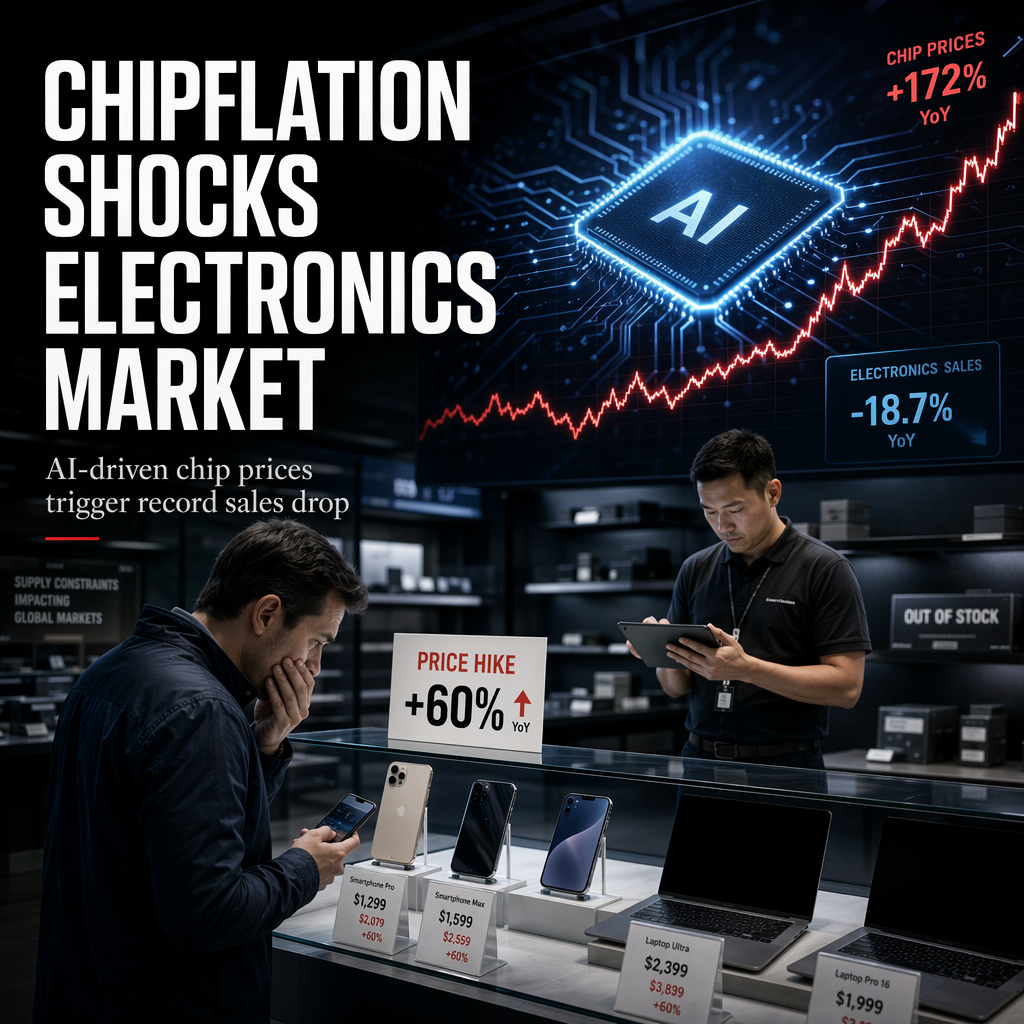
The semiconductor industry is experiencing a phenomenon dubbed 'chipflation,' as memory chip prices have surged sixfold amid booming investment in artificial intelligence technologies [1]. This sharp increase in component costs is directly impacting consumer electronics, with manufacturers passing higher prices onto end-users. As a result, shipments of devices such as smartphones and computers are projected to decline by 200 million units, marking a record drop in sales [1].
Industry analysts attribute the rising costs to robust AI-related demand, which has outpaced supply and led to persistent upward pressure on memory chip prices [1]. The effects are reverberating throughout the supply chain, with both manufacturers and retailers warning of continued price hikes and reduced sales volumes in upcoming quarters [1].
Market sentiment remains cautious, as companies and investors brace for further volatility in chip and electronics pricing. Analysts emphasize that ongoing AI investment is the primary catalyst behind these trends, and they do not foresee immediate relief for consumers or manufacturers [1].
CONCLUSION
The surge in memory chip prices driven by AI investment is causing unprecedented declines in electronics sales and heightened caution across the market. Analysts expect the upward trajectory in chip prices and weakened consumer demand to persist, signaling continued volatility for manufacturers and retailers.