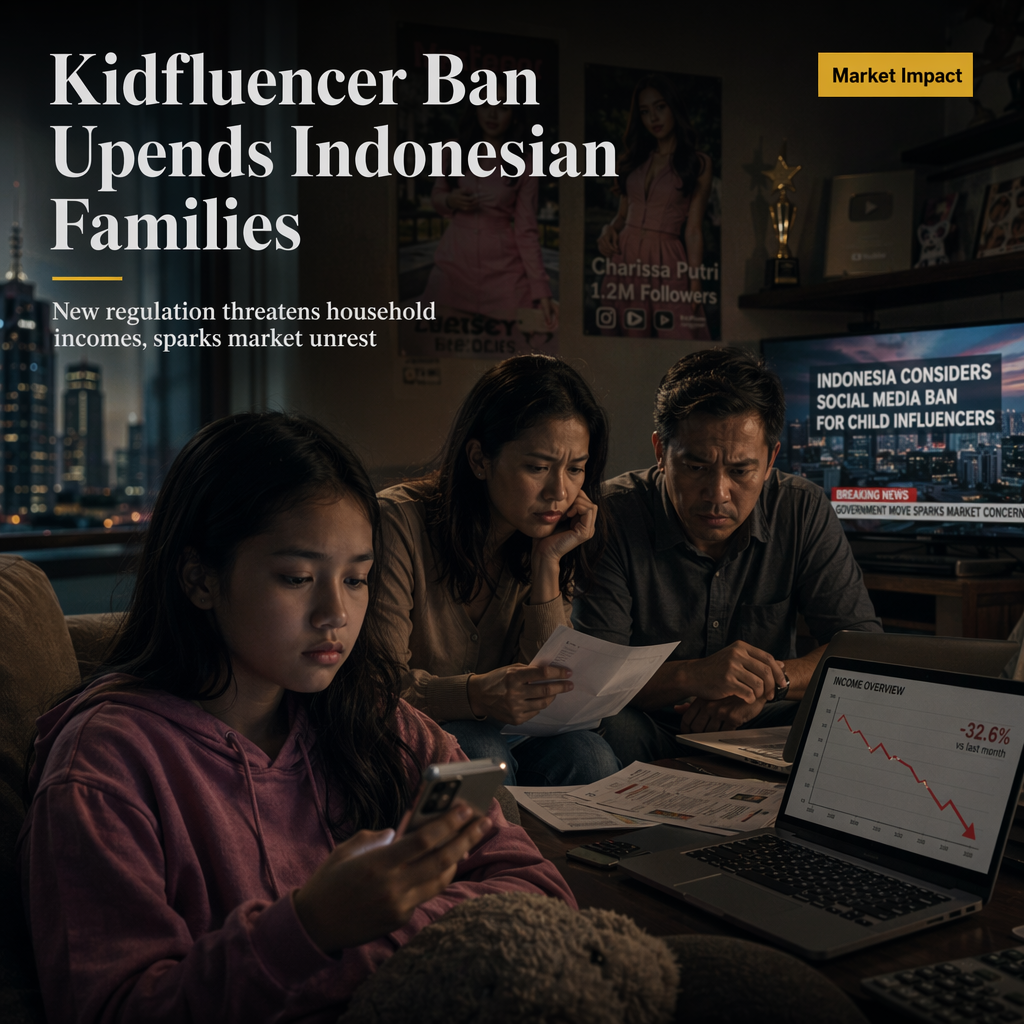
Indonesia has introduced a ban on social media accounts for individuals under the age of 16, a move that is sending shockwaves through the country's 'kidfluencer' economy and impacting families who rely on their children's online presence for income [1]. Notable young influencers such as Charissa Putri, 14, who transitioned from TV commercials and soap operas to Instagram in 2023, are among those affected by the new regulation [1].
The ban poses significant financial uncertainty for families, many of whom have turned to platforms like YouTube and Instagram as alternative sources of income due to a shortage of formal job opportunities in Indonesia [1]. Industry observers highlight that advertising contracts, brand deals, and sponsored content are often directly tied to the popularity of these young stars, making the influencer-driven income stream particularly fragile in the face of regulatory changes [1].
Financial analysts warn that the youth-driven social media content market in Indonesia is highly lucrative, with top 'kidfluencers' reportedly earning millions of rupiah per month [1]. The sudden regulatory shift is expected to disrupt cash flow for these families, potentially forcing them to seek alternative income sources or wait until their children reach the legal age to participate in social media [1]. A Jakarta-based digital marketing strategist noted, "This ban sends a chill through the influencer economy," predicting that brands are likely to pause or cancel agreements, with ripple effects across the creative sector [1].
Market sentiment among families and agencies is described as cautious, with some considering pivots to other forms of digital entrepreneurship, while others contemplate legal challenges or lobbying for regulatory exceptions [1]. Analysts anticipate that advertising budgets may shift toward older influencers and content creators, increasing competition and potentially reducing price levels for sponsored posts [1]. Informal estimates suggest that thousands of households could lose a significant portion of their monthly income, and technical analysis indicates a sharp drop in activity and revenue projections for affected accounts following the announcement [1].
The situation highlights Indonesia's ongoing struggle with formal job creation and the growing regulatory risks associated with digital entrepreneurship [1].
CONCLUSION
Indonesia's ban on social media accounts for those under 16 is expected to have a significant negative impact on the 'kidfluencer' economy, with thousands of households potentially losing substantial income. Market participants are bracing for disruption, and the creative sector faces increased uncertainty as the policy is debated and enforced.