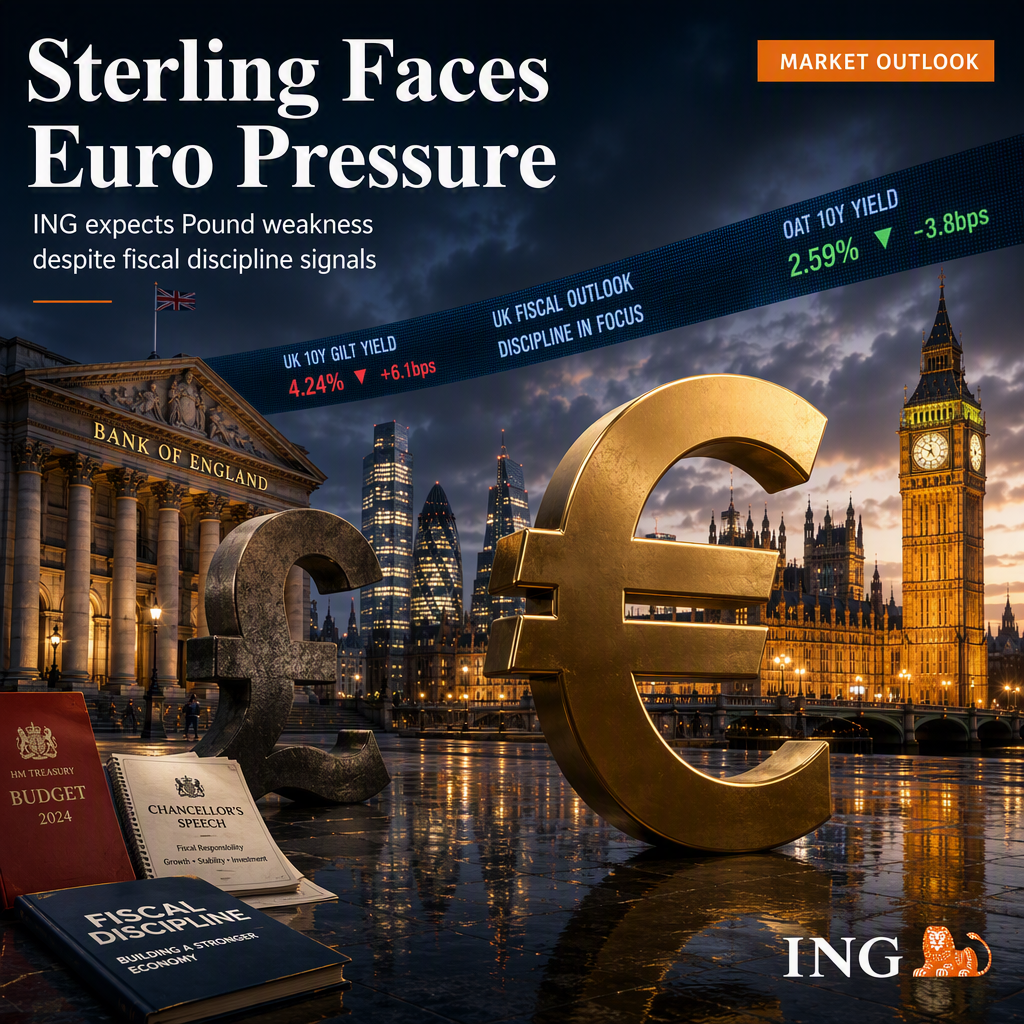
According to ING strategist Francesco Pesole, the British Pound (Sterling) experienced modest gains, attributed in part to Chancellor John Healey’s first major speech, which emphasized fiscal discipline. This message helped keep the rise in long-end gilt yields broadly in line with the global bond sell-off, providing some reassurance to markets about the UK government's fiscal stance [1].
Despite this, ING maintains a positive bias on EUR/GBP, suggesting that the Pound is likely to weaken against the Euro. This outlook is based on the view that market expectations for the Bank of England remain overly hawkish. The strategist notes that Sterling is currently not pricing in any fiscal risk premium, which could leave room for market concerns to develop, especially as headlines about the upcoming October budget emerge [1].
The UK government is described as being highly sensitive to market reactions and is considered unlikely to provoke a confrontation with bond markets, given the potential for higher yields to quickly erode fiscal headroom. The overall market implication is that while Sterling has found some short-term support from fiscal discipline signals, the medium-term risks are tilted towards weakness against the Euro if Bank of England expectations are reassessed [1].
CONCLUSION
Sterling has seen modest support from fiscal discipline signals, but ING expects the Pound to weaken against the Euro due to what it views as overly hawkish Bank of England pricing. The UK government’s sensitivity to market reactions may limit fiscal risk, but upcoming budget headlines could test market sentiment.