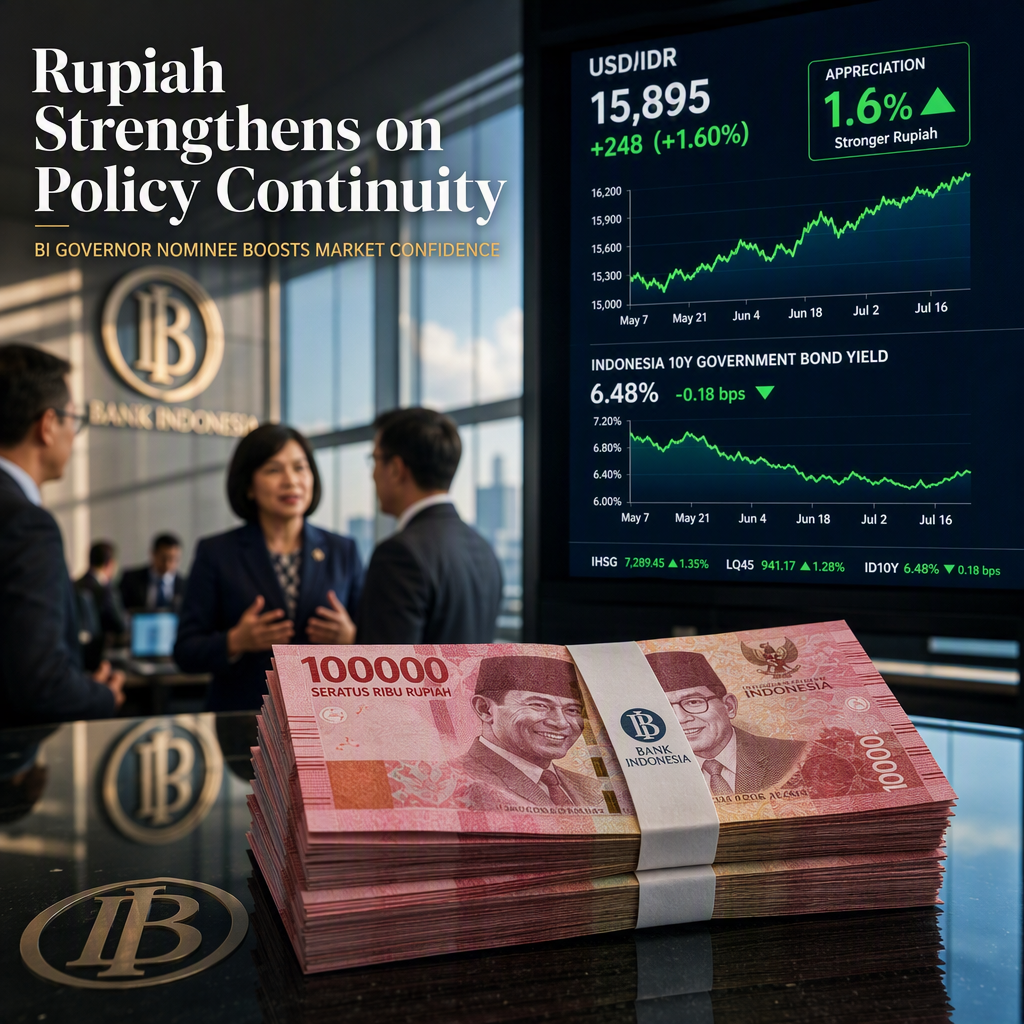
Indonesia's parliament recently conducted fit-and-proper hearings for Bank Indonesia (BI) Governor nominee Destry Damayanti, who emphasized the central bank's commitment to policy continuity, robust monetary and macroprudential tools, and stronger coordination with fiscal authorities. These remarks have contributed to a more constructive outlook in onshore markets, with the USD/IDR exchange rate easing from July highs to trade within the 17,700–17,900 range, reflecting a 1.6% appreciation of the rupiah in August. The bond market has also responded positively, with the yield on 10-year government bonds returning to around 7%, and the curve maintaining a steepening bias, influenced by global cues and a reduced frequency of SRBI auctions.
Foreign investor sentiment towards Indonesian rupiah-denominated debt has improved, as evidenced by nearly $1 billion in inflows in August, although foreign ownership remains at approximately 13% of outstanding issuance. Retail and onshore institutional demand for IDR debt also remains strong. The central bank's recent policy packages in June and July, which enhanced hedging activities and provided swap incentives, indicate a shift from relying solely on rate hikes to employing non-rate measures to support the currency.
Market participants have welcomed the stability in the currency, the positive fiscal outlook, and the manageable inflation profile. The expectation is that the incoming Governor will maintain the current policy stance unless significant foreign exchange or inflation pressures re-emerge. Overall, the combination of policy synergy, supportive growth outlook, and targeted central bank measures has bolstered market confidence in the Indonesian rupiah and local debt markets.
CONCLUSION
The nomination of Destry Damayanti as BI Governor and her commitment to policy continuity have strengthened market confidence in the Indonesian rupiah and local debt. Foreign inflows and a constructive market outlook suggest sustained support for the currency, barring any resurgence of FX or inflation pressures.