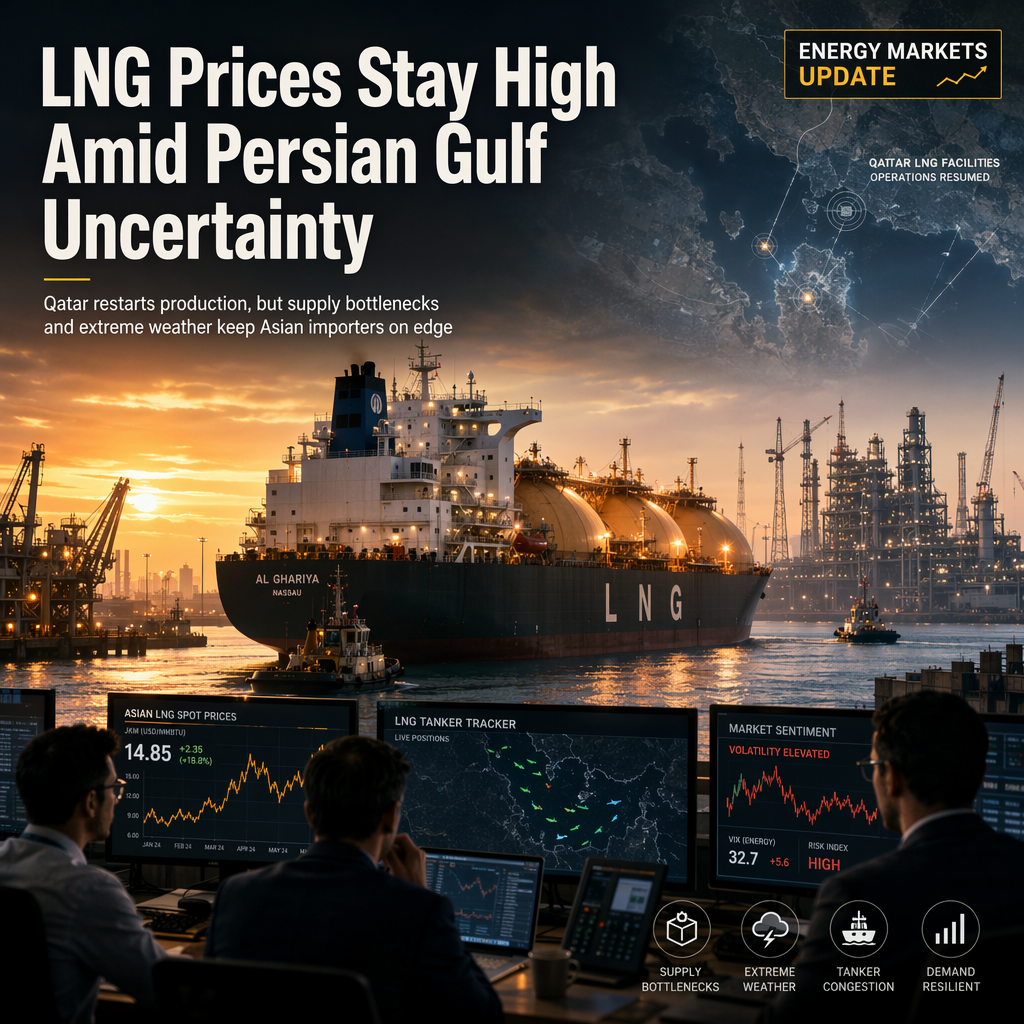
Liquefied natural gas (LNG) prices continue to stay high, even as previously stalled tankers around the Persian Gulf carrying LNG and oil are slowly moving again, following the easing of US sanctions on Iran and the restart of Qatari production facilities [1]. Satellite images suggest that Qatari LNG facilities may be resuming operations, but damage from strikes during the war is expected to prolong supply constraints [1]. Although tanker movement through the Strait of Hormuz has increased to 25% of prewar levels, persistent supply bottlenecks and infrastructure damage are keeping prices elevated [1].
Extreme summer weather across Asia is anticipated to further boost demand, adding upward pressure on spot LNG prices [1]. Traders warn that despite Qatar resuming some production, the overall market remains tight, with limited spare capacity and ongoing logistical issues [1]. A Tokyo-based analyst noted, "The war's impact on LNG facilities has introduced a new risk premium to the market. We could see continued volatility until full repairs are completed and supply chains stabilize" [1].
Energy importers in Japan, South Korea, and China are closely monitoring the situation as they strategize to secure sufficient supply ahead of peak consumption months [1]. The market is also watching developments in Iran, where the US has eased some sanctions, potentially allowing Iran to move an estimated $8.5 billion in oil, but uncertainty remains regarding the speed of LNG infrastructure restoration [1].
Technical analysis shows that Asian LNG spot prices remain above key support levels, with resistance near recent highs. Unless supply resumes at full prewar capacity, traders expect prices to remain elevated. Market sentiment is cautious, with risk managers advised to hedge exposure and monitor supply chain updates closely [1].
CONCLUSION
Despite the easing of sanctions on Iran and the restart of Qatari LNG production, prices remain elevated due to ongoing supply constraints and increased demand from extreme summer weather. Market participants expect continued volatility and advise caution until full repairs and supply chain stabilization are achieved. The situation is being closely watched by major Asian energy importers as they prepare for peak consumption months.