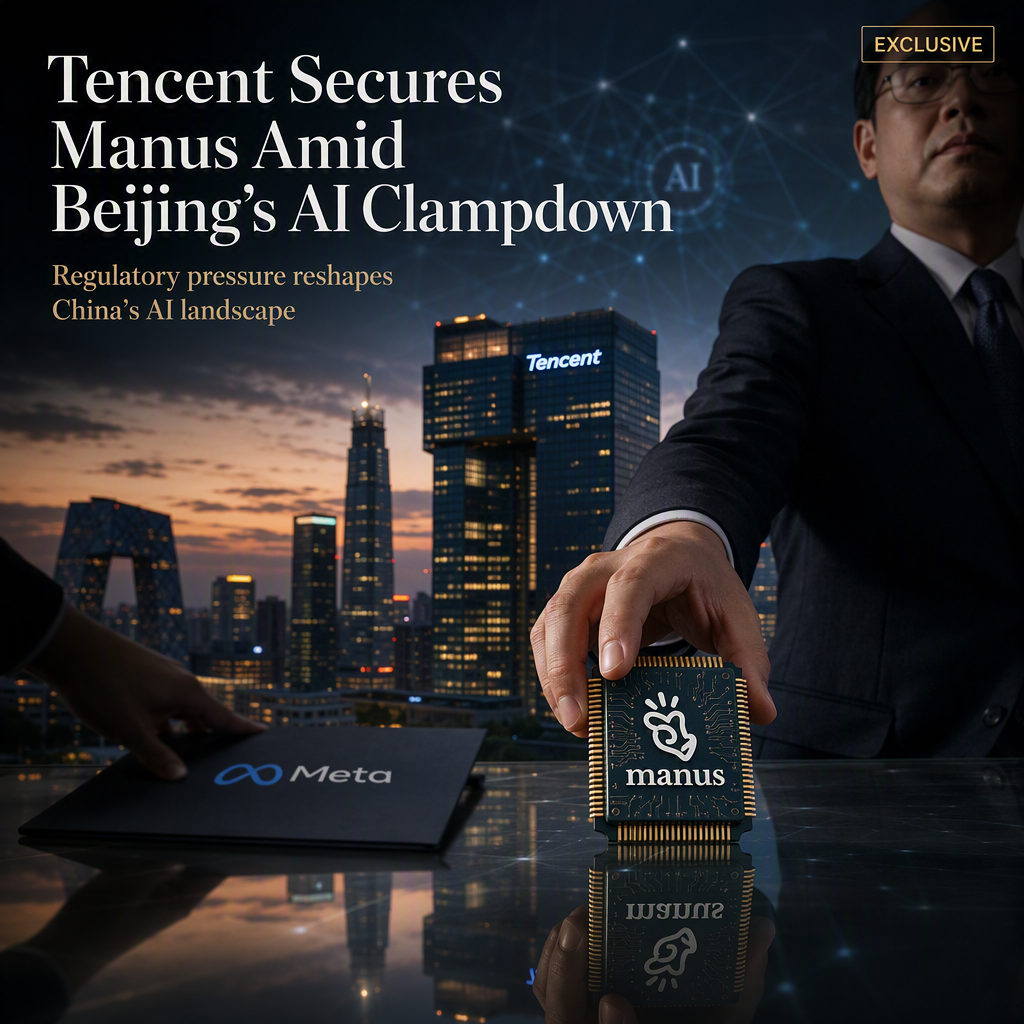
Tencent Holdings will acquire shares of Chinese artificial intelligence developer Manus from Meta (Facebook's parent company), positioning Tencent as the largest shareholder in Manus. This transaction comes after Beijing demanded the unwinding of Meta's acquisition of Manus, which originally took place in December 2025, as part of efforts to keep key AI assets under domestic control [1]. The financial terms of Tencent's share acquisition were not disclosed [1].
The deal marks a significant shift for Manus, which will sever its ties with Meta under pressure from Chinese regulators. This move is part of Beijing's broader strategy to ensure that strategic technology assets, particularly in the AI sector, remain under Chinese ownership. The regulatory intervention follows recent tightening of outbound investment regulations in the wake of the Meta-Manus deal [1].
Industry sources indicate that Tencent's new position as Manus's largest stakeholder will reinforce its influence in China's rapidly evolving AI sector. Market analysts note that this development reflects shifting sentiment, with domestic tech giants like Tencent consolidating their positions amid ongoing regulatory uncertainty and increased government scrutiny. The Chinese AI market is experiencing volatility, and the unwinding of the Meta-Manus deal is expected to trigger further realignments, as foreign investments face greater obstacles and domestic players seek to benefit from regulatory preferences [1].
One market analyst commented, 'This move underscores Beijing's determination to maintain control over strategic technology assets. It also signals Tencent's aggressive approach to strengthening its AI portfolio, especially after recent declines in its market capitalization' [1].
CONCLUSION
Tencent's acquisition of Manus shares from Meta, driven by regulatory pressure, highlights Beijing's commitment to domestic control over strategic AI assets. The deal is expected to reshape the Chinese AI sector, favoring domestic players like Tencent while increasing challenges for foreign investors.