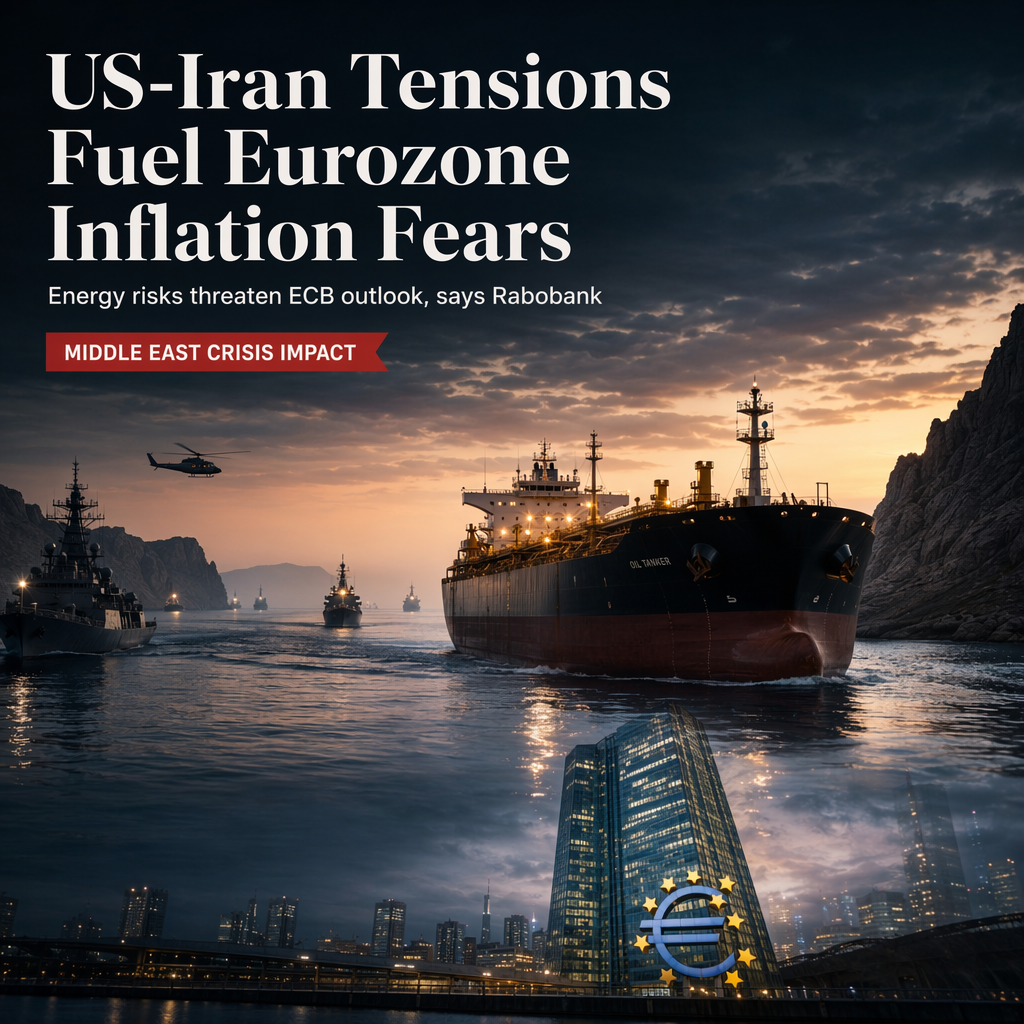
Rabobank’s Bas van Geffen highlights that renewed hostilities between the US and Iran have increased the risks of higher inflation in the Eurozone, reversing the previously more optimistic outlook for energy prices and inflation trends [1]. The earlier decline in energy prices, which contributed to a softer-than-expected June inflation flash estimate, has now reversed, suggesting that firmer inflation readings are likely in the coming months [1].
Van Geffen notes that the recent escalation in the Middle East has eliminated the possibility of a near-term ceasefire or peace deal, shifting the balance of risks towards higher inflation. He suggests that ECB President Lagarde may reference these heightened risks in her upcoming press conference, emphasizing the central bank’s vigilance regarding developments in the Middle East and energy markets. However, Rabobank does not expect Lagarde to provide significant forward guidance at this stage [1].
The report also points out that further escalation—such as the US failing to secure shipping lanes in the Strait of Hormuz or additional damage to energy infrastructure—could intensify upside risks to inflation. Capacity constraints at refineries, following Ukrainian attacks on Russian facilities, are also cited as contributing factors. Nonetheless, Rabobank stresses that a substantial increase in energy prices would be required to trigger a severe inflation scenario [1].
While measures of underlying inflation have not yet shifted to a significantly higher range, the lower bound of the distribution is drifting upward, including the persistent and common component of inflation, which is designed to capture ongoing inflationary pressures after temporary shocks subside [1].
CONCLUSION
Rabobank sees renewed US-Iran tensions as a key driver of rising inflation risks in the Eurozone, reversing the recent trend of declining energy prices. While the ECB may acknowledge these risks, significant policy changes are not expected unless the situation escalates further.