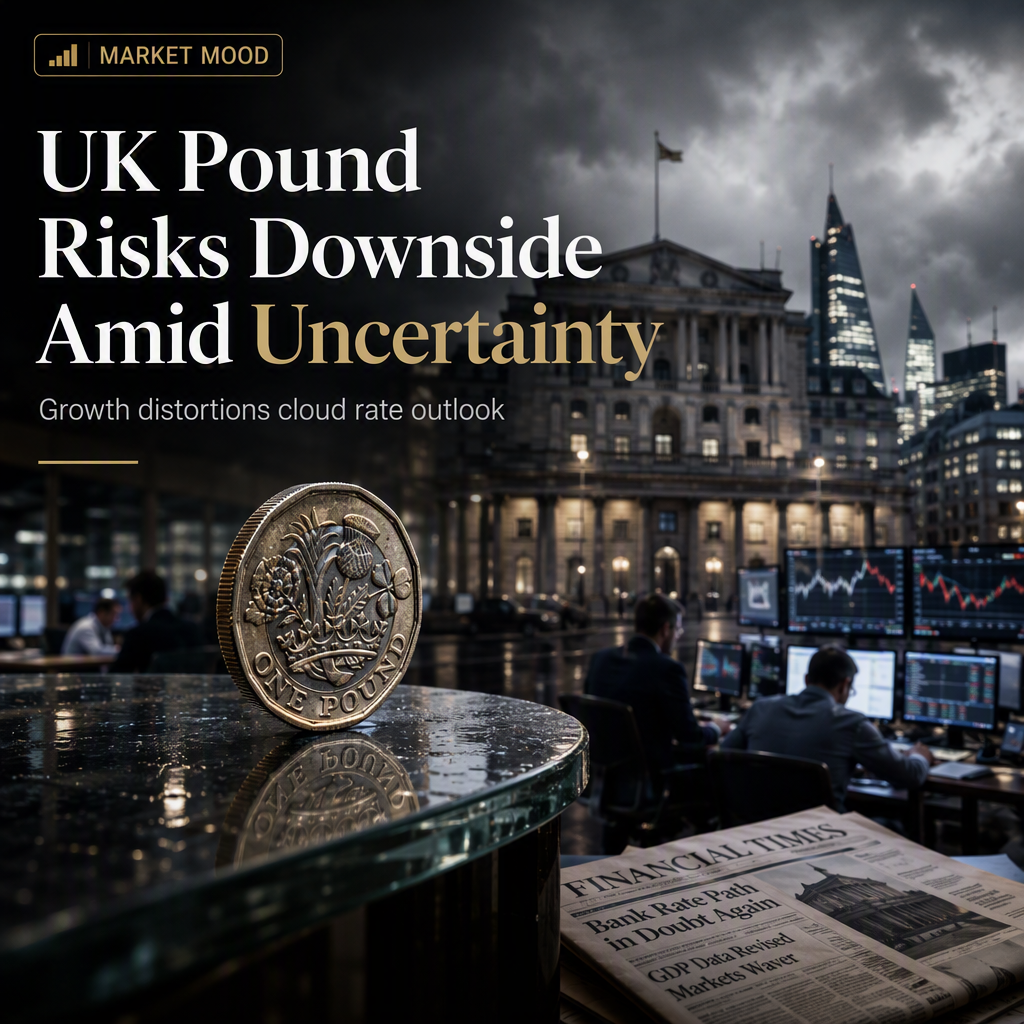
Commerzbank’s Michael Pfister highlights that the United Kingdom reported exceptionally strong growth figures for July, with a 0.4% month-on-month increase, a result not commonly seen at the start of the second half of the year in recent times [1]. This robust performance was primarily driven by the services sector. However, since 2022, the UK has experienced a pattern of strong growth in the first half of the year followed by notably weaker outcomes in the second half, a phenomenon that complicates the interpretation of recent data and its implications for monetary policy [1].
Pfister notes that while stronger growth is typically positive for a currency due to increased likelihood of interest rate hikes, the Bank of England is unlikely to react to a single data point, especially given the observed seasonal distortions. He suggests that changes in seasonal patterns, potentially influenced by the pandemic, may not be fully captured by traditional adjustment methods such as x13 ARIMA [1].
The market has recently increased its expectations for Bank of England rate hikes, but the lingering uncertainty regarding the true underlying growth momentum introduces the risk of disappointment. Should the strong growth observed in July persist, it could prompt the Bank of England to consider raising rates. Until there is greater clarity, however, the central bank is expected to maintain a cautious stance, which could reinforce downside risks for the British Pound if market expectations are not met [1].
CONCLUSION
The UK’s recent strong growth figures have fueled market expectations for rate hikes, but Commerzbank warns that seasonal distortions and underlying uncertainty may limit the Bank of England’s response. This creates potential downside risks for the Pound if growth momentum does not persist or if the central bank remains cautious.