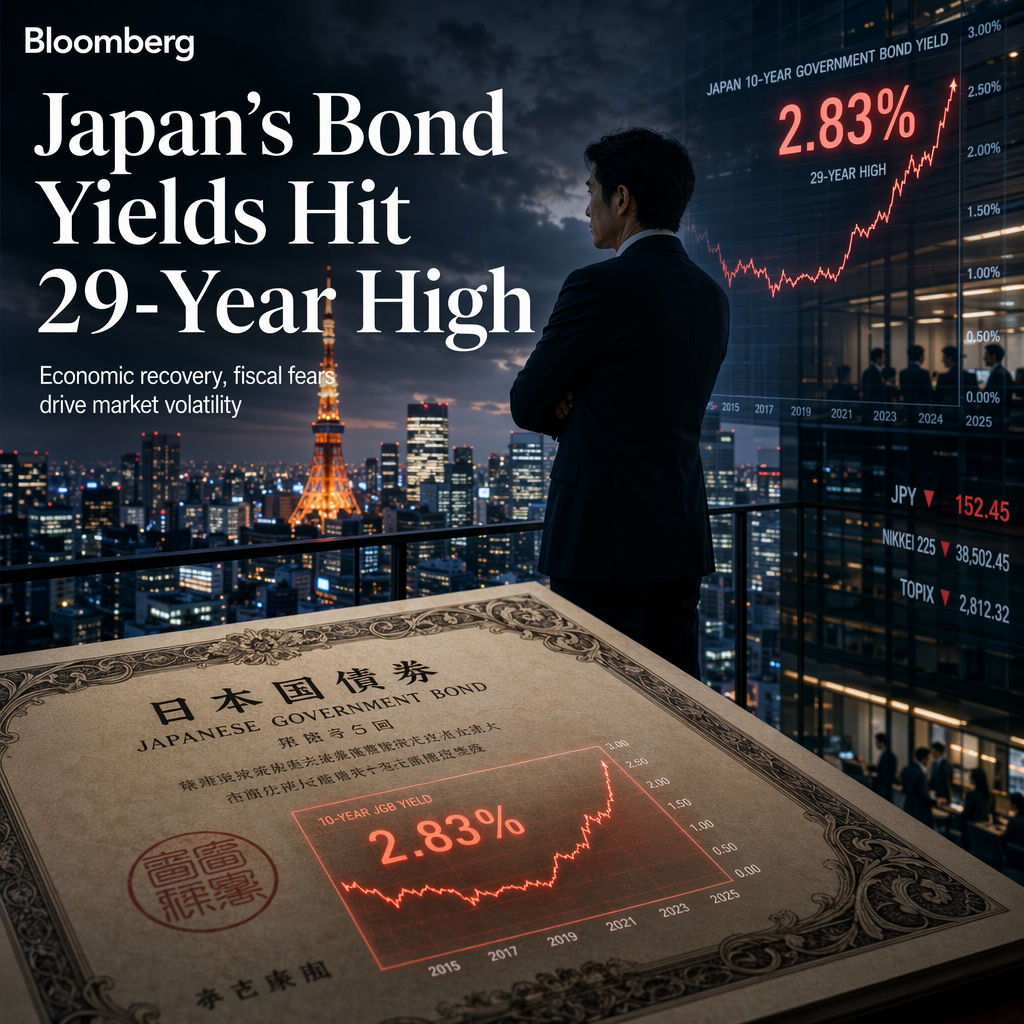
Japan's long-term interest rate rose sharply to 2.83%, marking its highest level in approximately 29 years, with the last comparable figure recorded in 1997 [1]. According to market participants, there has been strong selling pressure in the domestic bond market, which has driven the rapid increase in long-term yields [1]. The main factors cited for this surge include a robust domestic economic recovery and growing concerns over expanded government fiscal spending [1]. Additional influences include rising overseas interest rates and speculation about a potential revision of the Bank of Japan's monetary policy, contributing to ongoing volatility in the bond market [1].
A leading securities firm analyst highlighted that future actions by the Bank of Japan and the government's fiscal management are now under close scrutiny. The analyst also noted that if the upward trend in interest rates continues, it could impact corporate funding costs and mortgage rates [1]. The 2.80% level was identified as a key resistance point in the market, and its clear breach has heightened caution about further increases [1]. Technical analysis suggests the next resistance is around 2.90%, and while short-term corrections are possible, many believe the upward trend is likely to persist [1].
Investors are being advised to adjust their bond holdings and strengthen risk management strategies in response to the rising interest rate environment [1].
CONCLUSION
Japan's long-term interest rate has reached a 29-year high, driven by economic recovery, fiscal concerns, and expectations of policy changes. Market participants are bracing for further volatility, with analysts recommending proactive risk management and portfolio adjustments.