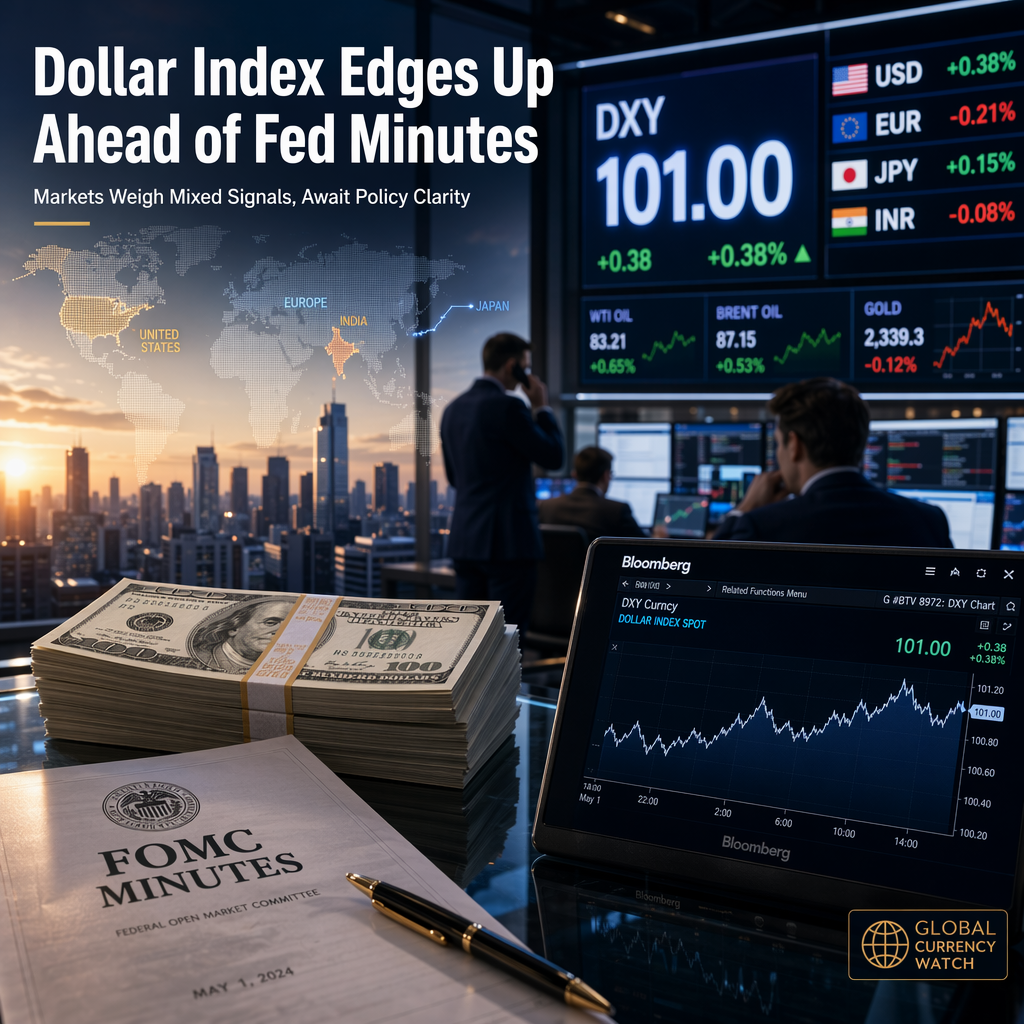
The US Dollar Index (DXY), which measures the value of the US Dollar against six major currencies, traded around 101.00 during the Asian and early European sessions on Monday, gaining 0.1% after a negative weekly close [1][2][3]. This modest rebound comes as traders anticipate the release of the Federal Open Market Committee (FOMC) Minutes from the June policy meeting on Wednesday, seeking further clarity on the Federal Reserve's interest rate outlook [1][2][3]. The Fed left rates unchanged at 3.50%-3.75% in June, with nine out of 19 policymakers supporting a hike by year-end [2]. According to the CME FedWatch tool, markets are pricing in a 77.3% chance of a rate hike by the end of the year [3].
Recent US economic data has sent mixed signals. Last week's Nonfarm Payrolls (NFP) report showed only 57,000 jobs added, significantly below the forecast of 110,000, though the unemployment rate unexpectedly dropped to 4.2% from 4.3% [3]. This has led markets to reduce bets on a September rate hike, despite Fed Chair Kevin Warsh reaffirming the central bank's commitment to its 2% inflation target and noting that inflation risks have begun to moderate [3].
Currency markets reflected these dynamics. The EUR/USD pair traded marginally lower near 1.1428, with the Euro underperforming the US Dollar but outperforming other peers, as expectations for further European Central Bank (ECB) rate hikes diminished following a lower-than-expected Eurozone core HICP reading of 2.4% in June, down from 2.6% [1]. The USD/INR pair edged up to around 95.32, supported by a firmer US Dollar and lower oil prices, which benefit oil-importing economies like India [2]. Analysts at Citi expect Brent Crude Oil to fall further to $60 by year-end, from its current level near $71.50 [2].
In the USD/JPY market, the pair climbed toward 162.00, driven by a wide interest rate differential between the US and Japan, despite Japanese officials signaling readiness to intervene in currency markets [4]. The Bank of Japan raised its policy rate to 1.00% in June, the highest since 1995, while the Fed maintained its rate range [4]. Ongoing tensions in the Strait of Hormuz and Iran's plans to introduce new shipping fees have also supported safe-haven demand for the US Dollar, though the impact is tempered by receding Fed rate hike bets and easing inflation fears due to lower oil prices [4].
Market sentiment remains cautious, with traders awaiting the FOMC Minutes and upcoming US ISM Services PMI for further direction [1][2][3]. In India, foreign institutional investors turned net buyers in equities on Friday, investing Rs. 1,355.33 crore, with sentiment improving ahead of the Q1 FY26-27 earnings season and Tata Consultancy Services (TCS) set to report results on Thursday [2].
CONCLUSION
The US Dollar has regained modest strength as markets await key Fed communications and digest mixed economic data. While expectations for further rate hikes persist, recent labor market softness and easing inflation have tempered bullish sentiment. Currency markets remain sensitive to central bank signals and geopolitical developments, with medium-term direction hinging on upcoming data and policy clarity.