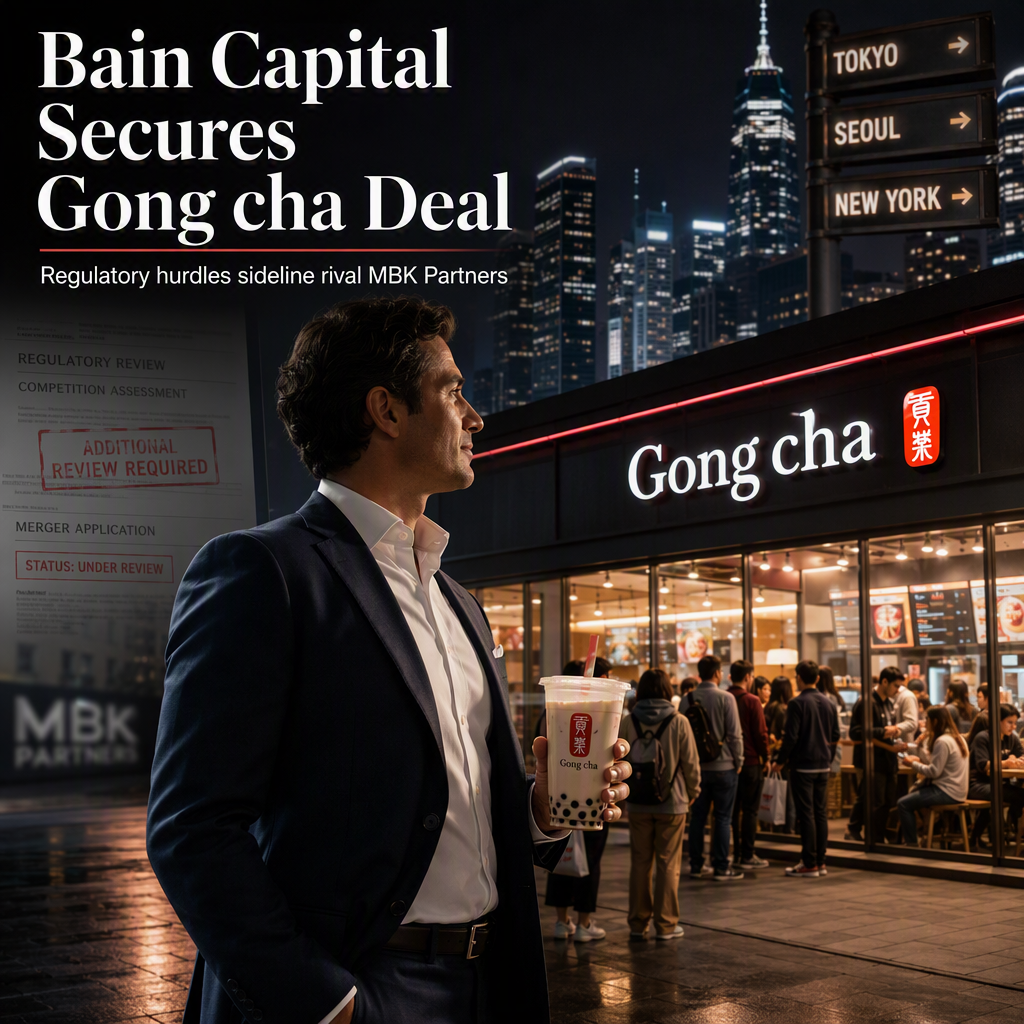
Bain Capital announced on Thursday that it will acquire Gong cha, a global bubble tea chain with approximately 2,200 stores worldwide, from U.S.-based private equity firm TA Associates [1]. The acquisition comes after Bain Capital outbid MBK Partners, one of Asia's largest private equity firms, which faced significant regulatory pressure in South Korea that hindered its ability to secure the deal independently [1]. According to sources familiar with the matter, MBK had been seeking a Korean private equity partner for a joint bid, with plans for MBK to acquire Gong cha's Japan business and its partner to take over the South Korean operations [1].
The regulatory scrutiny on MBK Partners intensified following the collapse of its portfolio company Homeplus, formerly South Korea's second-largest supermarket chain by market share [1]. Homeplus recently secured 200 billion won ($141 million) in emergency funding after seeking court-led rehabilitation due to liquidity pressures, which critics have partly attributed to MBK's leveraged buyout of the retailer [1]. This heightened regulatory environment made it challenging for MBK to proceed with the Gong cha acquisition, especially given the chain's significant presence in South Korea [1].
Bain Capital stated in a press release that it intends to continue expanding Gong cha's footprint in Japan and South Korea, where the brand is already well-established, and will also accelerate growth in the U.S. market [1]. Gong cha offers a wide range of tea and fruit-based beverages and operates in regions including the U.S. and Central America [1]. MBK Partners declined to comment on market inquiries, citing company policy [1].
CONCLUSION
Bain Capital's acquisition of Gong cha marks a significant move in the global beverage market, especially as regulatory challenges sidelined a major competitor, MBK Partners. The deal positions Bain to further expand Gong cha's presence in key markets, with a particular focus on Japan, South Korea, and the U.S. The market impact is high, given the scale of the transaction and the competitive dynamics involved.