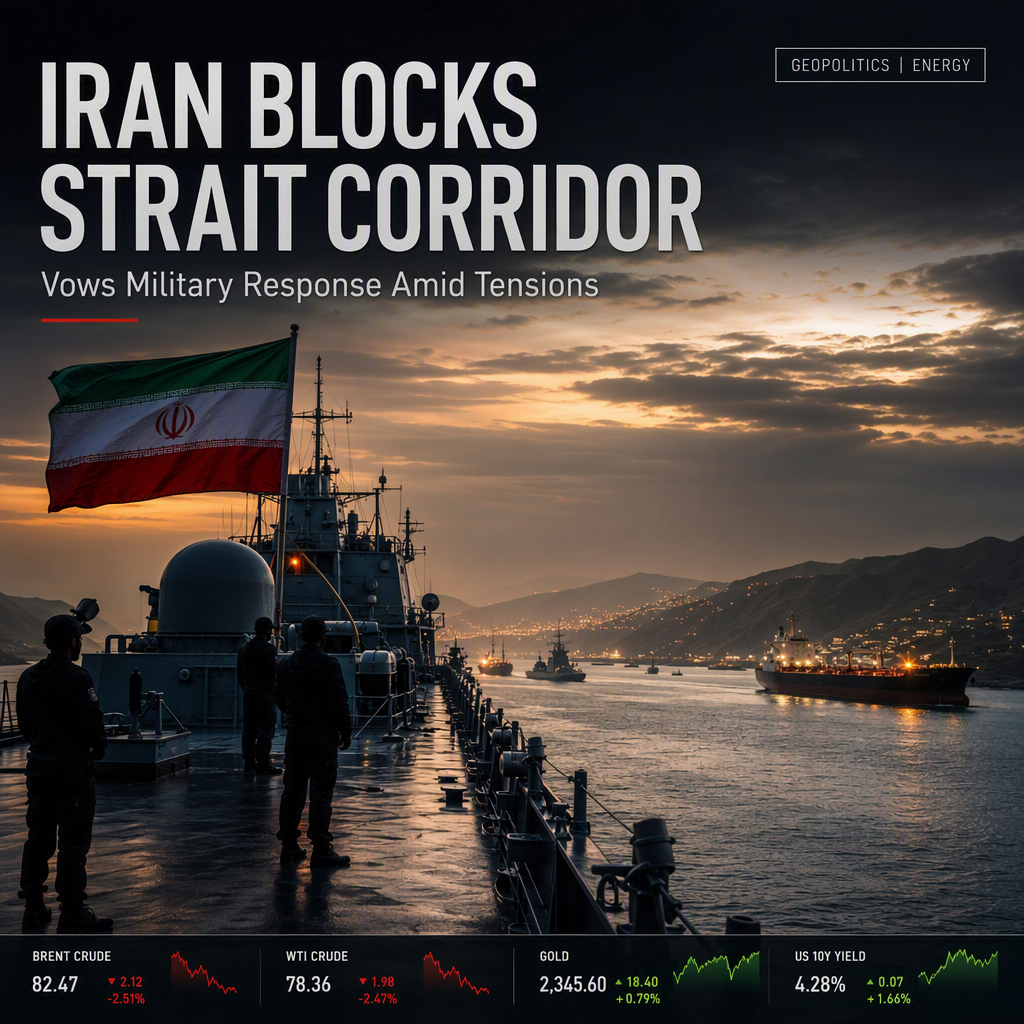
Iran has firmly rejected the possibility of opening a second corridor through the Strait of Hormuz, according to statements made by General Mohsen Rezaei, an advisor to the Supreme Leader, as reported by Iranian state television and Reuters. Rezaei emphasized that Iran will 'absolutely not allow the opening of a second corridor in the Strait of Hormuz' and warned that any attempt to bring warships or military forces to the critical waterway for that purpose would result in Iran targeting them [1].
Rezaei also commented on recent military actions, stating, 'After US stopped the attacks, we continued our attacks for another 2 days so they would understand the situation.' He further noted that Iran was prepared to attack three points in Ukraine but canceled the operation after Ukraine apologized [1]. Additionally, Rezaei mentioned that a Saudi official contacted Iran's Ministry of Foreign Affairs to clarify that Saudi Arabia was not involved in the attack on Iraq [1].
In terms of market reaction, West Texas Intermediate (WTI) crude oil was down 0.03% on the day at $80.50 at the time of reporting [1]. The article provides context on risk sentiment, explaining that in times of heightened geopolitical tension, investors may shift towards 'risk-off' assets such as bonds, gold, and safe-haven currencies like the US Dollar, Japanese Yen, and Swiss Franc [1]. However, the immediate market movement in oil prices was minimal despite the geopolitical developments [1].
CONCLUSION
Iran's strong stance against the establishment of a second corridor in the Strait of Hormuz and its threats of military action underscore ongoing geopolitical risks in the region. Despite these tensions, the immediate market reaction in oil prices was muted, suggesting that investors are closely monitoring the situation but have not yet shifted significantly into risk-off assets.