
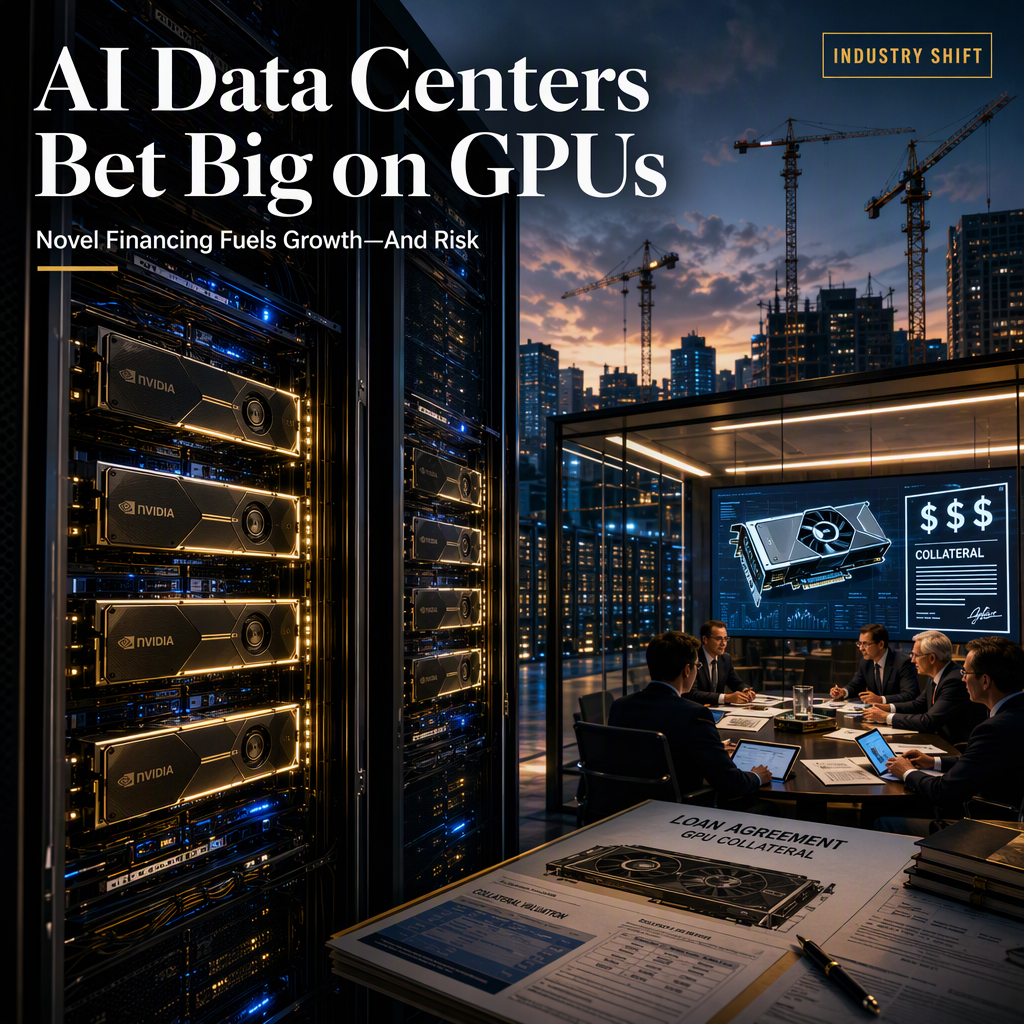
U.S. artificial intelligence data centers are increasingly relying on creative financing methods, such as using GPU collateral and other novel structures, to fund their expansion as construction costs rise and traditional credit lines become less accessible for companies outside the tech giant sphere [1]. This trend highlights the significant capital requirements in the AI infrastructure sector and the growing importance of innovative financial engineering to facilitate growth [1]. Leveraging valuable hardware assets like GPUs as collateral allows companies to secure loans or attract investment, but it also introduces additional risks, especially if long-term AI demand does not meet expectations [1].
Industry analysts and investors are closely monitoring these financing strategies, as they may alter the risk profile of new data center projects. Companies that have heavily leveraged their hardware assets could face substantial financial strain if AI demand falls short, while continued growth in demand could enable rapid expansion and technological advancement through these unconventional funding mechanisms [1].
The shift toward non-traditional financing reflects broader uncertainty about the pace of AI adoption and the sustainability of current investment levels. Both companies and investors are weighing the potential rewards against the heightened risks associated with these new funding approaches [1].
CONCLUSION
The adoption of GPU collateral and other novel financing methods signals both opportunity and risk for AI data center expansion. While these strategies may accelerate growth, they also expose companies to greater financial vulnerability if AI demand does not meet projections. Investors and industry participants remain cautious as the sector navigates this evolving landscape.